Completion of Figures - Base Level
Practice and master this topic with our carefully crafted questions.
In such problems, a figure following a particular sequence or pattern is given, in which a part, usually one-fourth, is left blank. This problem figure is followed by four alternative figures. One is required to choose the one which best fits into the blank space of problem figure so as to complete the original pattern.
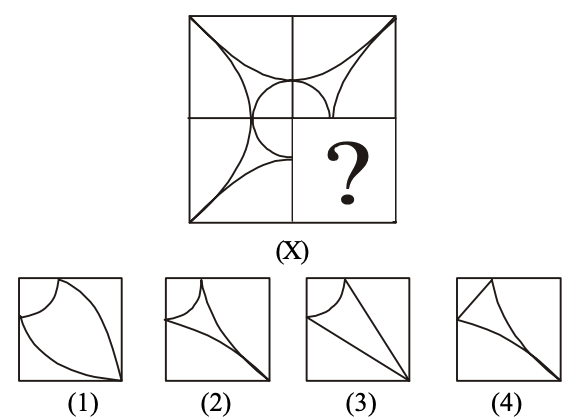
Select a figure from amongst four alternatives, which when placed in the blank space of fig. (X) would complete the pattern.
🔍 Analyze the Pattern
Observe the two curves entering the blank quadrant:
- The outer curve enters the missing section from the left boundary.
- The inner curve enters from the central circular portion.
The missing figure must continue both curves smoothly without any break.
Also, the completed figure should preserve the overall symmetry of the design around the central circle.
Among the answer figures:
- Fig.(1) does not align properly with the incoming curves.
- Fig.(3) contains an extra straight diagonal line which is not required.
- Fig.(4) does not match the curvature and meeting points accurately.
- Fig.(2) correctly continues both curves and completes the pattern without any discontinuity.
Clearly, fig.(2) will complete the pattern when placed in the blank space of fig. (X) as shown below :
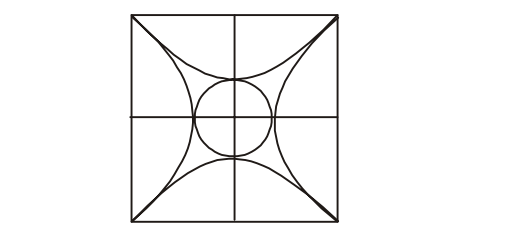
Correct Answer: (B)
⚡ Quick Exam Shortcut
In figure completion questions, trace the lines entering the blank space.
The correct option must:
- Continue every incoming curve smoothly.
- Match all boundary intersection points.
- Avoid adding unnecessary lines.
Only Option (B) satisfies all these conditions.
Shortcut Answer: Match the incoming curves exactly → Option (B).
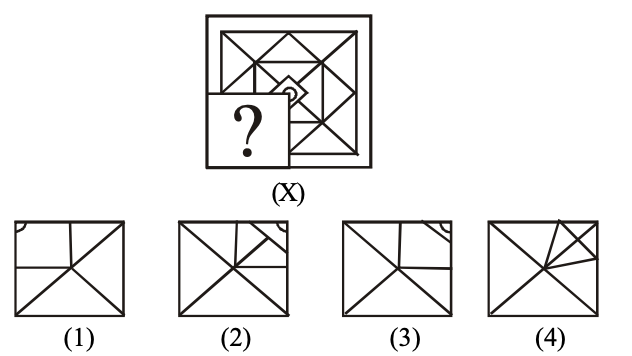
Select a figure from amongst four alternatives, which when placed in the blank space of fig. (X) would complete the pattern.
🔍 Analyze the Pattern
The missing portion is the lower-left quadrant of the complete figure. To find the answer, trace all the lines that enter the blank region from the adjacent sides.
Step 1: Continue the Diagonal Lines
A major diagonal line enters the missing quadrant from the centre and must continue towards the lower-left corner.
Step 2: Continue the Vertical and Horizontal Lines
The vertical line passing through the centre continues downward into the missing portion. Similarly, the horizontal line entering from the left boundary must align perfectly with the existing structure.
Step 3: Match the Curved Corner
Near the centre, a small curved arc is visible. The missing piece must contain the continuation of this curved feature in the correct position.
Among the answer figures:
- Fig. (1) contains the curve in the wrong corner.
- Fig. (3) does not correctly continue all the incoming lines.
- Fig. (4) introduces extra line segments that are not present in the original pattern.
- Fig. (2) correctly continues the diagonal, vertical, horizontal and curved lines.
Clearly fig. (2) when placed in the blank in fig. (X) will complete the pattern, as shown below :
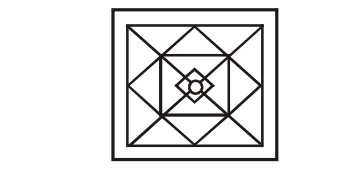
Correct Answer: (B)
⚡ Quick Exam Shortcut
In figure completion questions:
- Trace every line entering the blank space.
- Match all boundary intersection points.
- Check continuation of curves and diagonals.
- Reject options that add extra lines.
Only Option (B) completes all the incoming lines and the curved arc correctly.
Shortcut Answer: Continue all incoming lines and the small arc → Option (B).
Select a figure from amongst four alternatives, which when placed in the blank space of fig. (X) would complete the pattern.
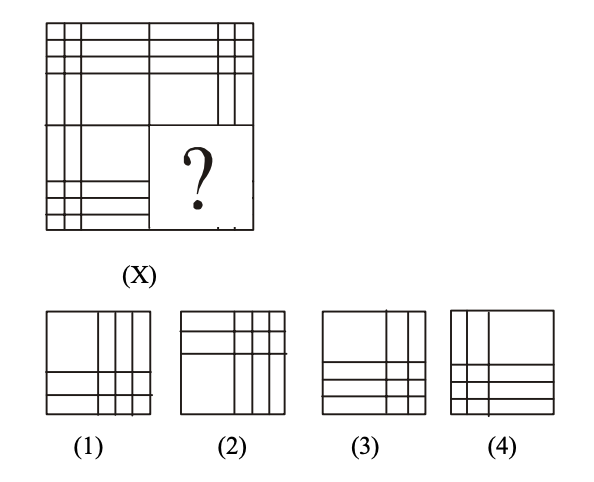
🔍 Analyze the Pattern
The missing portion is the lower-right quadrant of the figure. To determine the correct answer, trace all the lines entering the blank space from the adjacent quadrants.
Step 1: Continue the Vertical Lines
Three vertical lines descend from the upper-right quadrant into the missing area. These lines must continue without any break.
Step 2: Continue the Horizontal Lines
Three horizontal lines extend from the lower-left quadrant into the missing area and must align perfectly.
Step 3: Match the Intersections
The correct figure must contain:
- Three vertical lines in exactly the same positions as those entering from above.
- Three horizontal lines continuing from the left.
- All intersection points aligned with the existing grid pattern.
Among the answer figures:
- Fig. (1) does not align all the vertical continuations correctly.
- Fig. (2) contains horizontal lines in the wrong position.
- Fig. (4) shifts the vertical group towards the left side.
- Fig. (3) perfectly continues both the vertical and horizontal line groups and preserves the overall symmetry.
Clearly fig. (3) when placed in the blank in fig. (X) will complete the pattern, as shown below :
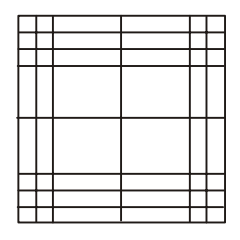
Correct Answer: (C)
⚡ Quick Exam Shortcut
Follow the lines entering the blank space:
- Three vertical lines come from above.
- Three horizontal lines come from the left.
- The correct option must continue all six lines without shifting their positions.
Only Option (C) matches every incoming line exactly.
Shortcut Answer: Continue all incoming grid lines exactly → Option (C).
Select a figure from amongst four alternatives, which when placed in the blank space of fig. (X) would complete the pattern.
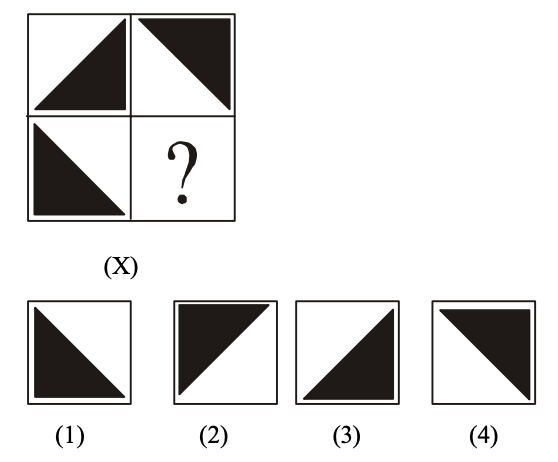
🔍 Analyze the Pattern
Each quadrant contains the same triangular design. The black triangle rotates through an angle of 90° clockwise from one quadrant to the next.
Observe the sequence:
- Top-Left quadrant → Black region lies below the diagonal.
- Top-Right quadrant → After a 90° clockwise rotation.
- Bottom-Right quadrant → Missing figure.
- Bottom-Left quadrant → Next 90° clockwise rotation.
Therefore, the missing quadrant must be the figure obtained by rotating the top-right quadrant through 90° clockwise.
Among the answer figures, only Option (2) fits this rotational pattern and completes the design correctly.
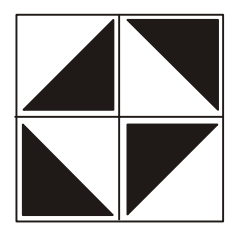
Correct Answer: (B)
⚡ Quick Exam Shortcut
Do not count corners. Instead, treat the black triangle as a rotating figure.
The black region rotates:
Top-Left → Top-Right → Bottom-Right → Bottom-Left
with a 90° clockwise rotation at each step.
The figure required in the missing quadrant is therefore Option (B).
Shortcut Answer: 90° clockwise rotation pattern → Option (B).
Select a figure from amongst four alternatives, which when placed in the blank space of fig. (X) would complete the pattern.
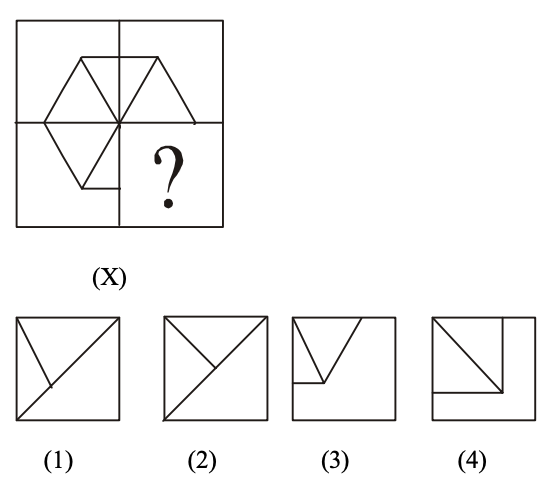
🔍 Analyze the Pattern
The figure is formed by two adjoining hexagonal shapes meeting at the centre of the square.
To find the missing part, observe the lines entering the blank quadrant from the adjacent sections:
- A slanting line extends downward from the central point into the blank region.
- The lower-right side of the right hexagon is incomplete and must be continued.
- The missing piece should complete the boundary of the hexagon without introducing extra diagonals.
Among the answer figures:
- Fig.(1) introduces an unnecessary diagonal extending across the entire square.
- Fig.(2) contains an extra line segment that does not belong to the hexagon.
- Fig.(4) introduces horizontal and vertical lines not present in the figure.
- Fig.(3) correctly continues the two sides of the hexagon and completes the pattern.
Clearly, fig.(3) will complete the pattern when placed in the blank space of fig. (X) as shown below :
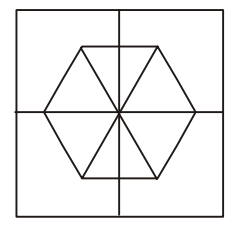
Correct Answer: (C)
⚡ Quick Exam Shortcut
Ignore the outer square and focus only on the hexagon.
The missing piece must complete the lower-right side of the right hexagon.
Eliminate options that add extra diagonals or unrelated lines.
Shortcut Answer: Complete the hexagon boundary → Option (C).
Select a figure from amongst four alternatives, which when placed in the blank space of fig. (X) would complete the pattern.
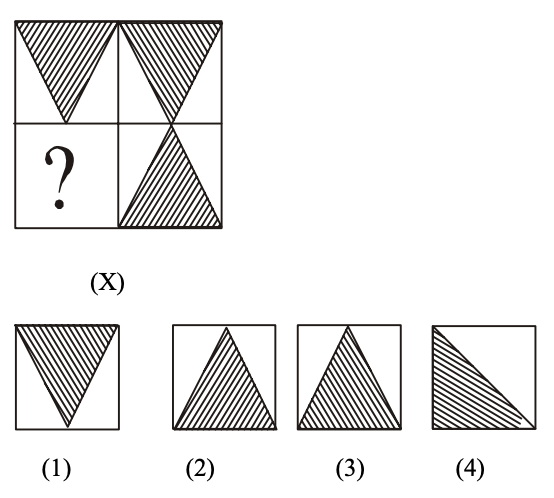
🔍 Analyze the Pattern
Observe the shaded triangles in the given quadrants.
- The two upper quadrants contain inverted shaded triangles.
- Their vertices meet exactly at the central intersection of the figure.
- The lower-right quadrant contains an upright shaded triangle whose vertex also meets the same central point.
Therefore, the missing lower-left quadrant must contain an upright shaded triangle whose vertex touches the central intersection.
Check the Options
- Fig. (1) is an inverted triangle, so it is incorrect.
- Fig. (2) is upright, but its vertex position does not align correctly with the centre.
- Fig. (3) is an upright triangle with its vertex positioned at the correct corner so that it meets the central intersection.
- Fig. (4) is not the required triangular pattern.
Hence, only Fig. (3) completes the figure correctly.
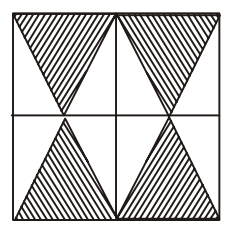
Correct Answer: (C)
⚡ Quick Exam Shortcut
Check where the triangle's vertex touches.
All four triangles meet at the centre of the large square.
The missing figure must therefore be an upright shaded triangle whose top vertex lies at the central intersection.
Shortcut Answer: Match the centre-touching vertex → Option (C).
Select a figure from amongst four alternatives, which when placed in the blank space of fig. (X) would complete the pattern.
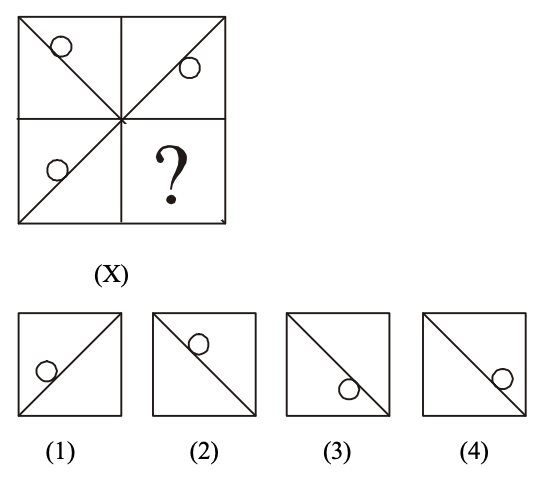
🔍 Analyze the Pattern
Observe the position of the circle relative to the centre of the large square.
In each quadrant:
- The diagonal passes through the central intersection.
- The circle remains on the same side of the diagonal.
- The circle rotates clockwise around the centre from one quadrant to the next.
The sequence of circle positions is:
Top-Left → Top-Right → Bottom-Right → Bottom-Left
Since the missing figure occupies the bottom-right quadrant, the circle must appear in the position corresponding to that quadrant.
Also, the diagonal in the missing quadrant must run from the top-left corner to the bottom-right corner.
Among the answer figures:
- Fig.(1) has the wrong diagonal direction.
- Fig.(2) places the circle too close to the upper region.
- Fig.(4) places the circle on the wrong side of the rotational sequence.
- Fig.(3) correctly continues both the diagonal and the clockwise movement of the circle.
Clearly, fig.(3) will complete the pattern when placed in the blank space of fig. (X) as shown below :
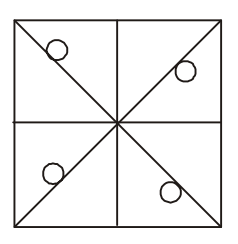
Correct Answer: (C)
⚡ Quick Exam Shortcut
Ignore the outer square and focus on the circle.
The circle moves clockwise through the four quadrants:
Top-Left → Top-Right → Bottom-Right → Bottom-Left
The missing quadrant is Bottom-Right, so choose the figure with:
- A diagonal from top-left to bottom-right.
- The circle in the Bottom-Right rotational position.
Shortcut Answer: Clockwise circle movement → Option (C).
Select a figure from amongst four alternatives, which when placed in the blank space of fig. (X) would complete the pattern.
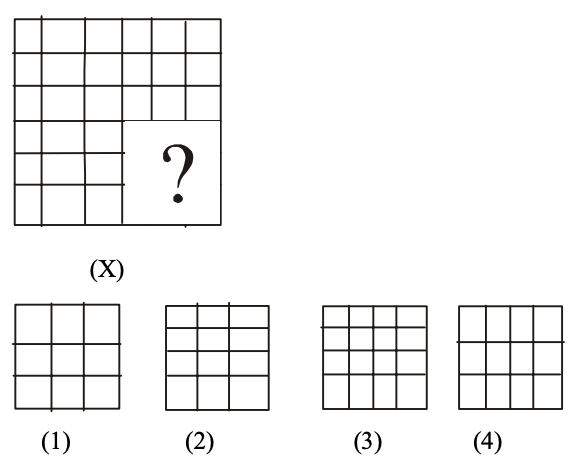
🔍 Analyze the Pattern
The figure is formed by a regular grid. The missing portion is the lower-right corner of the figure.
To find the correct answer, trace the lines entering the blank space:
Step 1: Vertical Lines
Two internal vertical lines enter the blank region from above. These lines must continue downward without any shift.
Step 2: Horizontal Lines
Two internal horizontal lines enter the blank region from the left side and must continue straight across.
Step 3: Match the Grid Spacing
The spacing between all rows and columns remains uniform throughout the figure.
Therefore, the missing piece must contain:
- Two internal vertical lines.
- Two internal horizontal lines.
- A simple 3 × 3 grid matching the existing spacing.
Among the answer figures:
- Fig.(2) has an extra horizontal line.
- Fig.(3) has an extra vertical line.
- Fig.(4) does not align perfectly with the incoming grid positions.
- Fig.(1) exactly continues all the grid lines and preserves the spacing.
Clearly, fig.(1) will complete the pattern when placed in the blank space of fig. (X) as shown below :
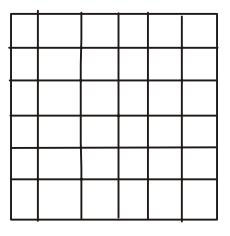
Correct Answer: (A)
⚡ Quick Exam Shortcut
Count the lines entering the blank space:
- 2 internal vertical lines
- 2 internal horizontal lines
The missing part should simply complete a uniform 3 × 3 grid.
Options with extra rows or columns can be eliminated immediately.
Shortcut Answer: Continue the grid exactly → Option (A).
Select a figure from amongst four alternatives, which when placed in the blank space of fig. (X) would complete the pattern.
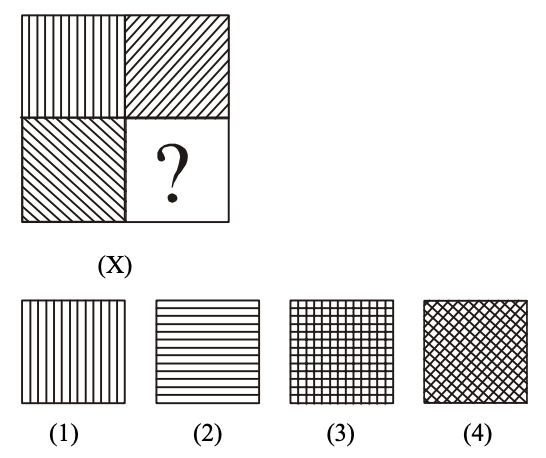
🔍 Analyze the Pattern
The four quadrants represent different orientations of parallel lines.
Observe the sequence:
Vertical → Diagonal ( / ) → Horizontal → Diagonal ( \ )
Each pattern is obtained by rotating the line orientation through 45°.
Therefore, the missing quadrant must contain horizontal parallel lines.
Among the answer figures, only fig.(2) matches this pattern.
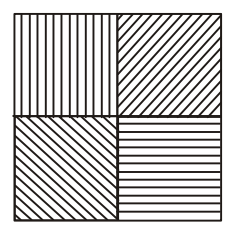
Correct Answer: (B)
⚡ Quick Exam Shortcut
Track the orientation of the lines:
| → / → — → \
The missing pattern is the horizontal-line stage.
Shortcut Answer: Line rotation pattern → Option (B).
Select a figure from amongst four alternatives, which when placed in the blank space of fig. (X) would complete the pattern.
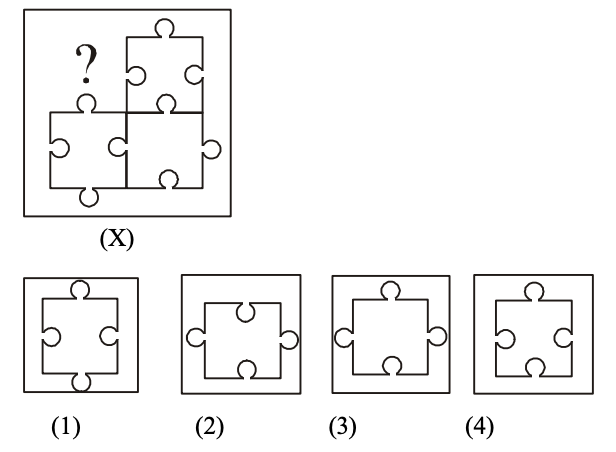
🔍 Analyze the Pattern
The figure consists of four jigsaw pieces arranged in a square. The top-left piece is missing.
Step 1: Match the Right Side
The top-right piece has an inward socket on its left edge.
Therefore, the missing piece must have an outward knob on its right edge.
Step 2: Match the Bottom Side
The bottom-left piece has an inward socket on its top edge.
Therefore, the missing piece must have an outward knob on its bottom edge.
Step 3: Check the Outer Edges
The top and left edges lie on the outer boundary of the completed figure. Looking at the existing pieces, these outer edges follow the same connector pattern shown in the puzzle.
Thus, the missing piece should contain:
- Top = inward socket
- Right = outward knob
- Bottom = outward knob
- Left = inward socket
Among the answer figures, only fig.(2) satisfies these conditions.
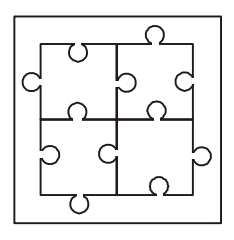
Correct Answer: (B)
⚡ Quick Exam Shortcut
Match the touching sides first:
- Socket ↔ Knob
- Knob ↔ Socket
The top-right piece requires a knob on the right side of the missing piece, and the bottom-left piece requires a knob on the bottom side.
Only Option (2) provides the correct combination of connectors.
Shortcut Answer: Match neighbouring connectors → Option (B).