Counting of Figures - Basic Level
Practice and master this topic with our carefully crafted questions.
Learn the basics of counting figures with easy and concept-building questions. Practice counting lines, triangles, squares, rectangles and other common shapes.
In each of the following questions, count the number of triangles and squares in the given figure.
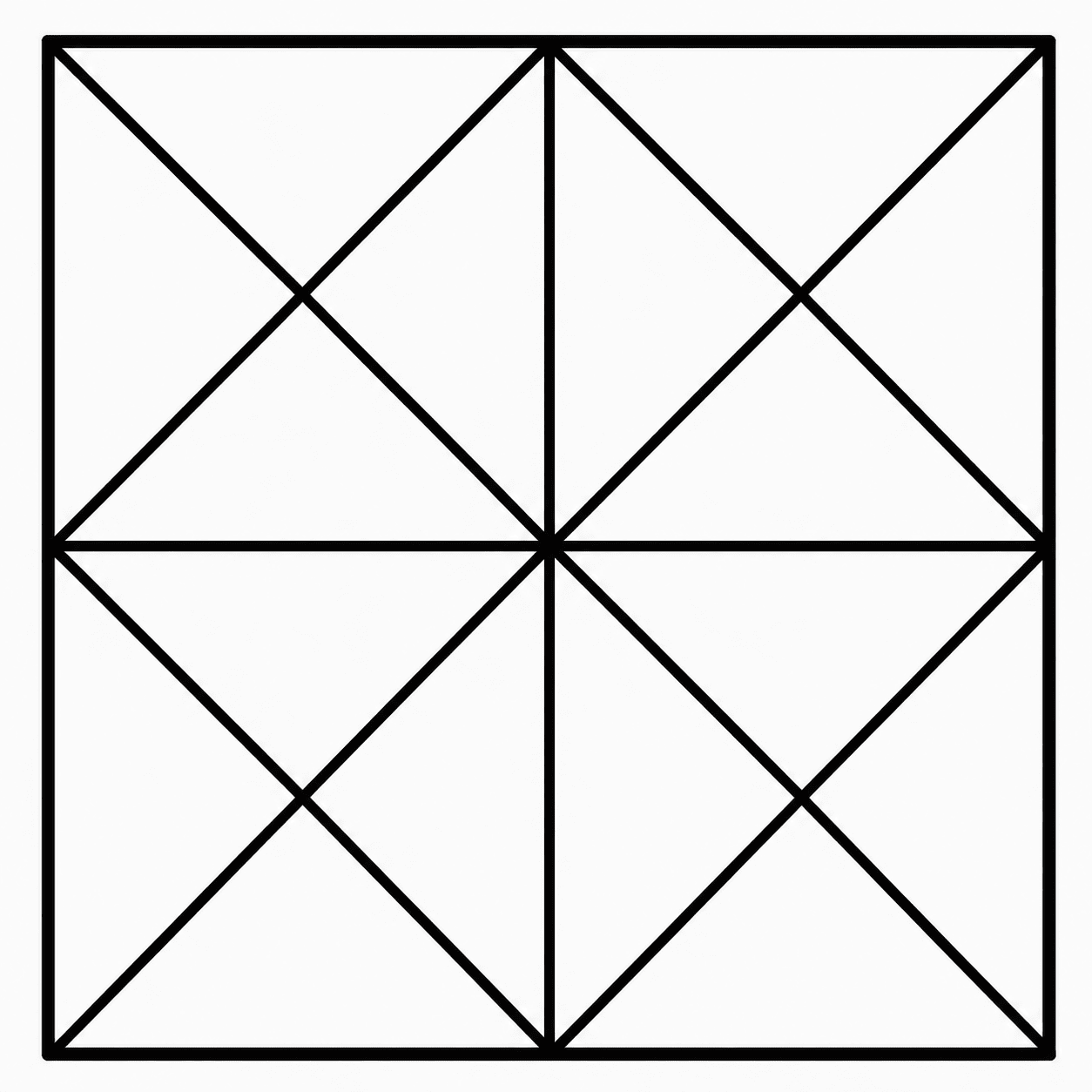
🔍 Analyze the Pattern
On carefully observing the labelled figure:
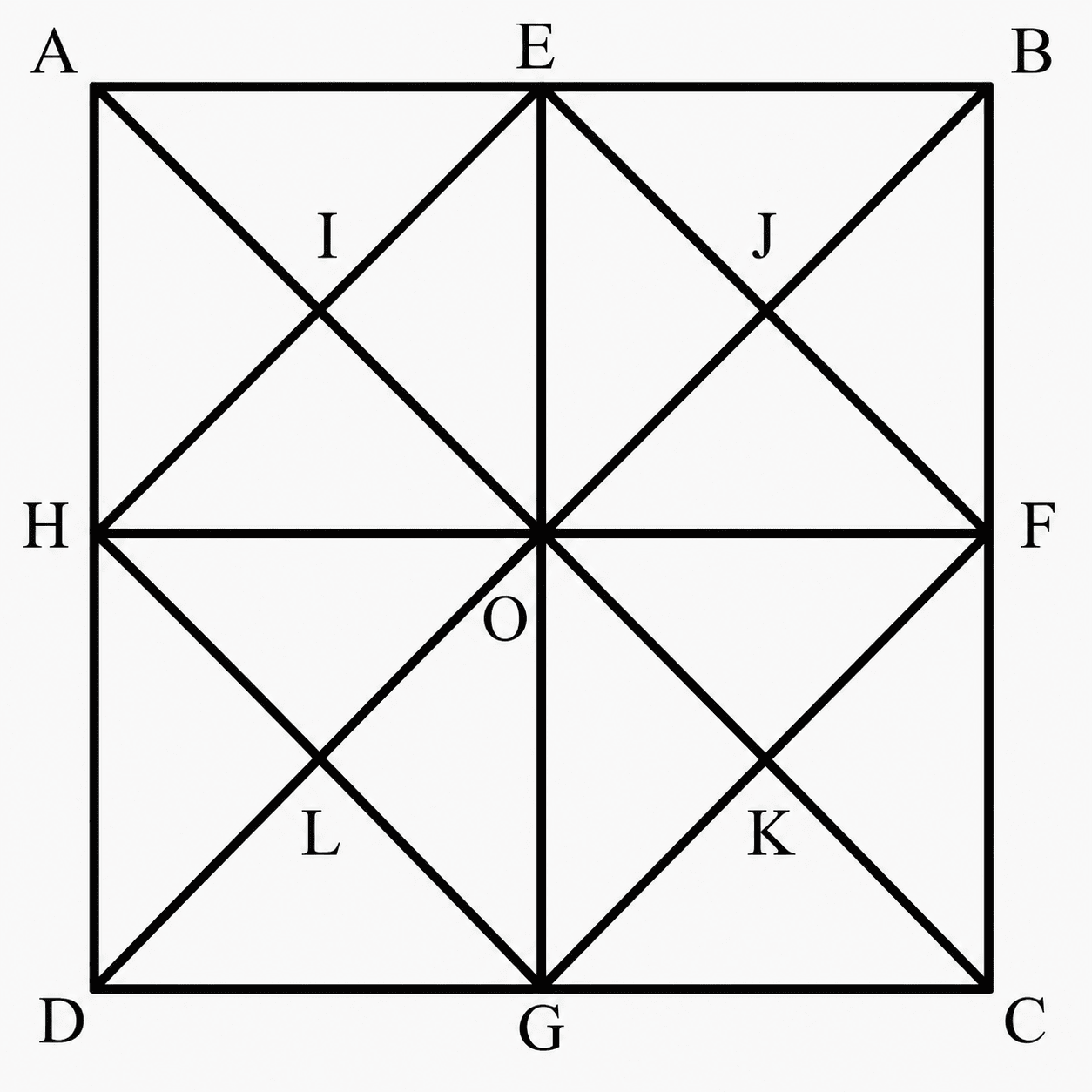
🔺 Count the Triangles
Using the labelled figure, the triangles can be counted systematically as follows:
AEI, EOI, OHI, HAI, EBJ, BFJ, 1 FOJ, OEJ, HOL, OGL, GDL, DHL, OFK, FCK, CGK, GOK, HAE, AEO, EOH, OHA, OEB, EBF, BFO, FOE, DHO, HOG, OGD, GDH, GOF, OFC, FCG, CGO, HEF, EFG, FGH, GHE, ABO, BCO, CDO, DAO, DAB, ABC, BCD, CDA
Total Triangles = 44
◻ Count the Squares
The squares present in the figure are:
- HIOL
- IEJO
- JFKO
- KGLO
- AEOH
- EBFO
- OFGC
- HOGD
- EFGH
- ABCD
Total Squares = 10
Correct Answer: Option (A) — 44 Triangles and 10 Squares
⚡ Quick Exam Tip
For counting figures, label all intersection points first. Then:
- Count the smallest figures.
- Count medium-sized figures.
- Count larger composite figures.
- Finally, count the outermost figure.
Final Answer: 44 Triangles and 10 Squares → Option (A).
In each of the following questions, count the number of triangles and squares in the given figure.
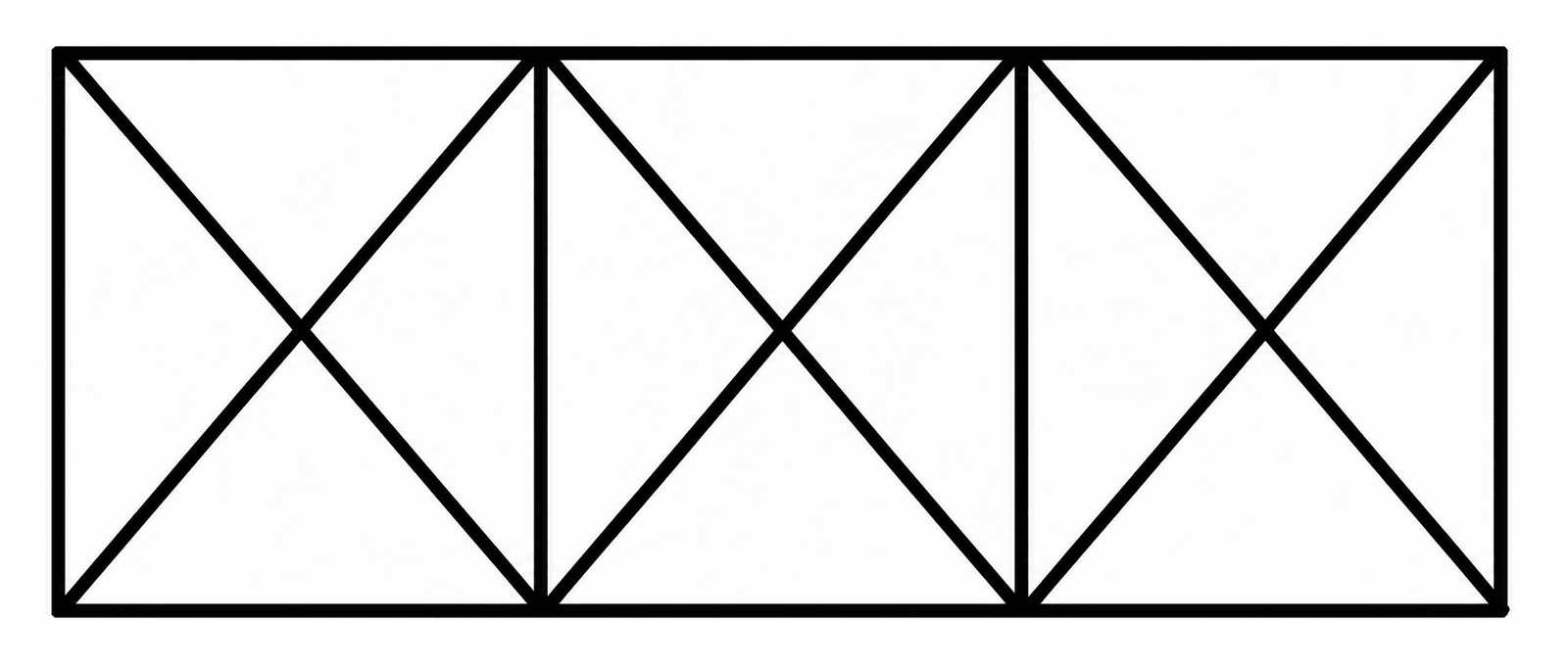
🔍 Analyze the Pattern
On carefully observing the labelled figure:
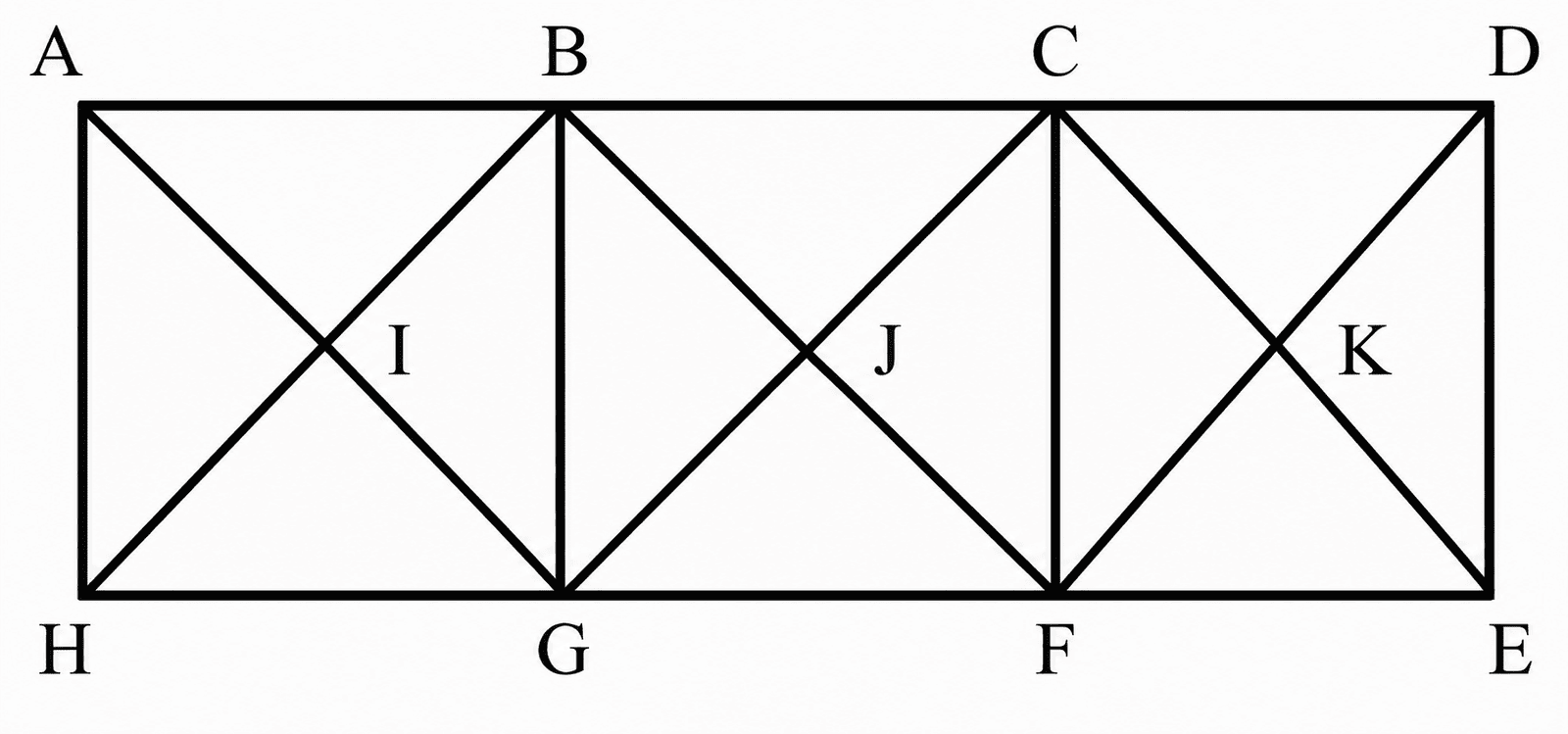
🔺 Count the Triangles
Using the labelled figure, the triangles can be counted systematically as follows:
ABI, BGI, GHI, HAI, BCJ, CFJ, FGJ, GBJ, CDK, DEK, EFK, FCK, ABG, BGH, GHA, HAB, BCF, CFG, FGB, GBC, CDE, DBF, EFC, FGD, AGC, BFD, HBF, GCE
Total Triangles = 28
◻ Count the Squares
The squares present in the figure are:
- ABGH
- BCFG
- CDEF
- ACFH
- BDEG
Total Squares = 5
Correct Answer: Option (C) — 28 Triangles and 5 Squares
In each of the following questions, count the number of triangles and squares in the given figure.
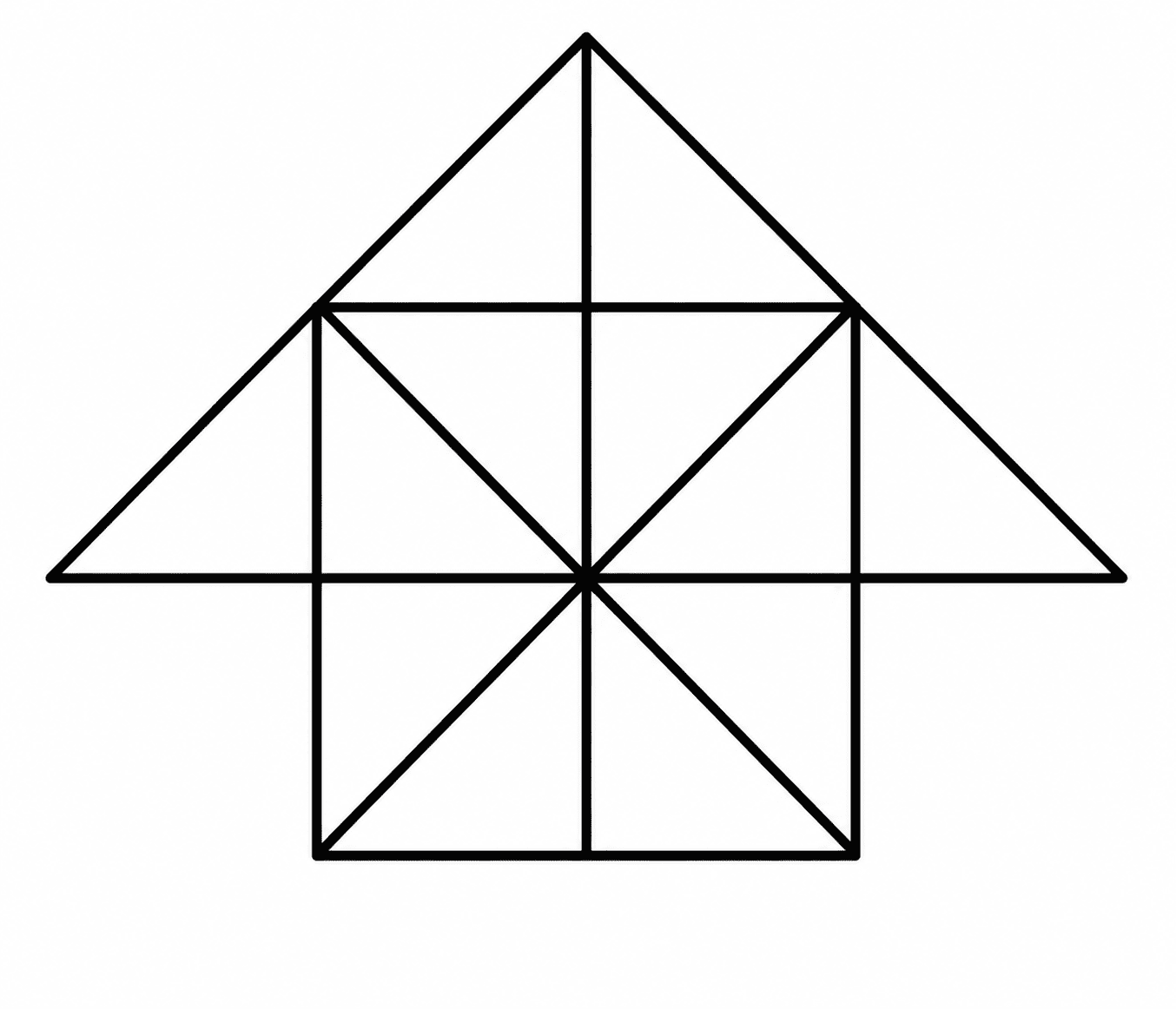
🔍 Analyze the Pattern
On carefully observing the labelled figure:
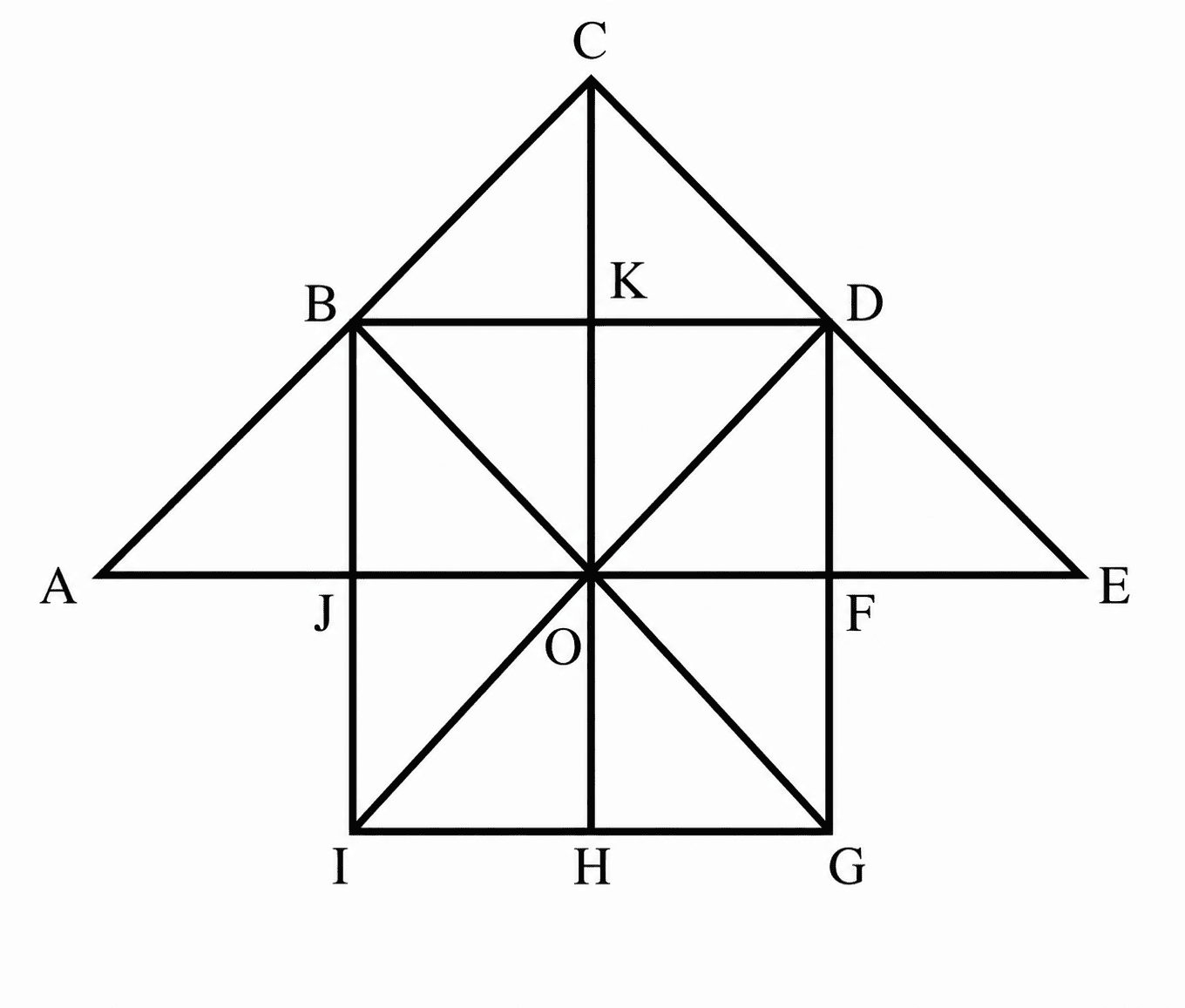
🔺 Count the Triangles
Using the labelled figure, the triangles can be counted systematically as follows:
JBO, BKO, KDO, DFO, FGO, GHO, HIO, IJO,
ABJ, BCK, CKD, DBF, IBO, EDO, DGO, GIO,
ABO, CBD, DEO, IBD, BDG, DGI, GIB, ACO,
COE, ACE
Total Triangles = 26
◻ Count the Squares
The squares present in the figure are:
- BKOD
- JIOH
- OFGH
- BIOH
- DOFG
- BIGD (Outer Square)
Total Squares = 6
Correct Answer: Option (C) — 26 Triangles and 6 Squares
⚡ Quick Exam Tip
Label all vertices and intersection points first. Then:
- Count the smallest triangles.
- Count larger triangles formed by combining smaller ones.
- Count the smallest squares first.
- Finally, count the larger composite squares.
Final Answer: 26 Triangles and 6 Squares → Option (C).
In each of the following questions, count the number of triangles and squares in the given figure.
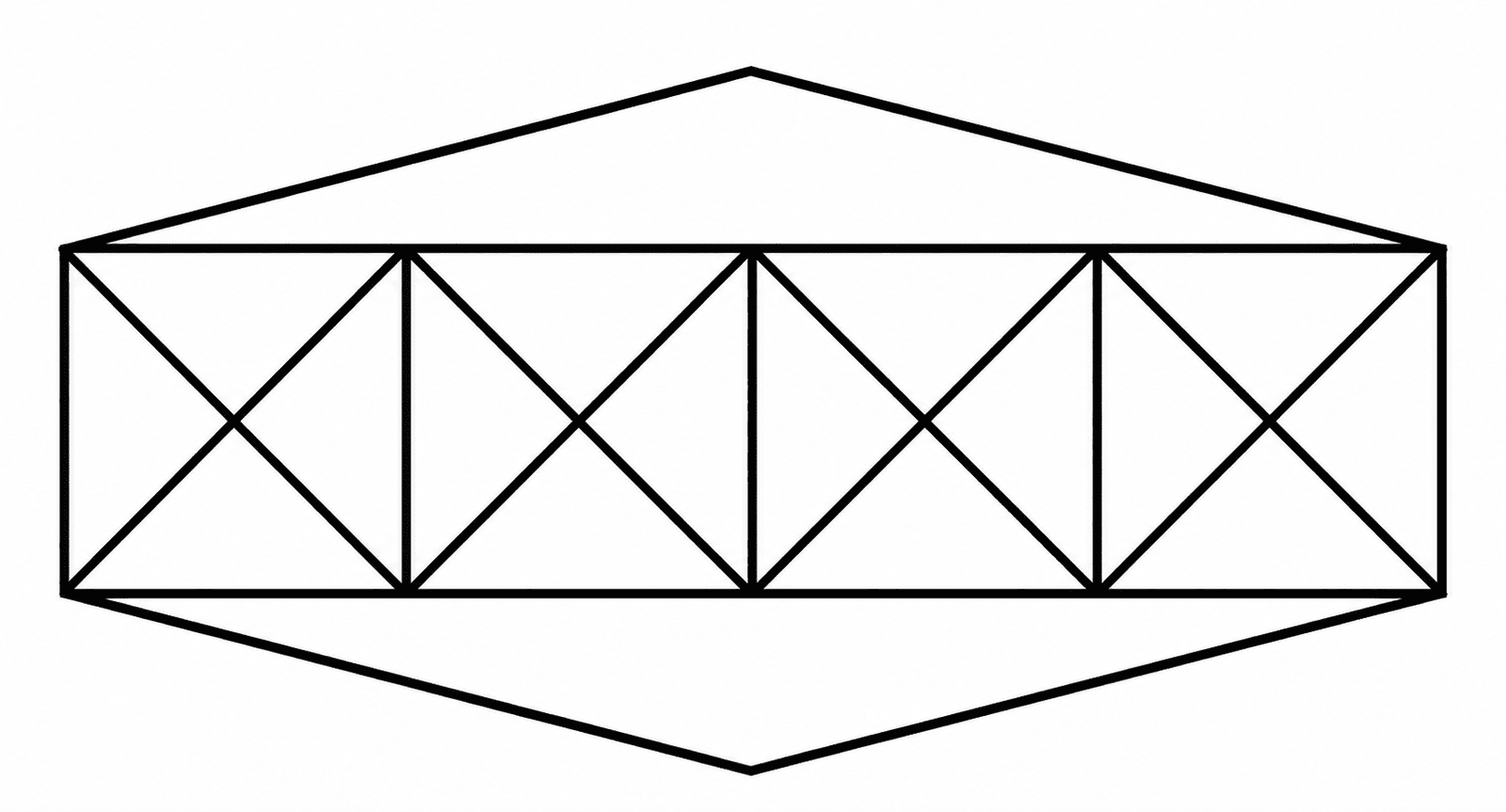
🔍 Analyze the Pattern
On carefully observing the labelled figure:
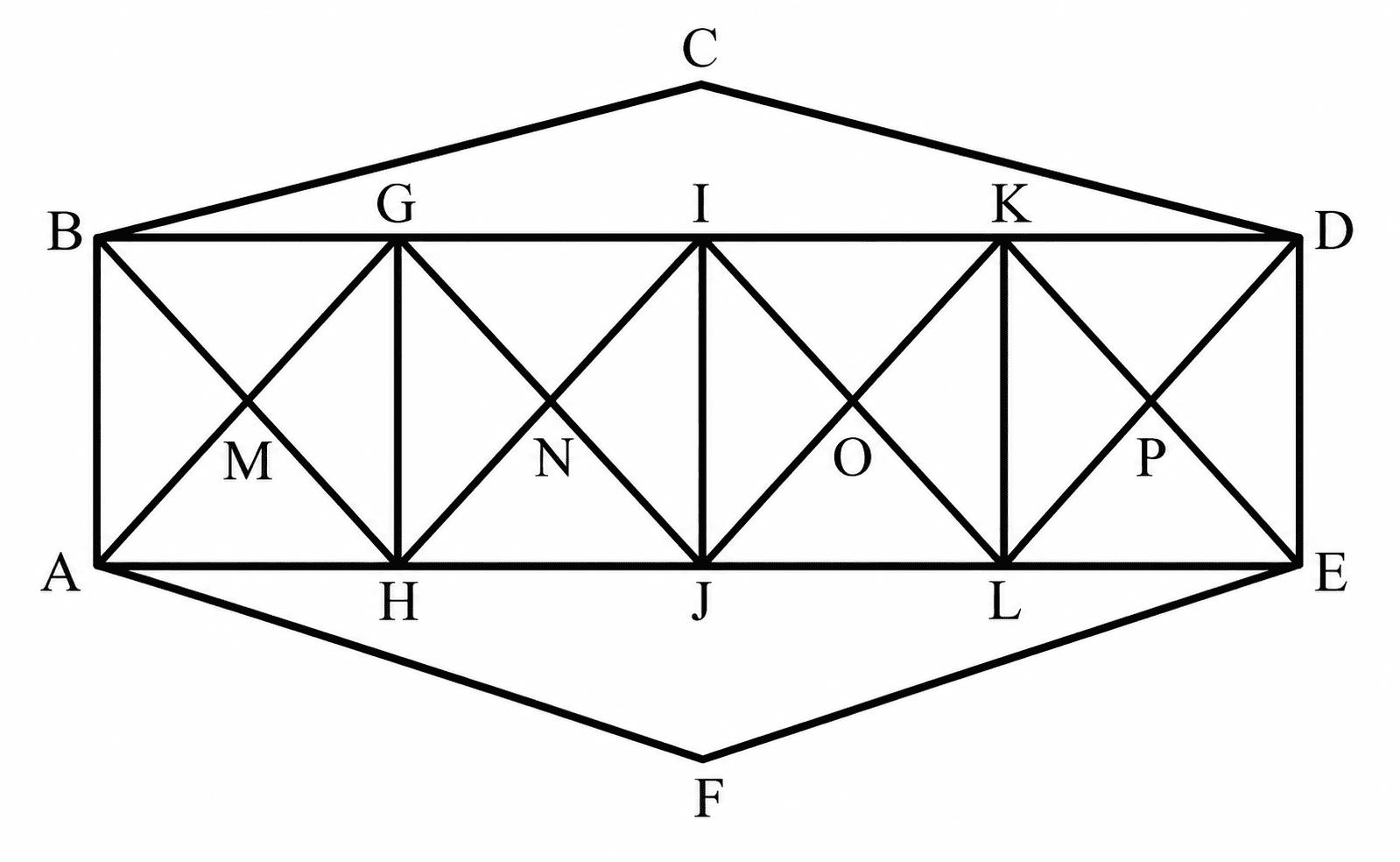
🔺 Count the Triangles
Using the labelled figure, the triangles can be counted systematically as follows:
BGM, GHM, HAM, ABM,
GIN, IJN, JHN, HGN,
IKO, KLO, LJO, JIO,
KDP, DEP, ELP, LKP,
BCD, AFE,
ABG, BGH, GHA, HAB,
HGI, GIJ, IJH, JHG,
JIK, IKL, KLJ, LJI,
LKD, KDE, DEL, ELK,
BHI, GJK, ILD,
AGJ, HIL, JKE
Total Triangles = 40
◻ Count the Squares
The squares present in the figure are:
- MGNH
- NIOJ
- OKPL
- GHAB
- GIJH
- IKLJ
- KDEL
Total Squares = 7
Correct Answer: Option (C) — 40 Triangles and 7 Squares
⚡ Quick Exam Tip
To avoid missing figures, first label all vertices and intersection points. Then count:
- The smallest triangles.
- Composite triangles formed by combining adjacent triangles.
- The smallest squares.
- The larger squares formed by combining adjacent squares.
Final Answer: 40 Triangles and 7 Squares → Option (C).
In each of the following questions, count the number of triangles and squares in the given figure.
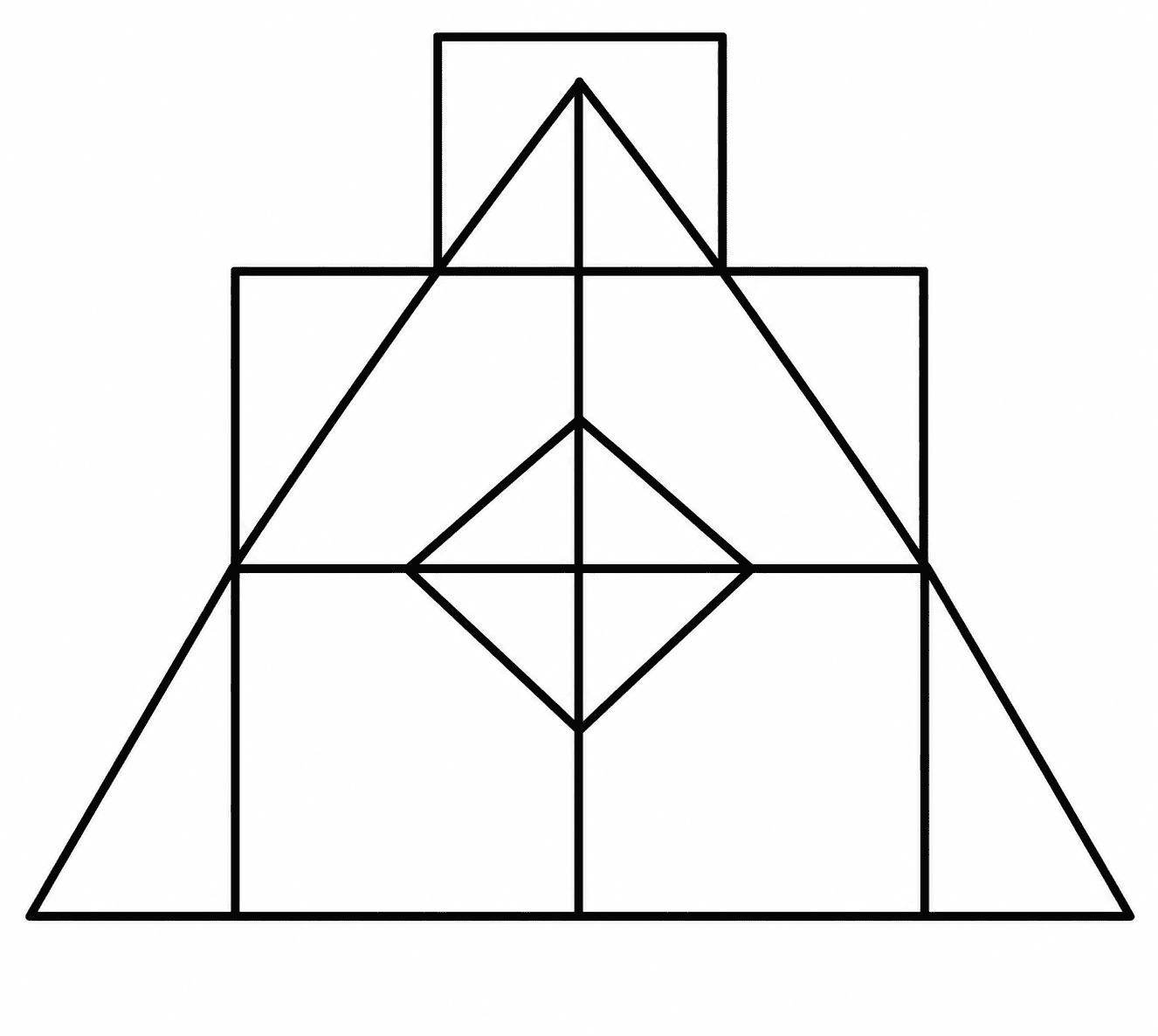
🔍 Analyze the Pattern
On carefully observing the labelled figure:
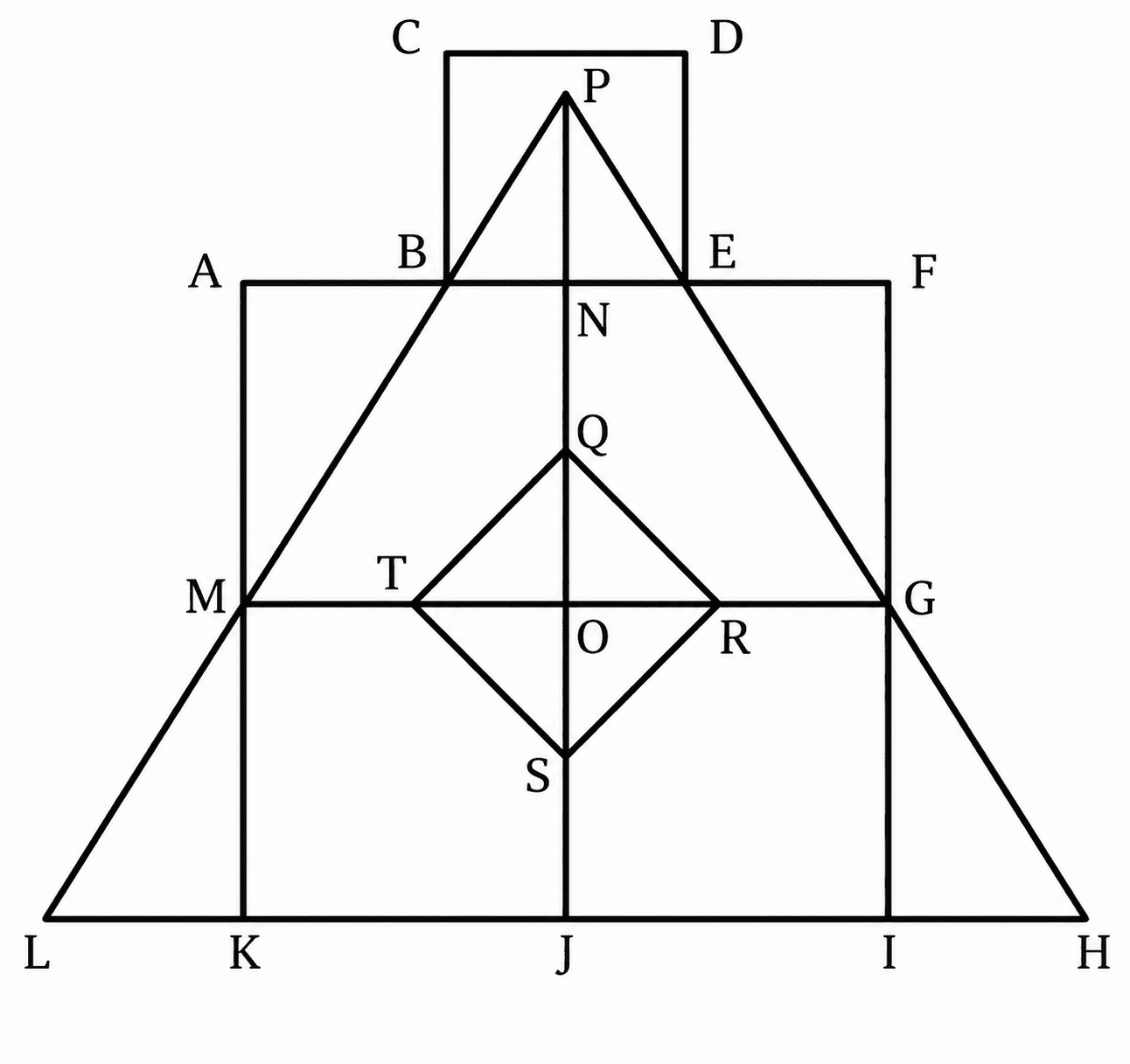
🔺 Count the Triangles
Using the labelled figure, the triangles can be counted systematically as follows:
BPN, PNE, ABM, EFG, MLK, GHI, QRO,
RSO, STO, QTO, BPE, TQR, QRS, RST,
STQ, MPO, GPO, LPJ, HPJ, MPG, LPG
Total Triangles = 21
◻ Count the Squares
The squares present in the figure are:
- KJOM
- JIGQ
- ANOM
- NFGO
- CDEB
- QRST
- AFIK
Total Squares = 7
Correct Answer: Option (A) — 21 Triangles and 7 Squares
⚡ Quick Exam Tip
Label all vertices and intersection points before counting. Count the smallest figures first, then the larger composite figures to avoid missing or double-counting shapes.
- Count the smallest triangles.
- Count composite triangles.
- Count the smallest squares.
- Finally, count the larger squares formed by combining smaller ones.
Final Answer: 21 Triangles and 7 Squares → Option (A).
In the adjoining figure, if the centres of all the circles are joined by horizontal and vertical lines, then find the number of squares that can be formed.
🔍 Analyze the Pattern
On carefully observing the figure, the centres of all the circles are joined by horizontal and vertical lines, forming a grid of squares.
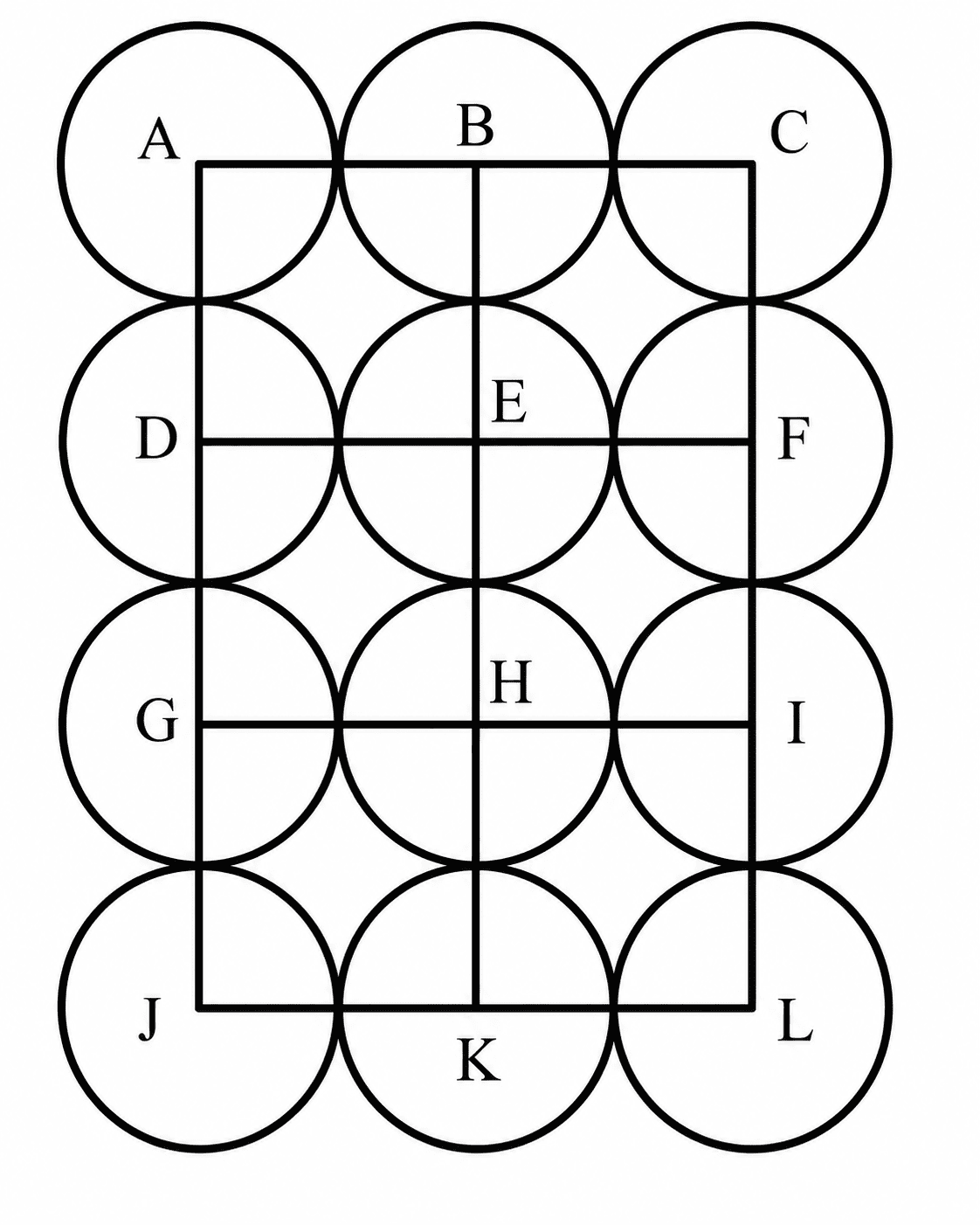
◻ Count the Squares
The squares can be counted as follows:
1 × 1 Squares (6):
- ABED
- BCFE
- DEHG
- EFIH
- GHKJ
- HILK
2 × 2 Squares (2):
- ACIG
- DFLJ
Total Squares = 6 + 2 = 8
Correct Answer: Option (C) — 8 Squares
⚡ Quick Exam Tip
When counting squares in a grid:
- Count all 1 × 1 squares first.
- Then count all possible 2 × 2 squares.
- Continue with larger squares, if any.
In this figure:
- 6 unit squares
- 2 composite (2 × 2) squares
Final Answer: 8 Squares → Option (C).
Directions to Solve (Q.47-49)
Study the following figure and answer the given questions based on this figure.
What is the minimum number of straight lines that are needed to construct the figure?
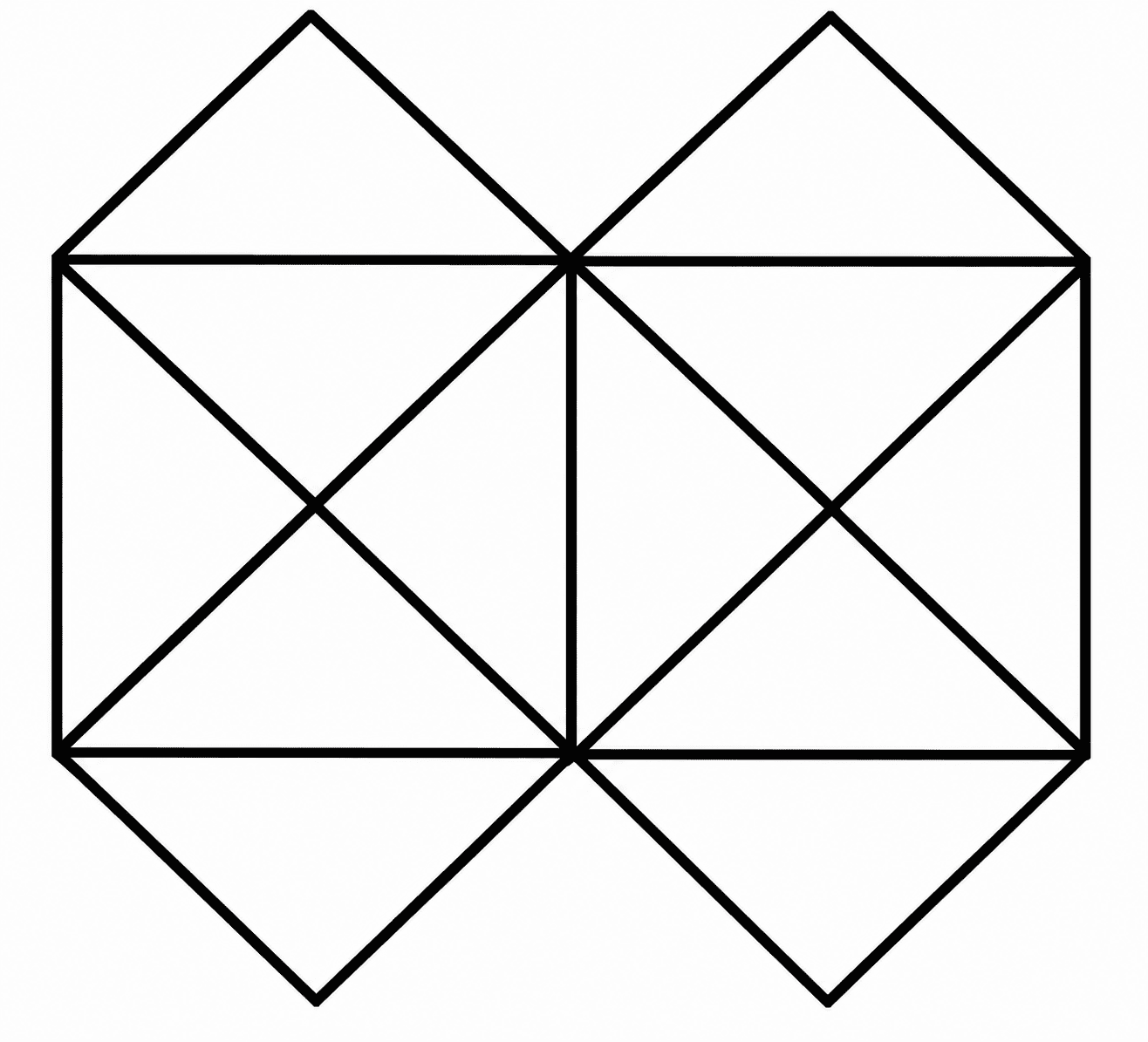
🔍 Analyze the Figure
To find the minimum number of straight lines required to construct the figure, count each continuous straight line only once. A line passing through one or more intersection points is still considered a single straight line as long as its direction does not change.
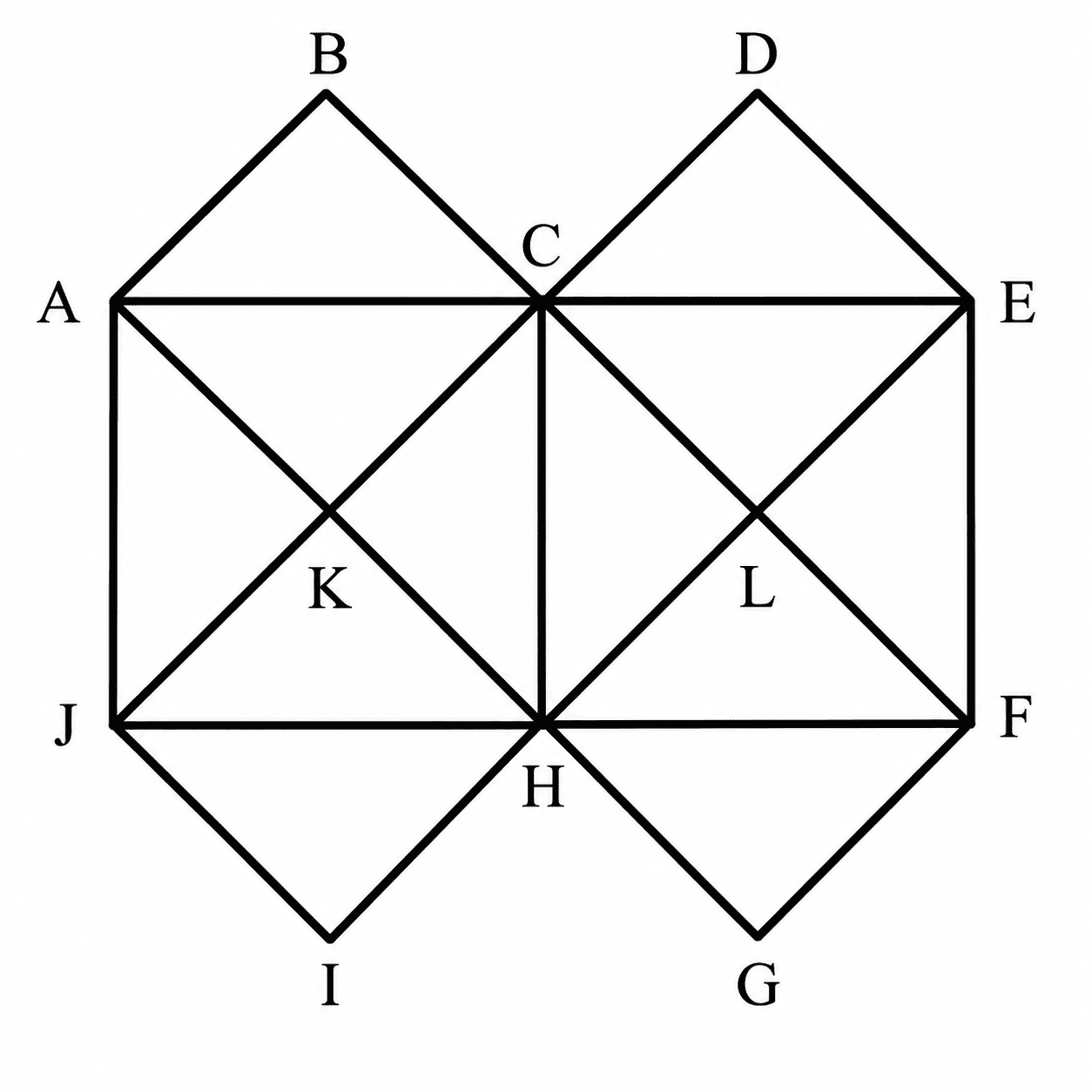
📏 Count the Straight Lines
The continuous straight lines in the figure are:
AE, JF, AJ, CH, EF, AG, BF, JD, IE, AB, DE, JI, FG
Total Straight Lines = 13
Correct Answer: Option (B) — 13 Straight Lines
💡 Quick Exam Tip
In questions asking for the minimum number of straight lines, count every continuous line only once. Do not split a line at intersection points unless the direction changes.
For this figure:
- Horizontal lines = 2
- Vertical lines = 3
- Diagonal lines = 8
2 + 3 + 8 = 13 Straight Lines
Final Answer: Option (B) — 13 Straight Lines.
Count the number of triangles in the figure.
🔍 Analyze the Figure
Count the triangles systematically by grouping them into small, medium and large triangles.
🔺 Count the Triangles
Small Triangles (10):
JHI, HFG, ACK, CHK, HJK, GEL, EFL, FHL, HCL, JAK
Medium Triangles (10):
JAC, ACH, CHJ, HJA, HCE, CEF, EFH, FHC, AHE, JCF
Large Triangles (2):
ABC, CDE
Total Triangles = 22
Correct Answer: Option (C) — 22 Triangles
💡 Quick Exam Tip
When counting triangles, begin with the smallest ones, then count all composite triangles, and finally check for the largest triangles formed by combining smaller regions.
Final Answer: 22 Triangles → Option (C).
How many squares does the figure contain?
🔍 Analyze the Figure
Count both the normal squares and the rotated (diamond-shaped) squares formed in the figure.
◻ Count the Squares
Rotated Squares (5):
- ABCK
- CDEL
- JKHI
- HLFG
- KCLH
Normal Squares (2):
- ACHJ
- CEFH
Total Squares = 7
Correct Answer: Option (C) — 7 Squares
💡 Quick Exam Tip
In counting-of-figures questions, always check for rotated (diamond) squares in addition to normal squares. The inner square KCLH is commonly overlooked, which is why many people incorrectly count only 6 squares.
Final Answer: 7 Squares → Option (C).
How many parallel quadrilaterals are in the given figure?
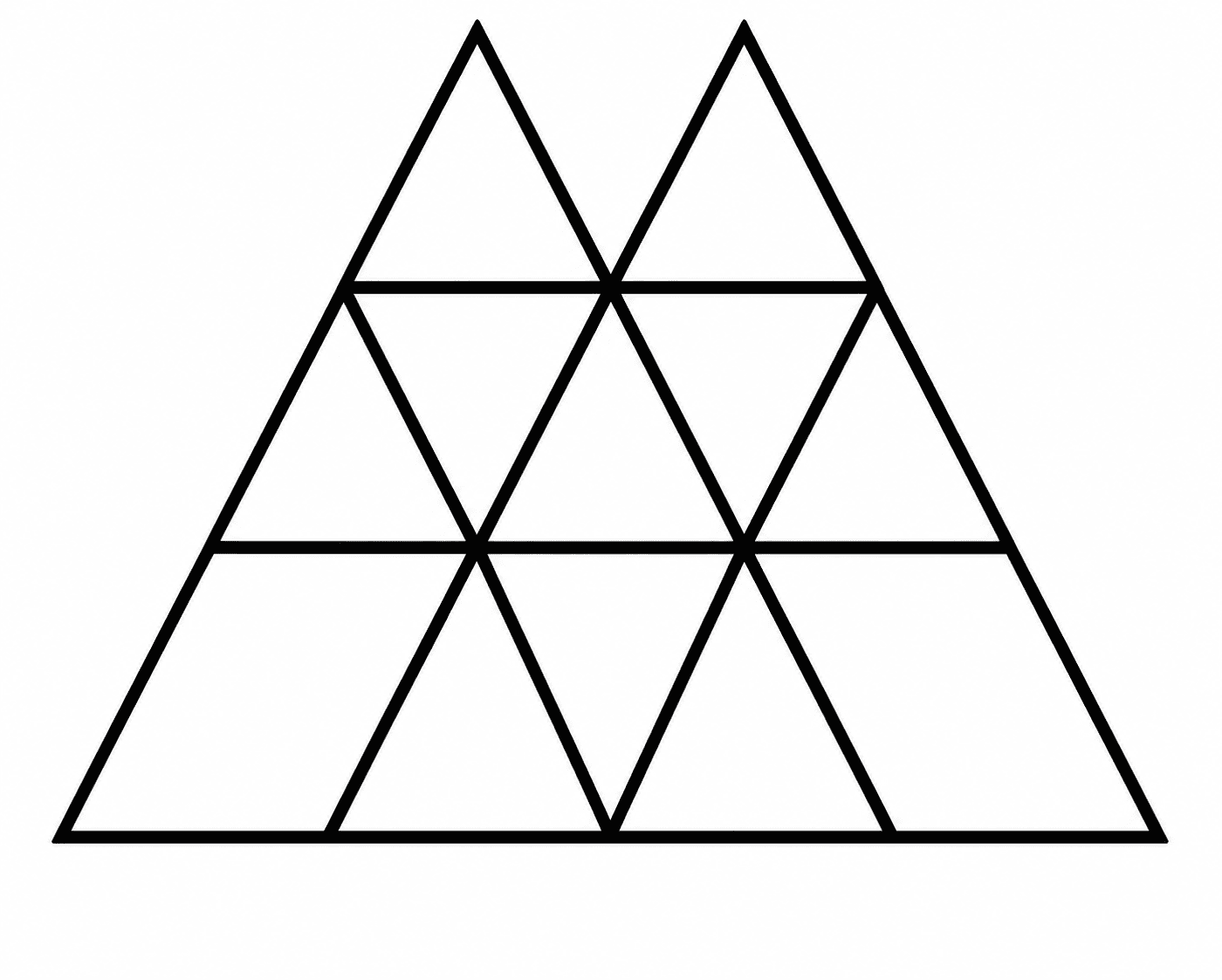
🔍 Analyze the Pattern
On carefully observing the labelled figure:
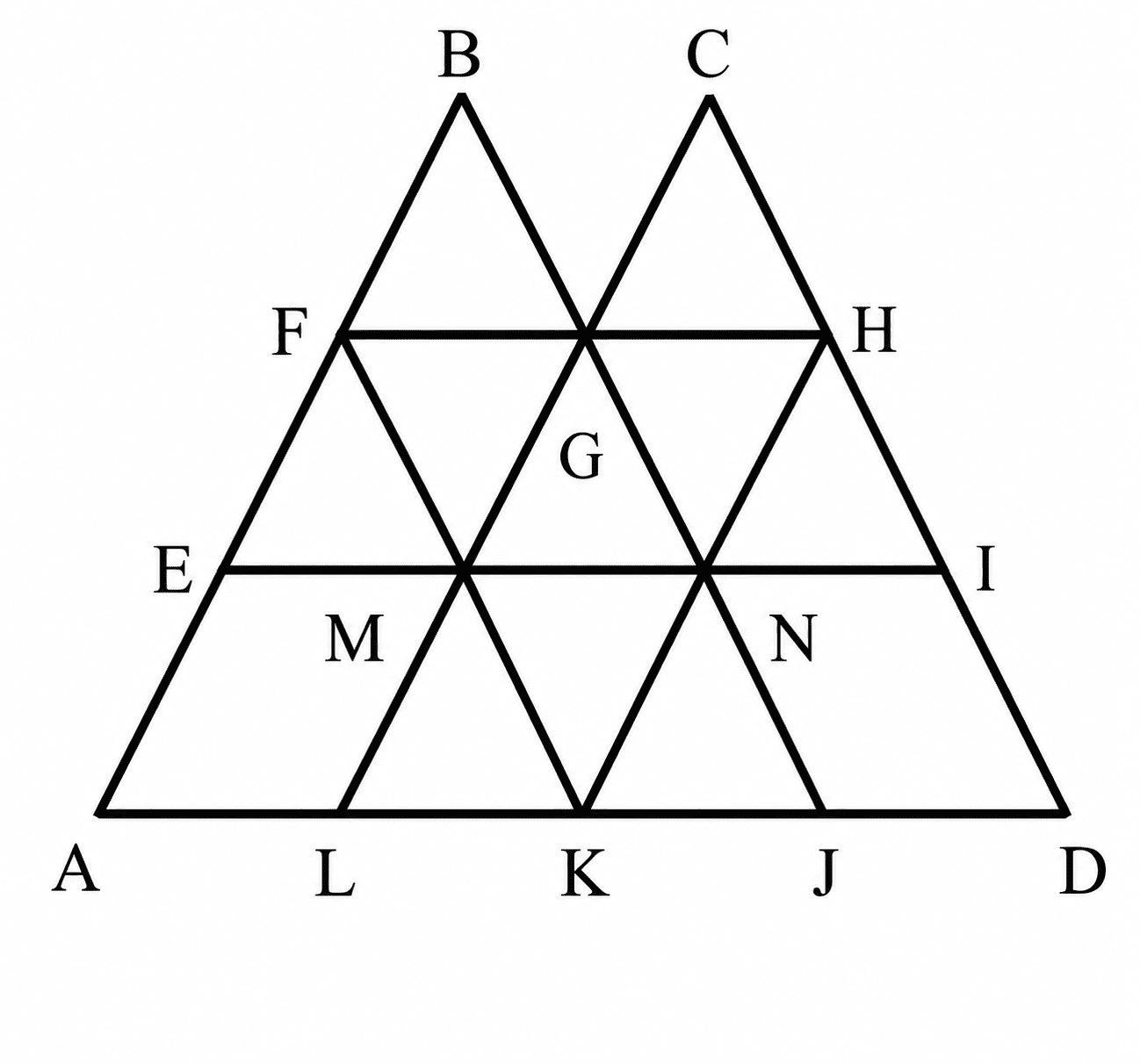
▱ Count the Parallelograms
The parallelograms present in the figure are:
EMLA, NIDJ, BFMG, CGNH, GMKN, FGME, GHNM, MNKL, FGNM, GHIN, MNJK, FGLA, ENKA, GHDJ, MIDK, FGJK, GHKL, FBNK, CHKM, EFHN, MFHI, FHKA, FHDK
Total Parallelograms = 23
Correct Answer: Option (A) — 23 Parallelograms