Counting of Figures - Basic Level
Practice and master this topic with our carefully crafted questions.
Learn the basics of counting figures with easy and concept-building questions. Practice counting lines, triangles, squares, rectangles and other common shapes.
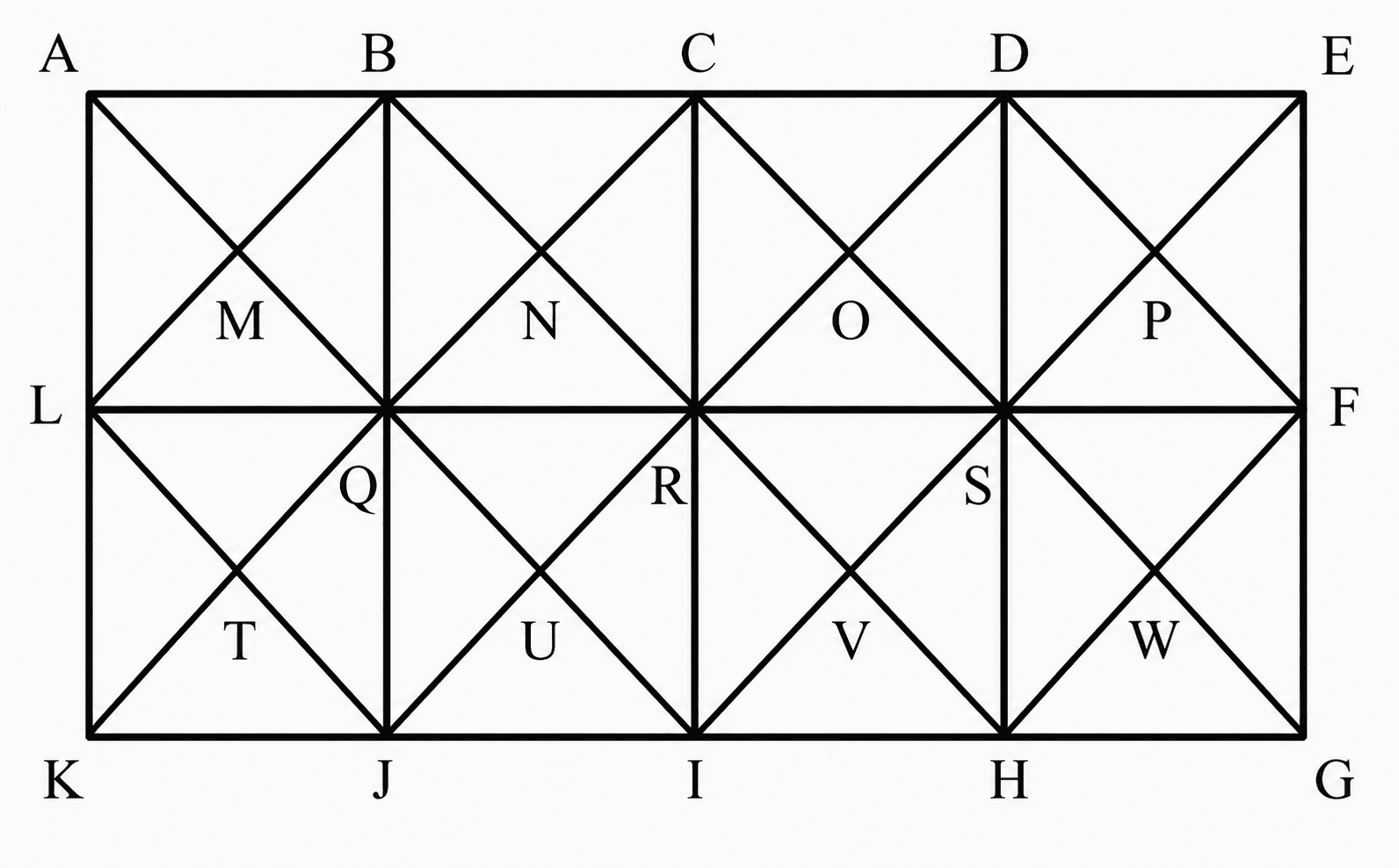
What is the number of straight lines and the number of triangles in the given figures?
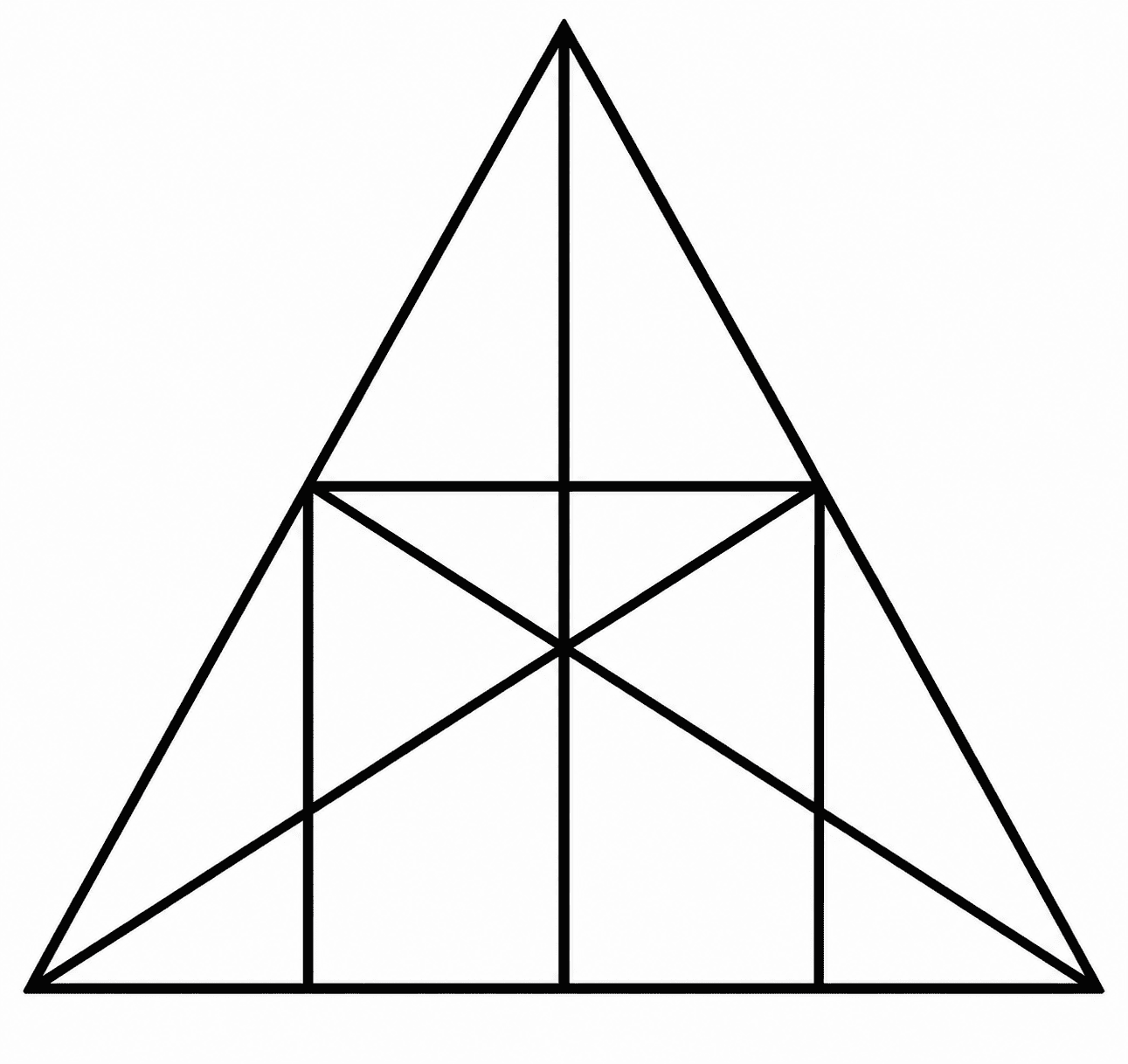
🔍 Analyze the Pattern
On carefully observing the labelled figure:
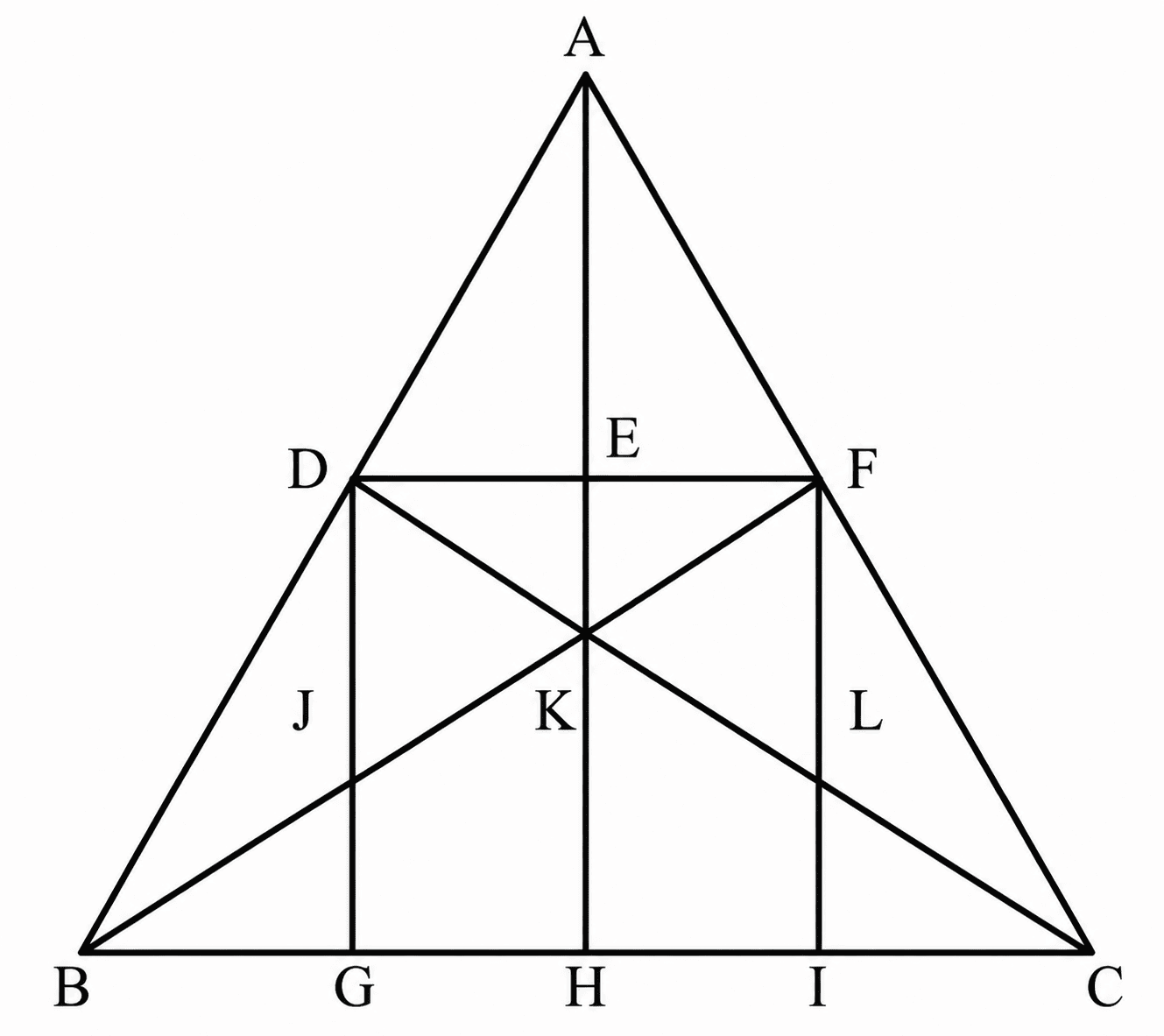
🔍 Count the Straight Lines
A complete straight line is counted as one line even when it is crossed by another line.
DF, BC, DG, AH, Fl, AB, AC, BF DC
The figure contains:
- Left outer slanting line
- Right outer slanting line
- Bottom horizontal line
- Central vertical line
- Upper horizontal line
- Left vertical line
- Right vertical line
- Diagonal from upper-left to bottom-right
- Diagonal from bottom-left to upper-right
Total Straight Lines = 9
🔺 Count the Triangles
Next, count the triangles systematically by considering the small triangles first and then combining adjacent sections to form larger triangles.
The figure contains small, medium, large and composite triangles formed by the horizontal, vertical and diagonal lines.
ADE, AEF, DEK, EFK, DJK, FLK, DJB, FLC, BJG, LIC, ADF, AFK, DFK, ADK, DKB, I FCK, BKH, KHC, DGB, FIC, DFJ, DFL, ABK, ACK, BFI, CDG, DFB, DFC, BKC, ABJ, ACH, ABF, ACD, BFC, CDB
Total Triangles = 36
Correct Answer: Option (C) 9 straight lines and 36 triangles
⚡ Quick Exam Shortcut
For straight lines, count each continuous line only once, even if it passes through several intersection points.
For triangles, count from the smallest shapes to the largest composite shapes to avoid missing overlapping triangles.
Shortcut Answer: 9 straight lines + 36 triangles → Option (C).
In each of the following questions count the number of squares in the given figure
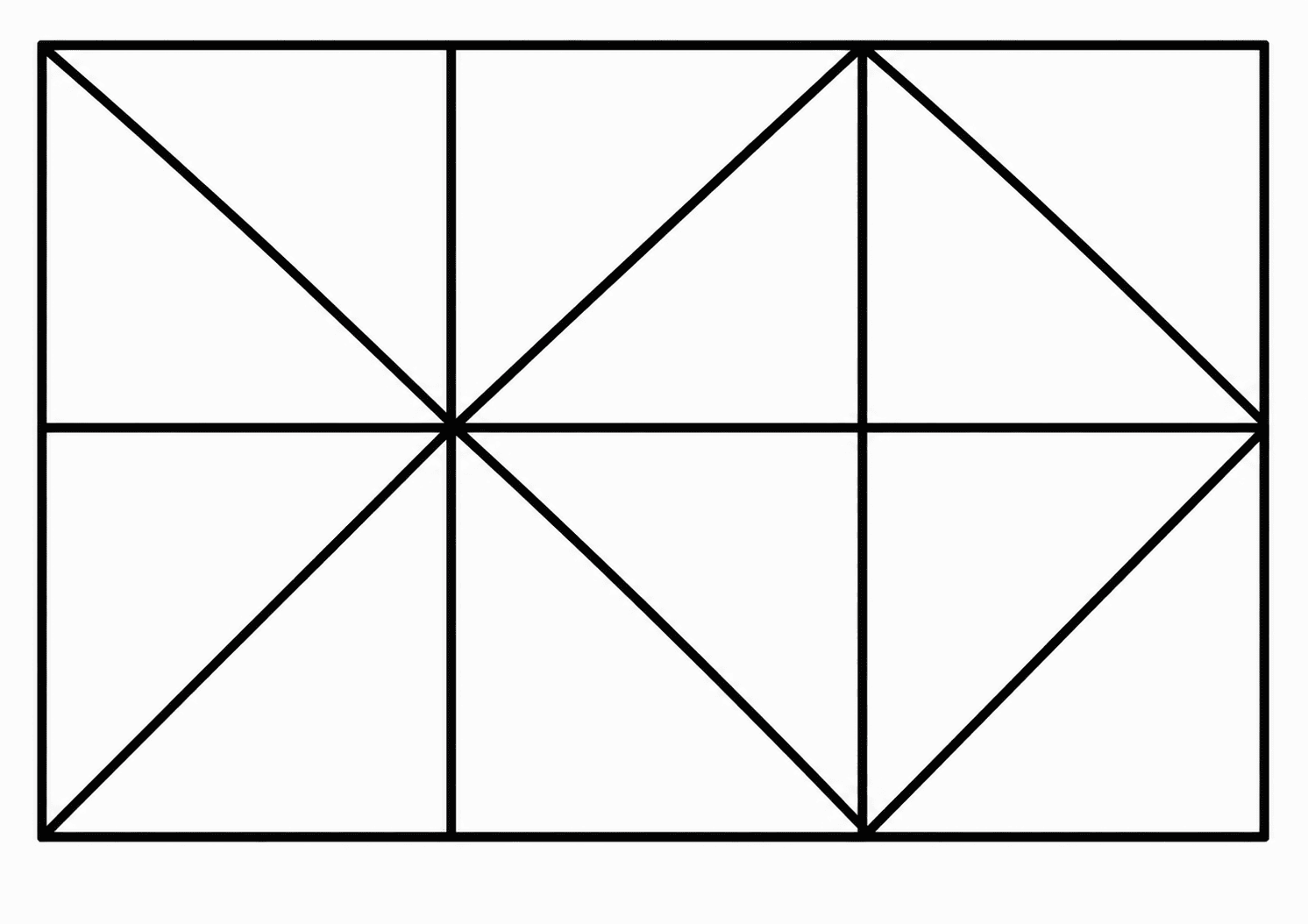
🔍 Analyze the Pattern
Count the squares systematically, starting with the smaller squares and then moving to the larger squares.
On carefully observing the labelled figure:
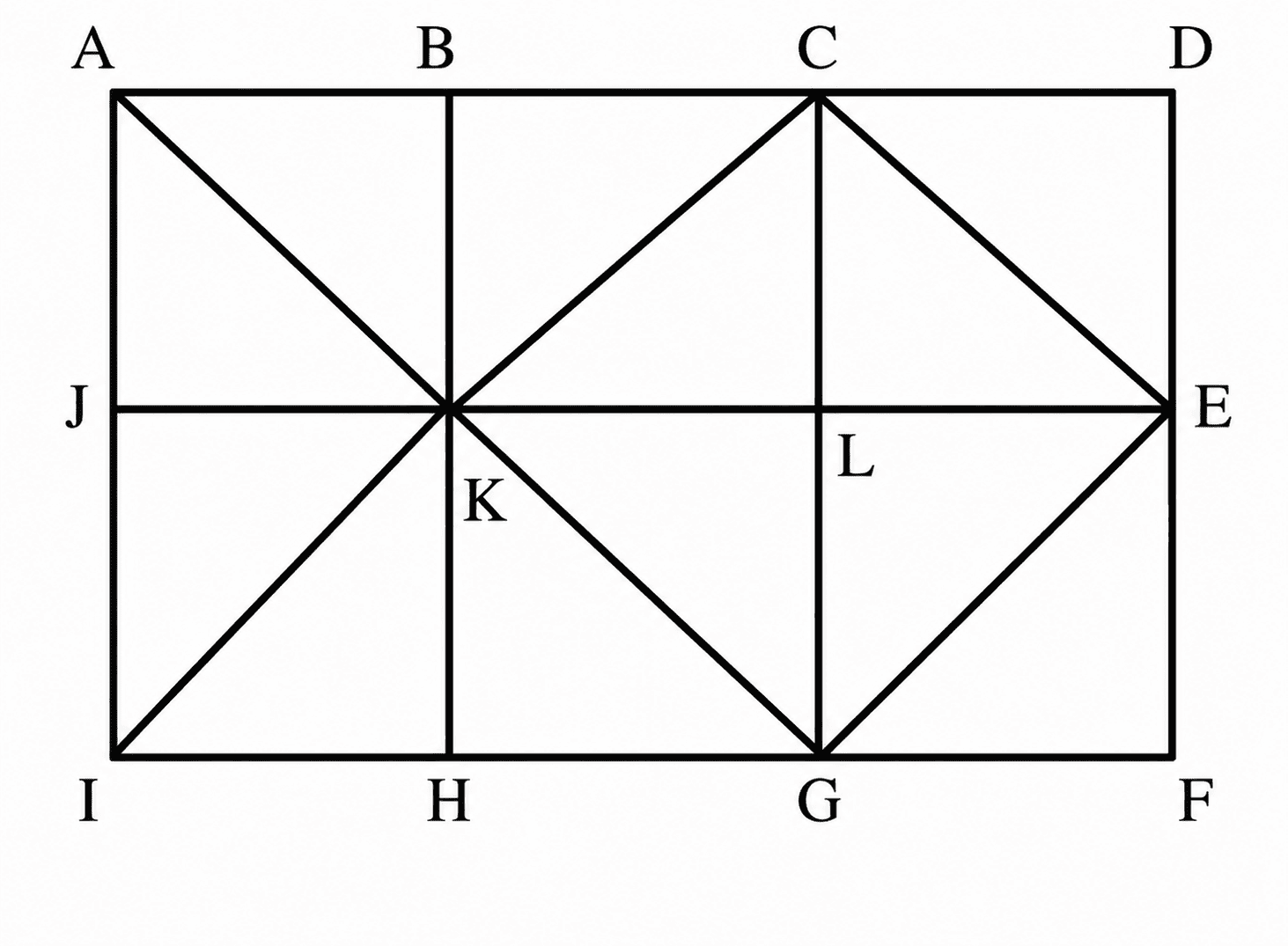
The squares formed in the figure are:
ABKJ, BCLK, CDEL, LEFG, KLGH JKHI, CEGK, ACGI, BDFH
Therefore, the total number of squares is:
Total squares = 9
So, the above figure has 9 squares.
Correct Answer: Option (C)
In each of the following questions count the number of squares in the given figure.
🔍 Analyze the Pattern
Count the squares systematically, starting with the smaller squares and then moving to the larger squares.
On carefully observing the labelled figure:
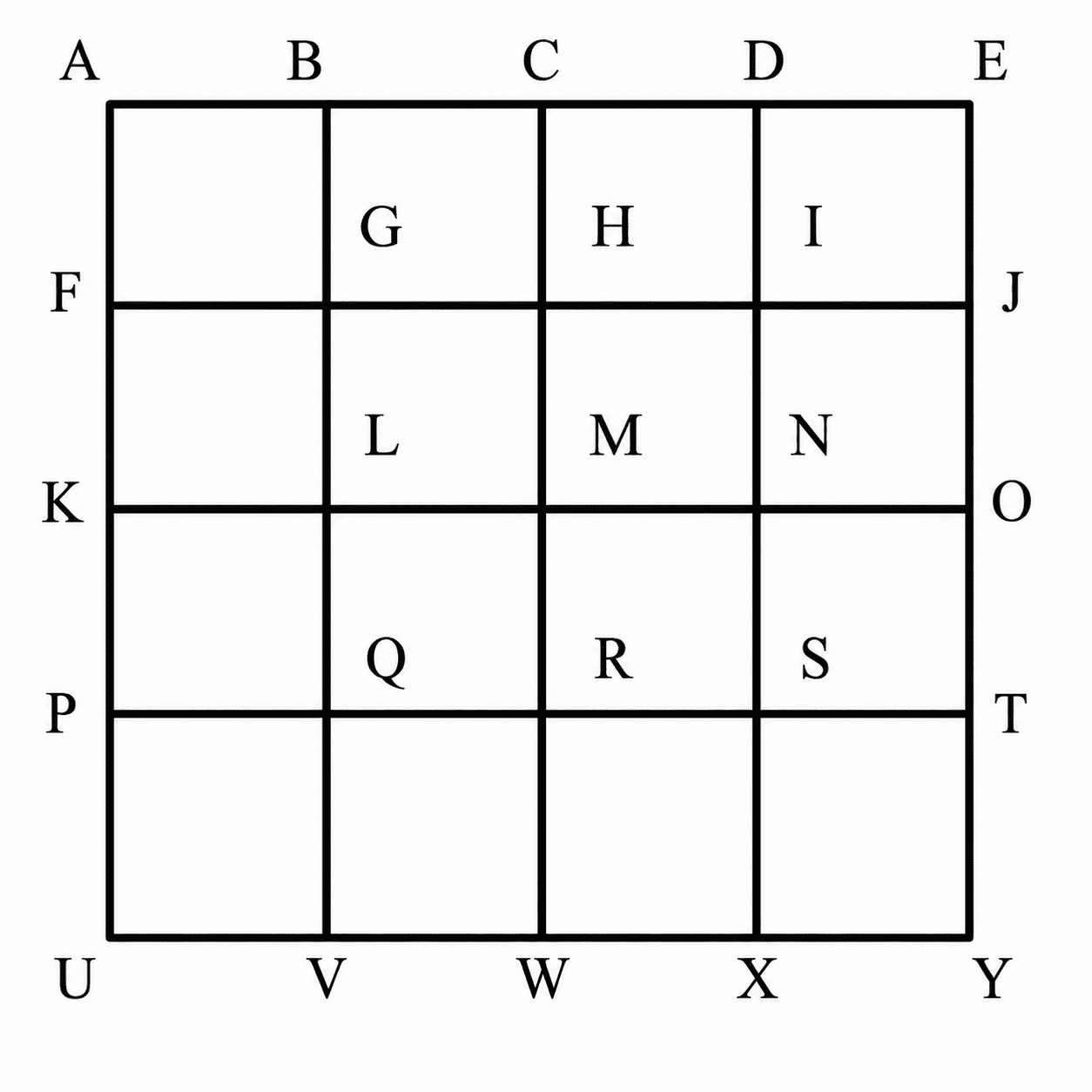
The squares formed in the figure are:
ABGF, BCHG, CDIH, DEJI, FGLK, GHML, H1NM, IJON, KLQP, LMRQ, MNSR, NOTS, PQVU, QRWV, RSXW, STYX, ACMK, BDNL, CEOM, FHRP, GISQ, HJTR, KMWU, LNXV, MOYW, ADSP, BETQ, FIXU, GJYV, AEYU
Therefore, the total number of squares is:
Total squares = 30
So, the above figure has 30 squares.
Correct Answer: Option (B)
In each of the following questions count the number of squares in the given figure.
🔍 Analyze the Pattern
Count the squares systematically, starting with the smaller squares and then moving to the larger squares.
On carefully observing the labelled figure:
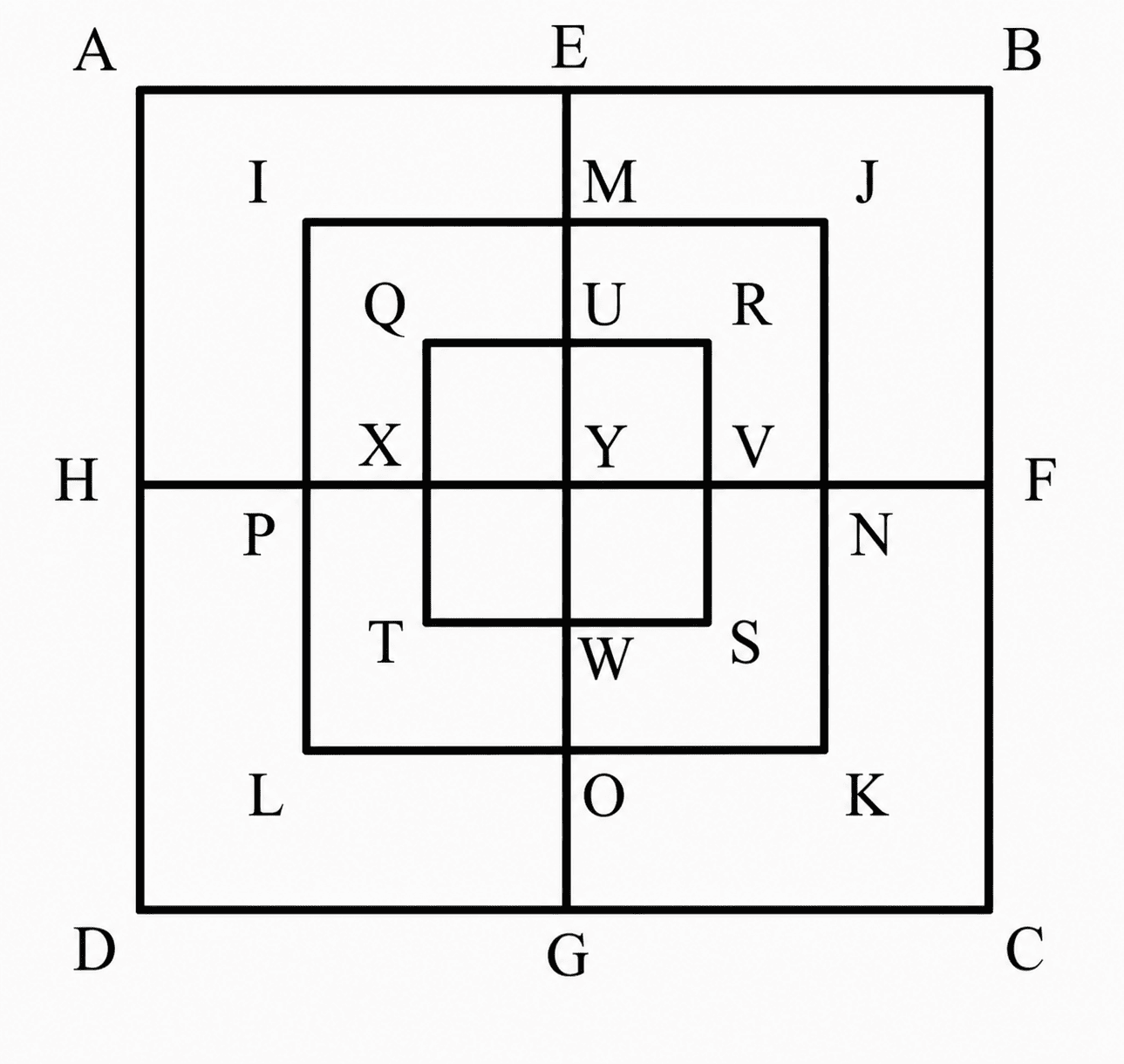
The squares formed in the figure are:
QUYX, URSY, YVSW, XYWT, IMYP, MJNY, YNKO, PYOL, AEYH, EBFY, YFCG, HYGD, QRST, IJKL, ABCD
Therefore, the total number of squares is:
Total squares = 15
So, the above figure has 15 squares.
Correct Answer: Option (C)
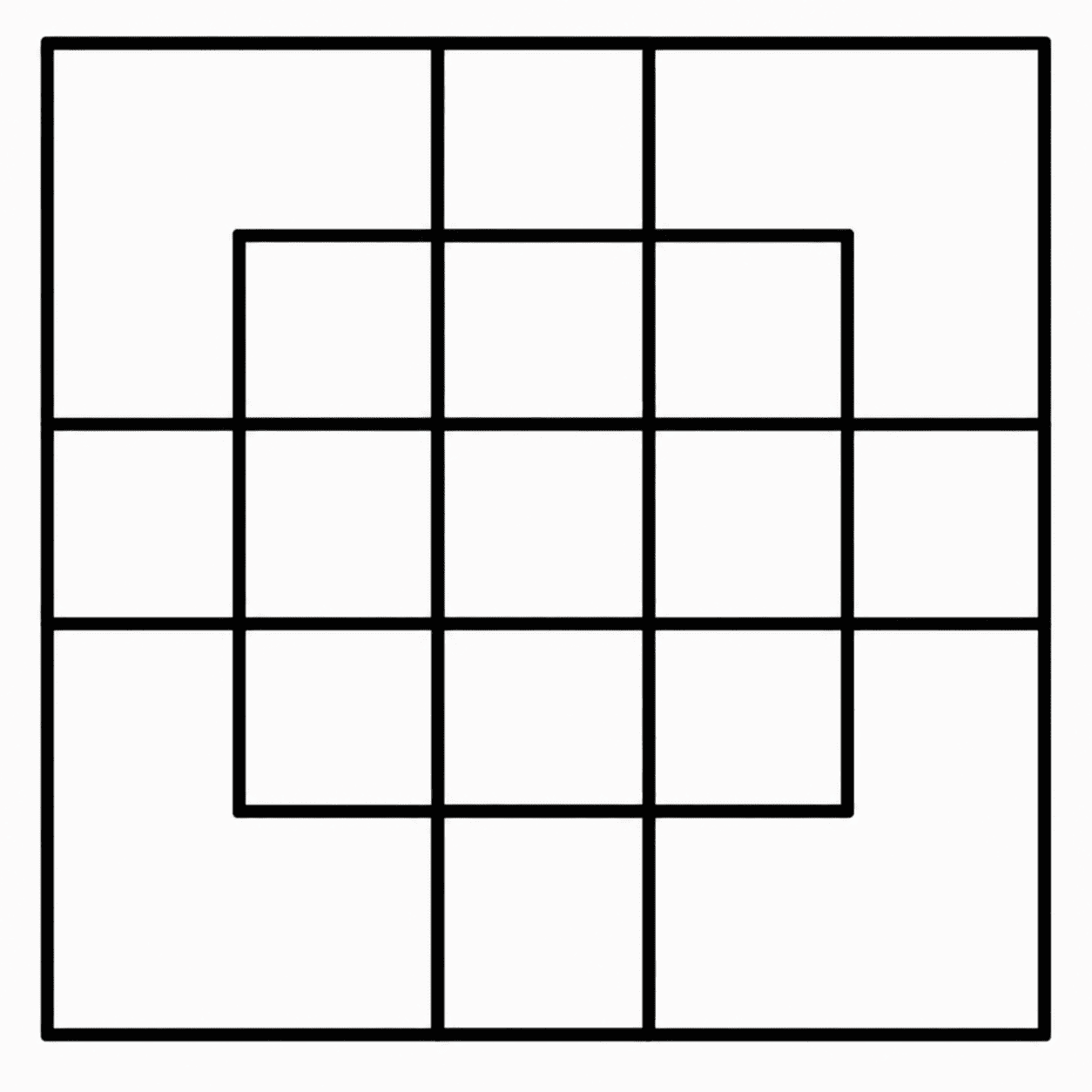
In each of the following questions count the number of squares in the given figure.
🔍 Analyze the Pattern
Count the squares systematically, starting with the smaller squares and then moving to the larger squares.
On carefully observing the labelled figure:
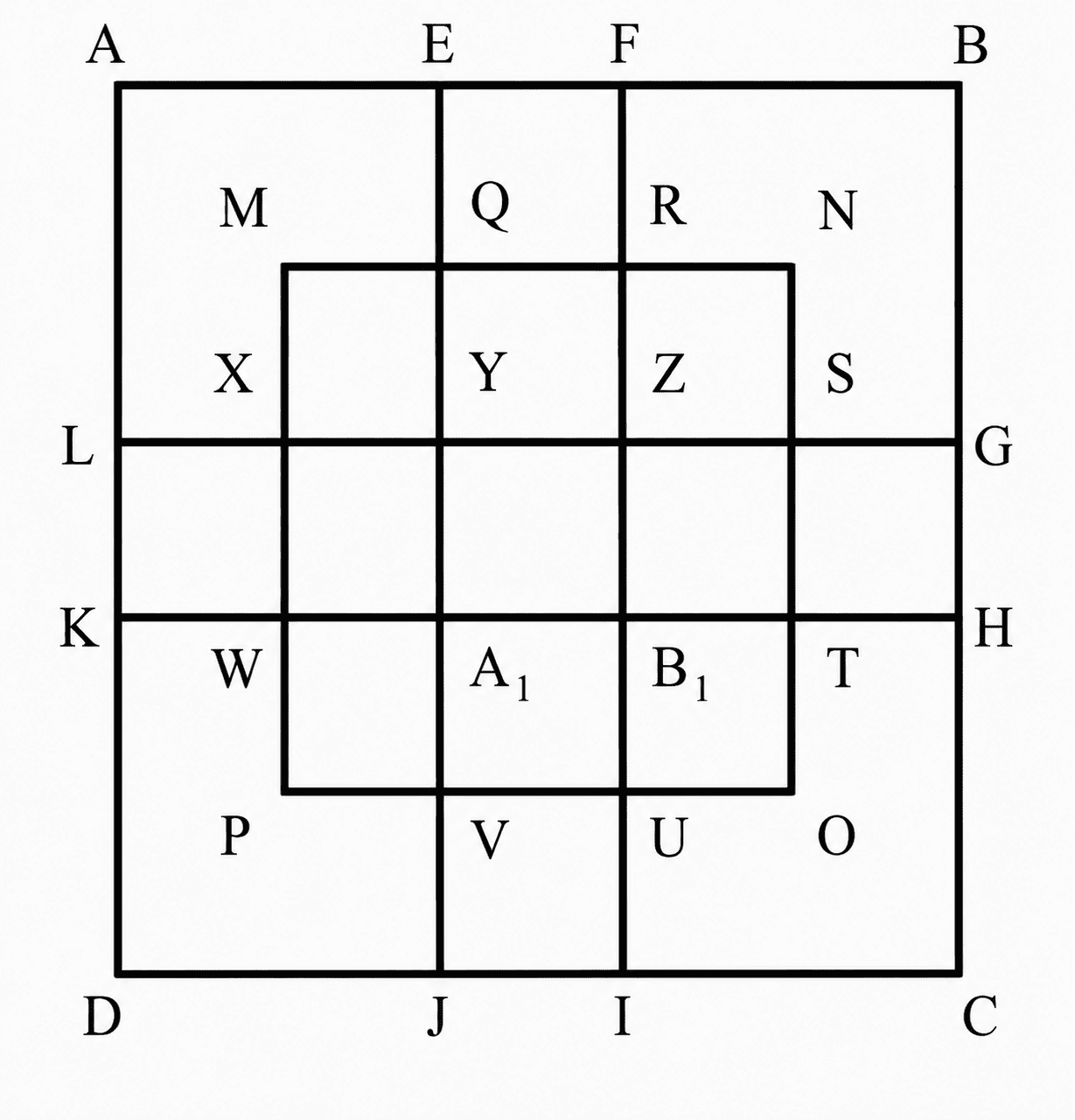
The squares formed in the figure are:
EFRQ, MQYX, QRZY, RNSZ, LXWK, XYA,W, YZBA, ZSTB, SGHT, WAVP, AUV, BTOU, VUIJ, AEYL, FBGZ, KAJD, BHCI, MRBW, QNTA XZUP, YSOV, AFB1K, EBHA, LZID, YGCJ, MNOP, ABCD.
Therefore, the total number of squares is:
Total squares = 27
So, the above figure has 27 squares.
Correct Answer: Option (D)
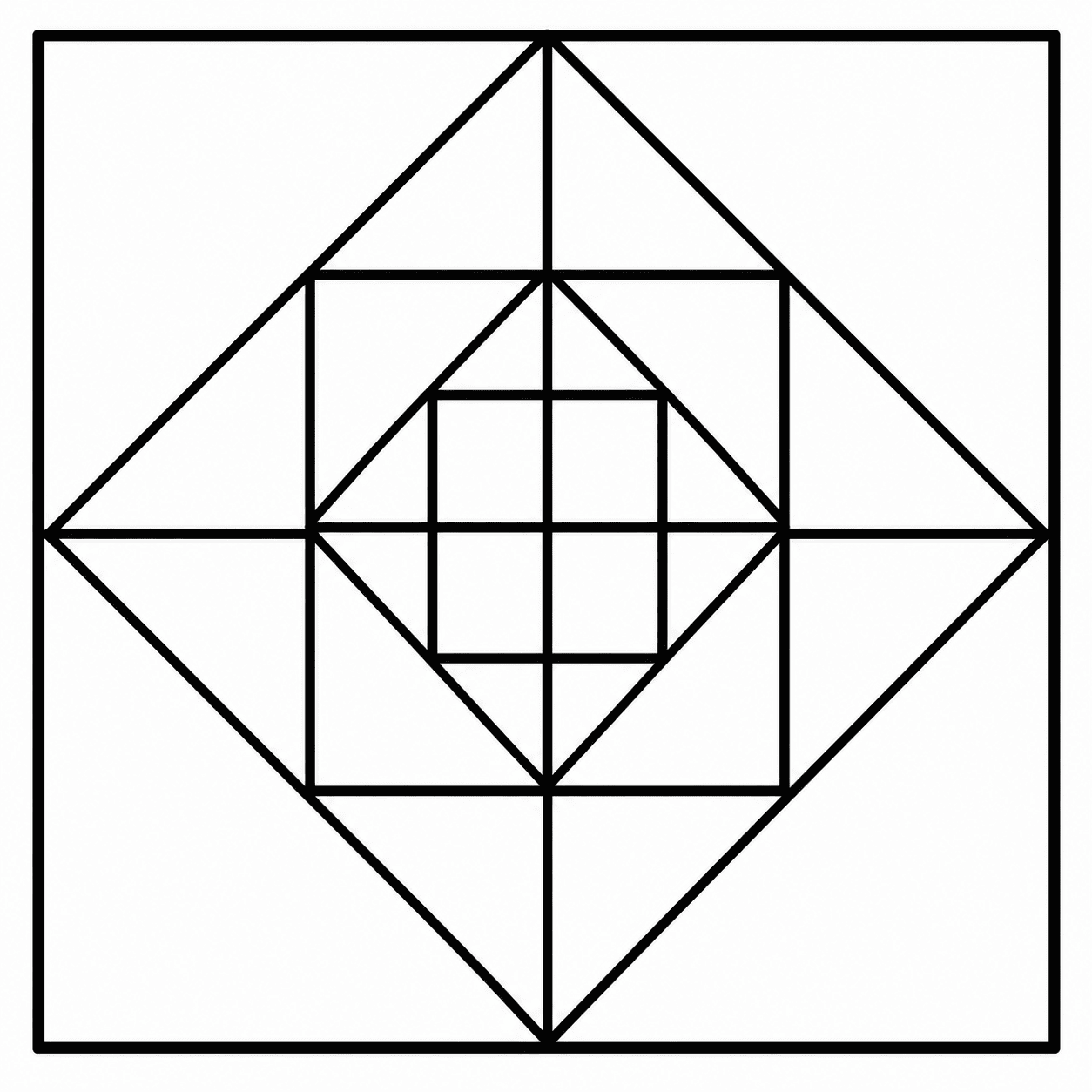
In each of the following questions count the number of squares in the given figure.
🔍 Analyze the Pattern
Count the squares systematically, starting with the smaller squares and then moving to the larger squares.
On carefully observing the labelled figure:
The squares formed in the figure are:
QVYU, VRWY, YWSX, UYXT, IMYP, MJNY, YN£O, PYOL, QRST, AEYH, EBFY, YFCG, HYGD, MNOP, IJKL, EFGH, ABCD
Therefore, the total number of squares is:
Total squares = 17
So, the above figure has 17 squares.
Correct Answer: Option (D)
In each of the following questions count the number of squares in the given figure.
🔍 Analyze the Pattern
Count the squares systematically, starting with the smaller squares and then moving to the larger squares.
On carefully observing the labelled figure:
The squares formed in the figure are:
BNQM, CORN, DPSO, MQTL, NRUQ, OSVR, PFWS, QUJT, RVIU, SWHV, ABQL, BCRQ, CDSR, DBFS, LQJK, QRIJ, RSHI, SFGH, BRJL, CSIQ, DFHR, ACIK, BDHJ, CEGI
Therefore, the total number of squares is:
Total squares = 24
So, the above figure has 24 squares.
Correct Answer: Option (C)
In each of the following questions count the number of squares in the given figure.
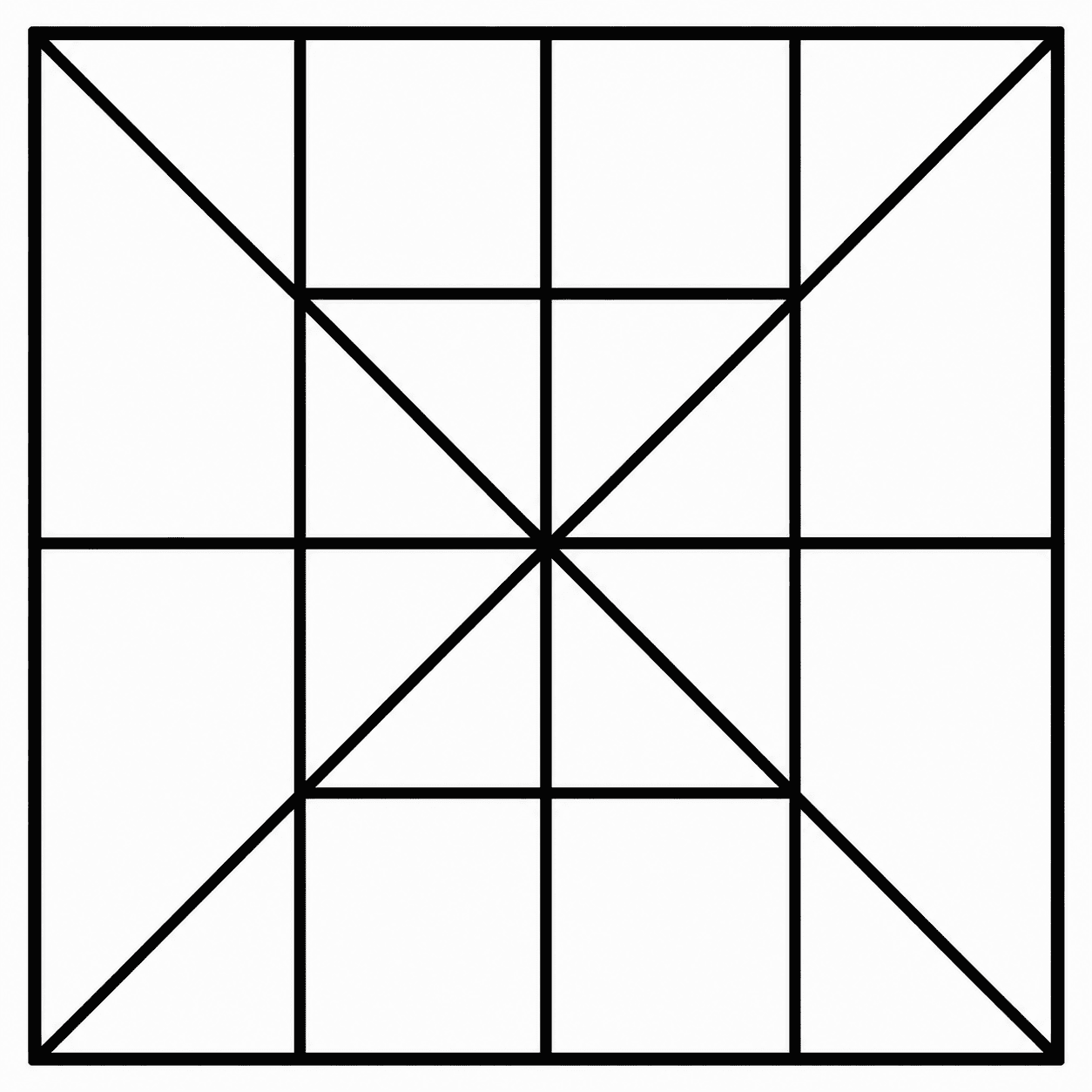
🔍 Analyze the Pattern
Count the squares systematically, starting with the smaller squares and then moving to the larger squares.
On carefully observing the labelled figure:
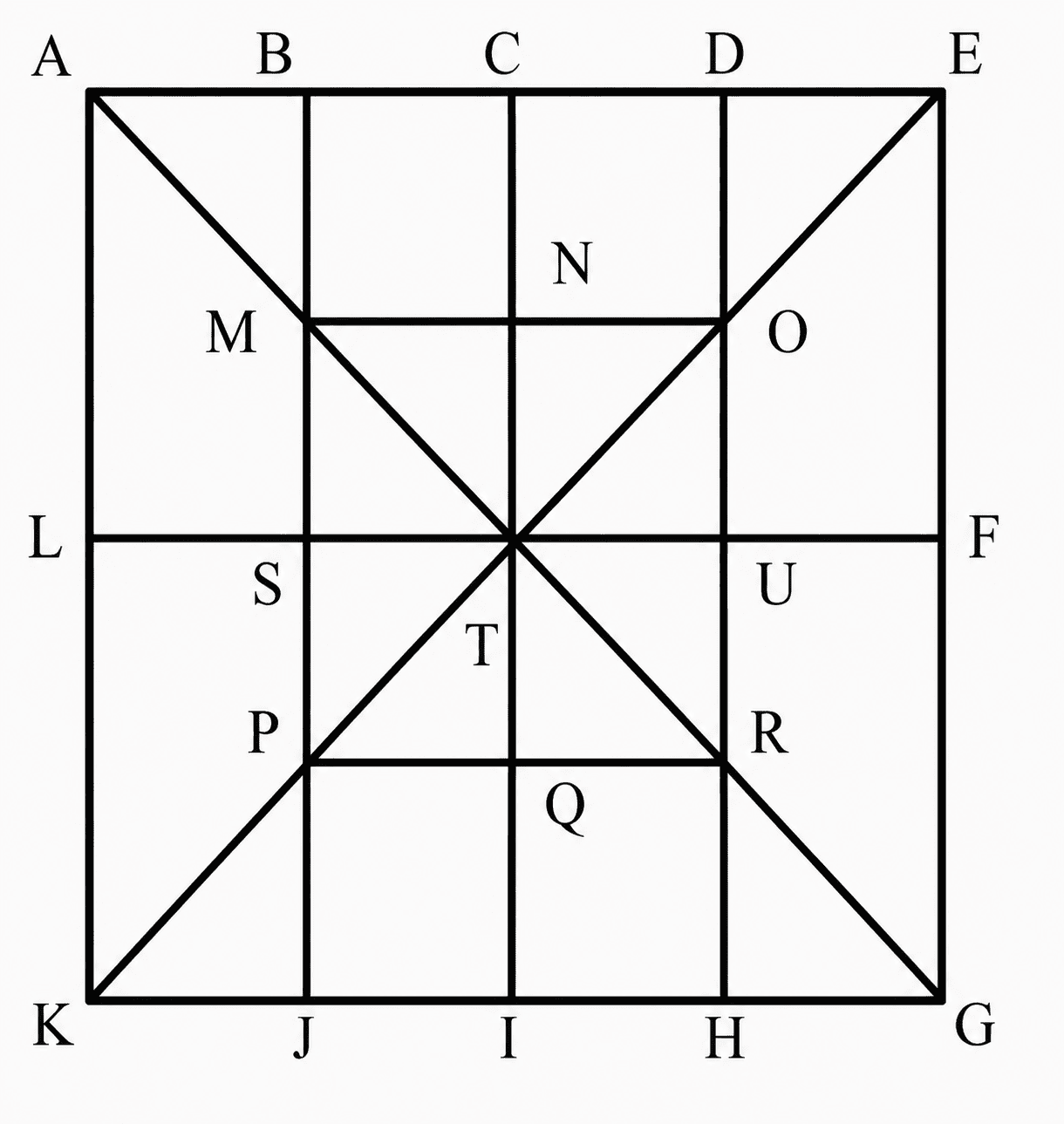
The squares formed in the figure are:
BCNM, CDON, PQIJ, QRHI, MNTS, NOUT, STQP, TURQ, ACTL, CEFT, TFGI, LTIK, BDUS, SUHJ, MORP, AEGK
Therefore, the total number of squares is:
Total squares = 16
So, the above figure has 16 squares.
Correct Answer: Option (B)
In each of the following questions count the number of squares in the given figure.
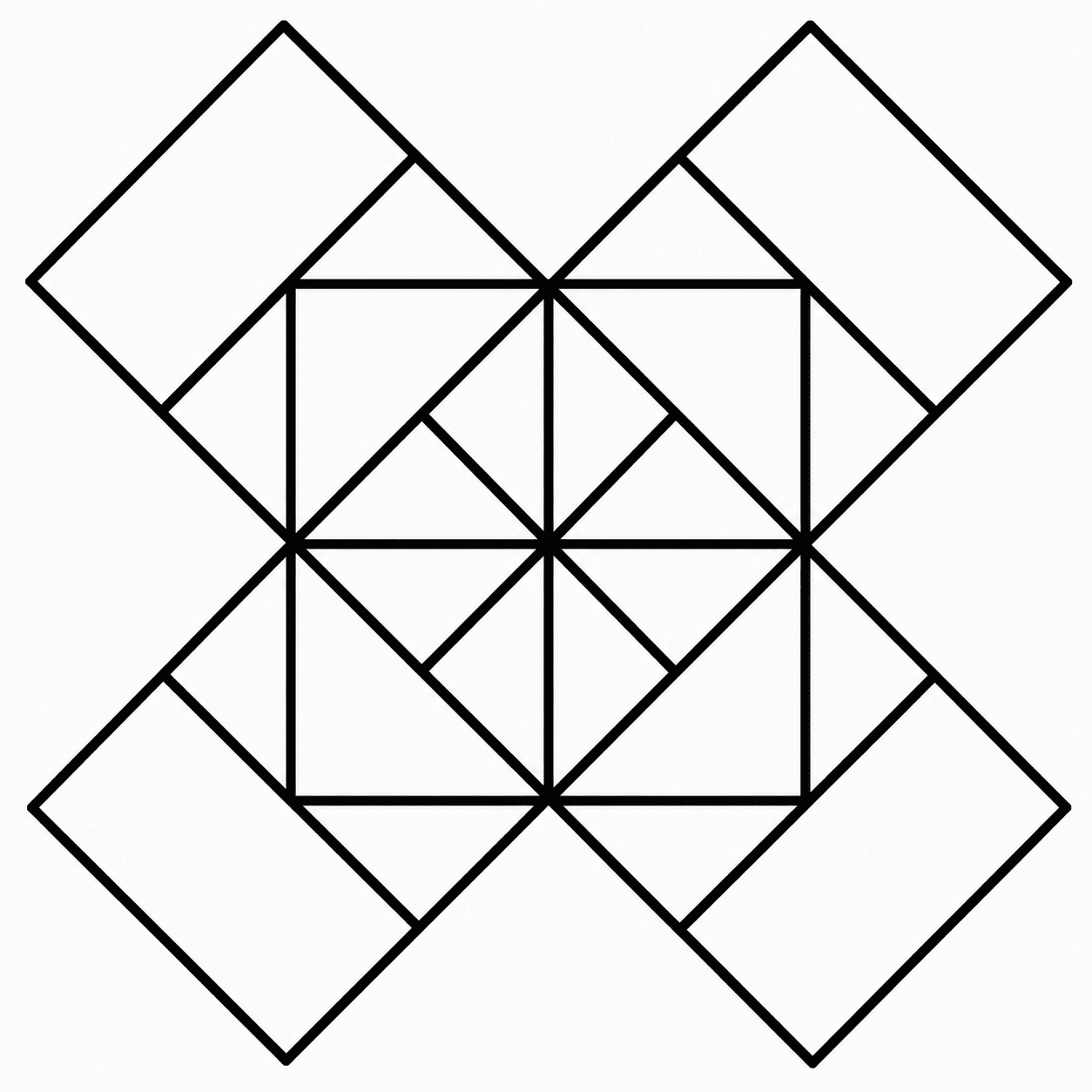
🔍 Analyze the Pattern
Count the squares systematically, starting with the smaller squares and then moving to the larger squares.
On carefully observing the labelled figure:
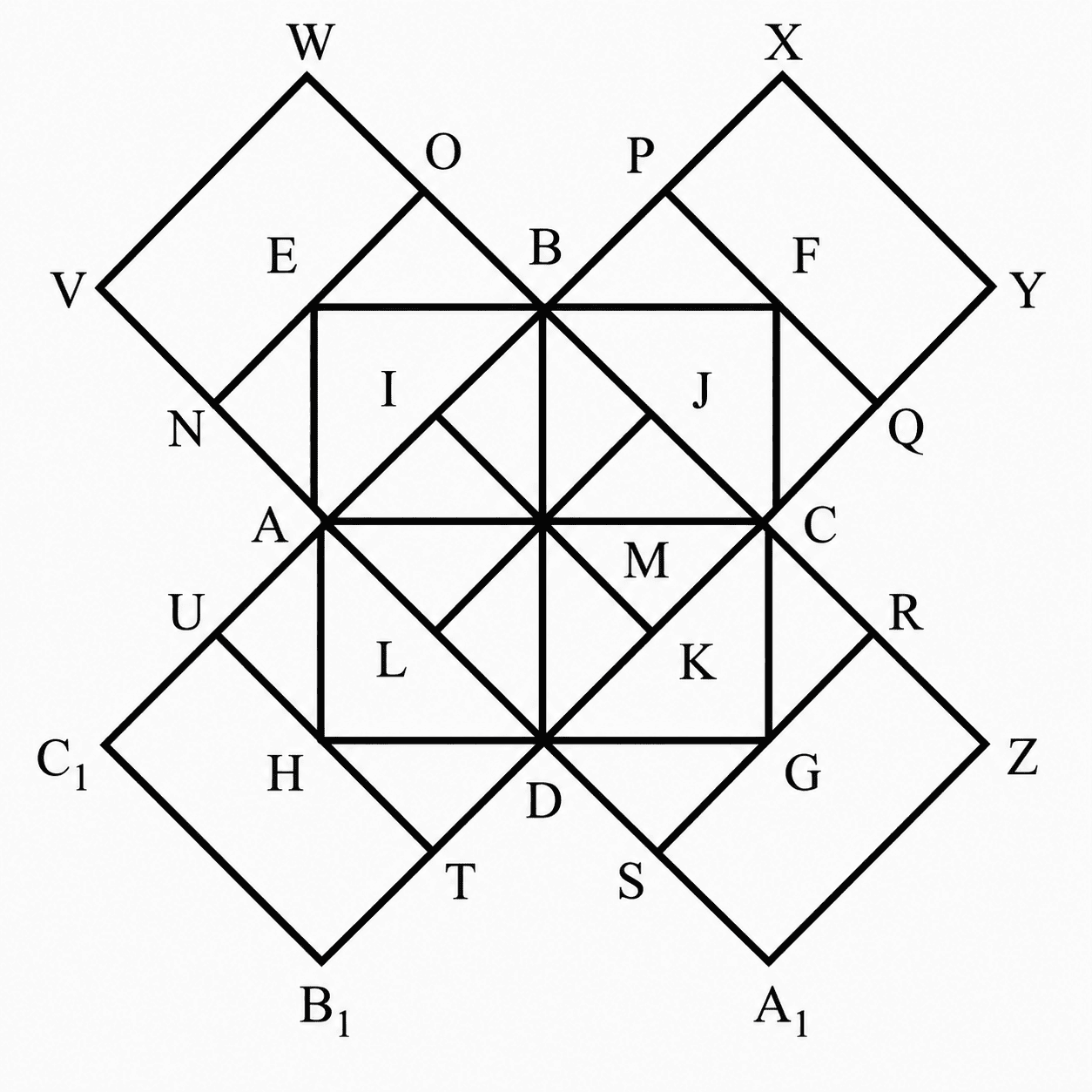
The squares formed in the figure are:
BJMI, CKMJ, DLMK, AIML, EBMA, BFCM, MCGD, AMDH,VWBA, XYCB, ZAJDC, B,C,AD, NOJL, PQKI, RSLJ, TUIK, ABCD, EFGH.
Therefore, the total number of squares is:
Total squares = 18
So, the above figure has 18 squares.
Correct Answer: Option (C)
In each of the following questions, count the number of triangles and squares in the given figure.
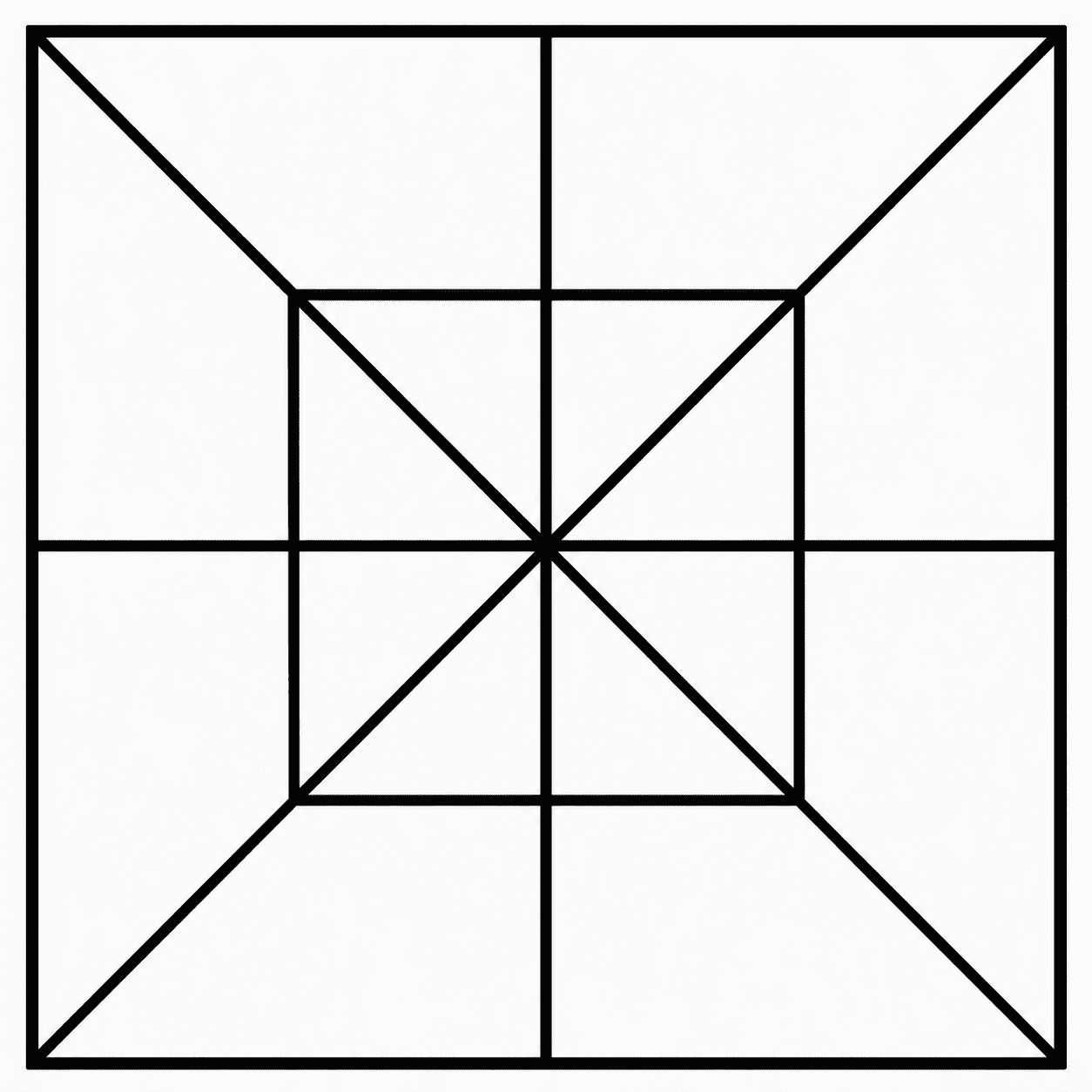
🔍 Analyze the Pattern
On carefully observing the labelled figure:
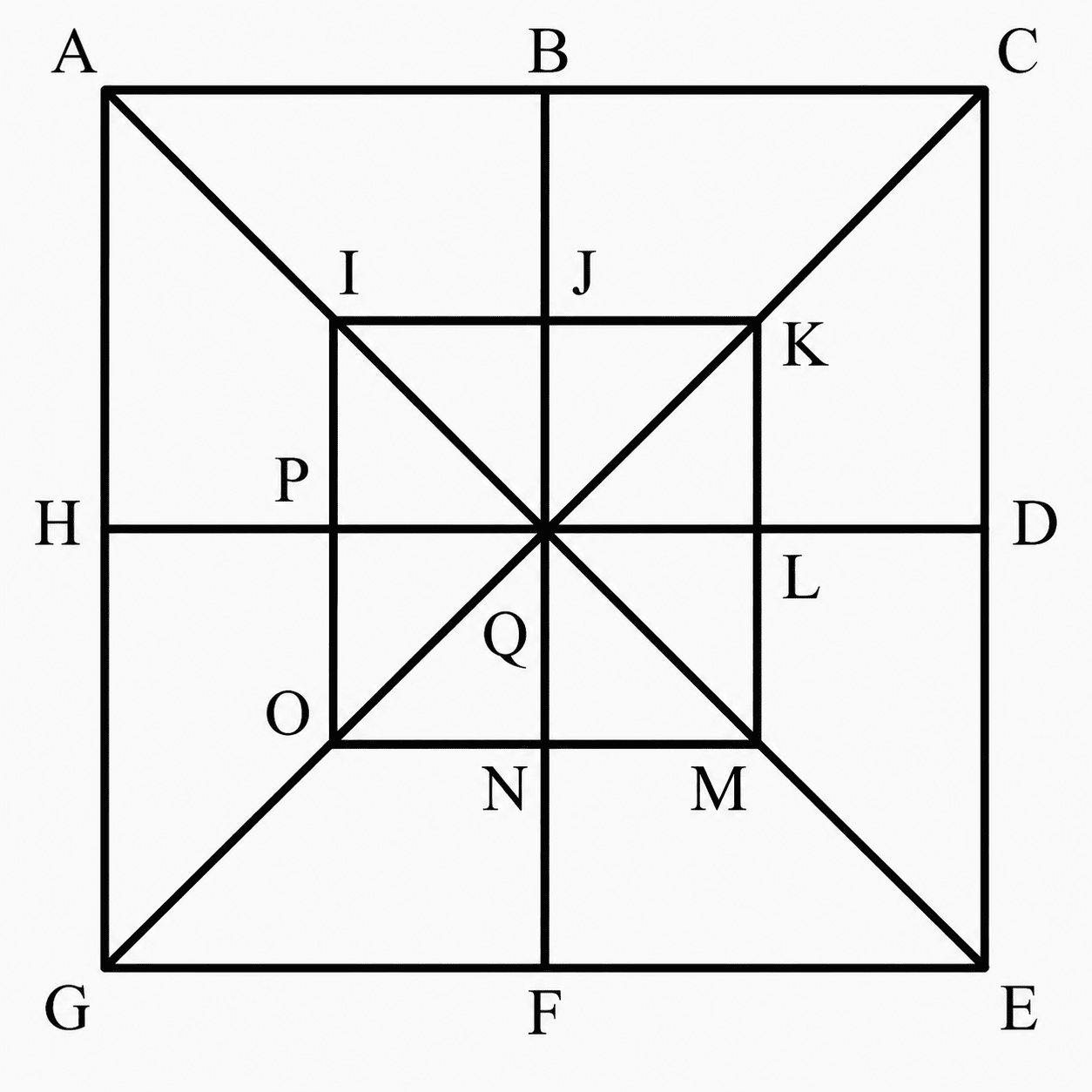
The triangles formed in the figure are:
IJQ, JKQ, KLQ, LMQ, MNQ, NOQ, OPQ, PIQ, ABQ, BCQ, CDQ, DEQ, EFQ, FGQ, GHQ, HAQ, IKQ, KMQ, MOQ, OIQ, ACQ, CEQ, EGQ, GAQ, IKM, KMO, MOI, OIK, ACE, CEG, EGA, GAC
Total number of triangles in the figure 32.
The squares formed in the figure are:
UQP, JKLQ, QLMN, PQNO, ABQH, BCDQ, QDEF, HQFG, IKMO, ACEG
Therefore, the total number of squares is:
Total squares = 10
Hence the above figure has 10 squares.
Correct Answer: Option (C)