Grouping of Figures - Base Level
Practice and master this topic with our carefully crafted questions.
Take a Leap..
Directions (Q Nos. 1-15) In each of the following questions, group the given figures into different classes on the basis of their orientation, shape etc.
Group the given figures into different classes on the basis of their orientation, shape etc.
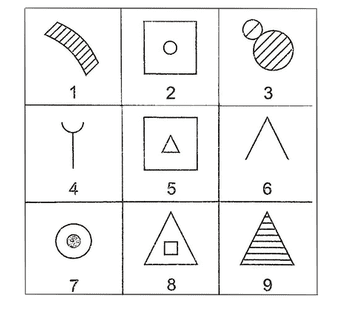
2, 5 and 8 form a group of figures which are composed of two dissimilar figures, one inside the other.
Group the given figures into different classes on the basis of their orientation, shape etc.
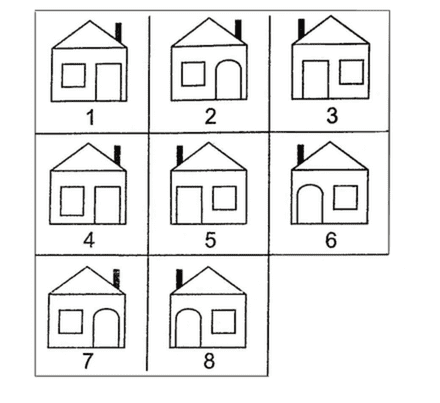
(1, 4), (2, 7), (3, 5) and (6, 8) are a group of identical figures.
Group the given figures into different classes on the basis of their orientation, shape etc.
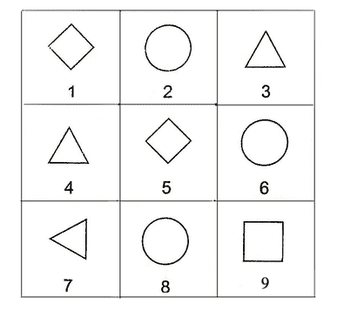
(2, 6, 8), (1, 5, 9) and (3, 4, 7) are a group of similar shape figures.
Group the given figures into different classes on the basis of their orientation, shape etc.
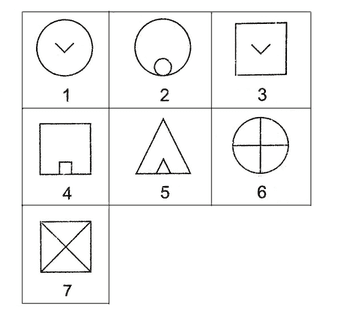
1 and 3 contain a V-shaped figure inside another figure.
2, 4 and 5 contain one figure placed inside a similar figure.
6 and 7 are divided into four equal parts by mutually perpendicular lines.
Group the given figures into different classes on the basis of their orientation, shape etc.
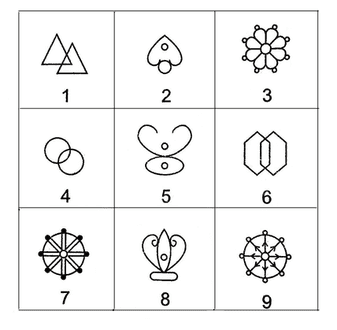
1, 4 and 6 contain two identical figures which intersect each other.
2, 5 and 8 contain figures in which curves are present 3, 7 and 9 contain figures which represent circular design patterns.
Group the given figures into different classes on the basis of their orientation, shape etc.
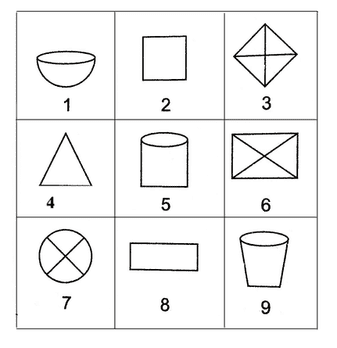
1, 5 and 9 consist of cup-shaped figures.
3, 6 and 7 contain straight lines dividing figure into four parts.
2, 4 and 8 are simple geometrical figures.
Group the given figures into different classes on the basis of their orientation, shape etc.
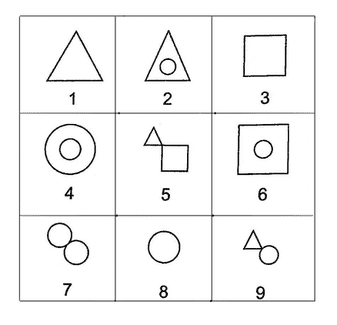
1, 3 and 8 form a group of figures which contain one geometrical figure.
2, 4 and 6 form a group of figures in which one figure is enclosed inside another figure.
5, 7 and 9 form a group of figures in which two figures are attached with one another.
Group the given figures into different classes on the basis of their orientation, shape etc.
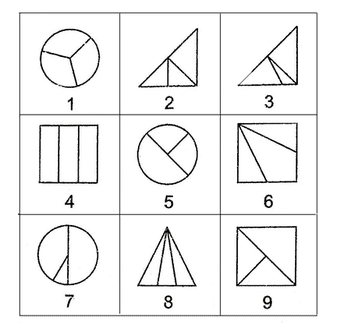
3, 7 and 6 form a group of figures which are divided into three unequal parts.
1, 8 and 4 form a group of figures which are divided into three equal parts.
2, 5 and 9 form a group of figures in which the figures are divided into three parts in such a way that one part is half and the other two parts are one-fourth of the original figure.
Group the given figures into different classes on the basis of their orientation, shape etc.
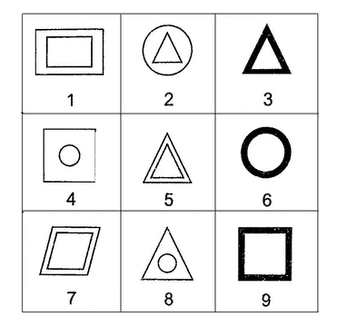
1, 5 and 7 are composed of two similar figures, one inside the other.
2, 4 and 8 contain a figure placed inside a different figure 3, 6 and 9 are figures with thick boundaries.
Group the given figures into different classes on the basis of their orientation, shape etc.
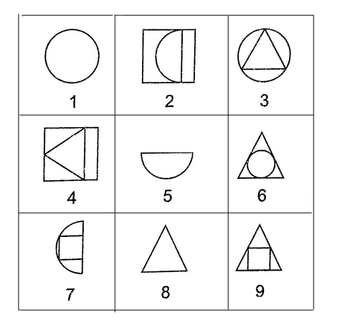
1, 3 and 6 contain one complete circle each.
2, 5 and 7 contain a semi-circle each.
4, 8 and 9 contain a triangle each.