Let us Practice - All Latest Questions
Practice and master this topic with our carefully crafted questions.
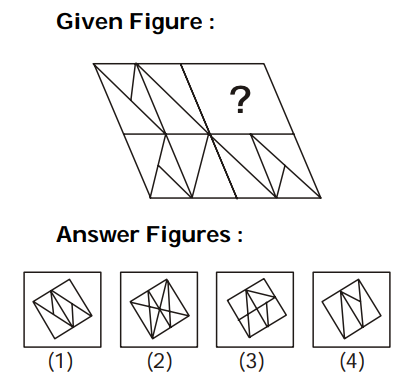
In such problems, a figure following a particular sequence or pattern is given, in which a part, usually one-fourth, is left blank. This problem figure is followed by four alternative figures. One is required to choose the one which best fits into the blank space of problem figure so as to complete the original pattern.
Which answer figure will complete the given figure ?
🔍 Analyze the Pattern
The missing portion lies in the upper-right parallelogram of the figure.
Step 1: Trace the Incoming Lines
Observe the diagonals and edges entering the blank region from the surrounding sections.
The missing piece must continue these lines without creating additional intersections.
Step 2: Match the Triangular Subdivisions
The figure is formed by a network of triangles. The missing piece should preserve the same subdivision pattern.
Step 3: Compare the Options
- Figures (1) and (3) fail to align all incoming lines.
- Figure (2) introduces extra diagonals not supported by the main figure.
- Figure (4) correctly continues all line segments and completes the pattern.

Correct Answer: Option (D)
⚡ Quick Exam Shortcut
For figure completion questions:
- Count the lines entering the blank space.
- Reject options that add extra intersections.
- Choose the option that continues all lines exactly.
Only Figure (4) satisfies these conditions.
Shortcut Answer: Correct line continuation without extra intersections → Option (D).
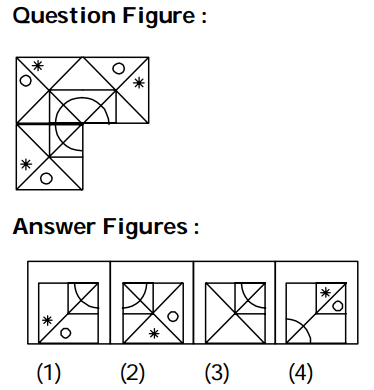
Which one of the answer figures shall complete the given question figure ?
🔍 Analyze the Pattern
The missing portion is the lower-right square of the figure.
Step 1: Follow the Curved Arc
The circular pattern at the centre extends into the blank region. The missing piece must continue both incoming arcs smoothly.
Step 2: Match the Diagonal Structure
The diagonal lines and the internal vertical-horizontal divisions must align with the surrounding squares.
Step 3: Check Symbol Placement
The stars and circles follow a balanced arrangement throughout the figure. The missing piece should preserve this pattern.
Step 4: Compare the Options
- Figures (1), (3) and (4) fail to match one or more of the incoming arcs, diagonals or symbols.
- Fig. (2) correctly completes all parts of the figure.
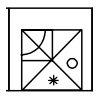
Correct Answer: Option (B)
⚡ Quick Exam Shortcut
For figure completion questions:
- Trace all incoming arcs and curves.
- Match the diagonal framework.
- Verify the placement of symbols.
- Reject mirror-image arrangements.
Only Figure (2) satisfies all these conditions.
Shortcut Answer: Correct arc continuation + symbol placement → Option (B).
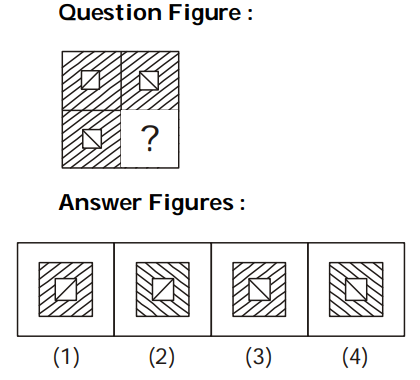
Which one of the answer figures shall complete the given question figure ?
🔍 Analyze the Pattern
The large square is divided into four quadrants. Each quadrant contains a small square with a diagonal.
Step 1: Observe the Diagonals
The diagonals in the three visible quadrants are:
Top-Left = /
Top-Right = \
Bottom-Left = \
To maintain the symmetry, the missing Bottom-Right quadrant must contain a / diagonal.
Step 2: Compare the Options
- Figures (2), (3) and (4) do not complete the diagonal arrangement correctly.
- Fig. (1) provides the required diagonal orientation.
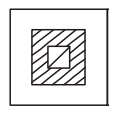
Correct Answer: Option (1)
⚡ Quick Exam Shortcut
Focus on the diagonals inside the small squares:
/ \
\ /
The missing quadrant must contain a / diagonal.
Shortcut Answer: Symmetric diagonal pattern → Option (A).
Which one of the answer figures shall complete the given question figure ?
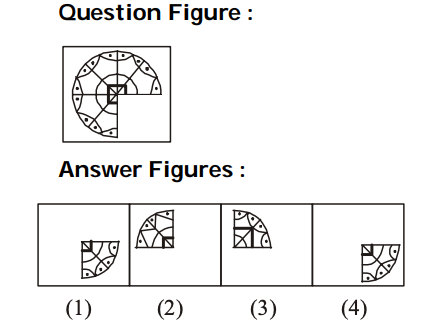
🔍 Analyze the Pattern
The missing portion is the lower-right quadrant of the spiral figure.
Step 1: Follow the Spiral
The curved bands form a continuous clockwise spiral around the centre. The missing piece must continue all the arcs smoothly.
Step 2: Match the Eye-Shaped Motifs
The eye-shaped symbols appear at regular intervals along the spiral and must continue in the same sequence.
Step 3: Check the Central Square
The central square extends into the missing region. Its corner and internal divisions must align exactly with the surrounding structure.
Step 4: Compare the Options
- Figures (2), (3) and (4) fail to match either the spiral continuation or the central square alignment.
- Fig. (1) correctly completes all arcs, motifs and square divisions.
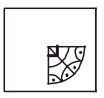
Correct Answer: Option (A)
⚡ Quick Exam Shortcut
For spiral-based figure completion:
- Trace the spiral arcs.
- Match recurring symbols.
- Verify the alignment of the central square.
Only Figure (1) satisfies all three conditions.
Shortcut Answer: Correct spiral + motifs + square alignment → Option (A).
Which one of the answer figures shall complete the given question figure ?
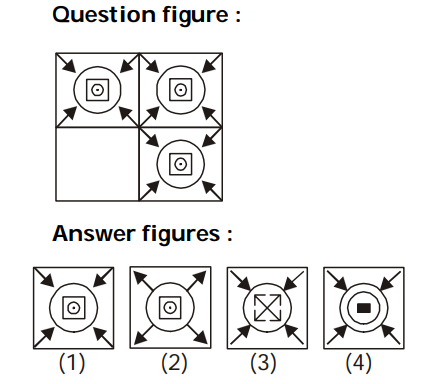
🔍 Analyze the Pattern
The missing portion is the lower-left quadrant of the figure.
Step 1: Observe the Inner Figure
All visible quadrants contain the same arrangement:
- A circle.
- A small square inside the circle.
- A central dot.
Therefore, the inner figure remains unchanged.
Step 2: Observe the Arrow Orientation
The arrows follow a rotational pattern around the large square.
The missing quadrant must preserve this orientation sequence.
Step 3: Compare the Options
- Fig. (2) changes the required arrow orientation.
- Figs. (3) and (4) alter the inner figure.
- Fig. (1) correctly matches both the inner figure and the arrow arrangement.

Correct Answer: Option (A)
⚡ Quick Exam Shortcut
Do not focus only on the inner shape.
- Check the arrow directions carefully.
- Look for rotational movement around the figure.
- Select the option that preserves both shape and orientation.
Only Fig. (1) satisfies all conditions.
Shortcut Answer: Same figure + correct arrow orientation → Option (A).
Which one of the answer figures shall complete the given question figure ?
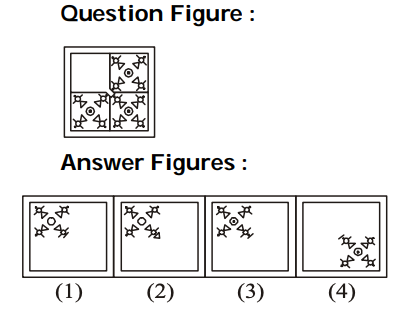
🔍 Analyze the Pattern
The large square is divided into four equal quadrants. The top-left quadrant is missing.
Step 1: Observe the Symbols
Each quadrant contains the same four symbols:
- ⭐ Star
- ◇ Diamond
- ○ Circle
- Curved Symbol
Only their positions change from one quadrant to another.
Step 2: Track the Symbol Movement
Observe the positions of the symbols in the three visible quadrants.
The arrangement follows a systematic movement pattern around the four quadrants. The missing quadrant must continue this sequence.
Step 3: Focus on the Diamond (◇)
The diamond is the easiest symbol to track because its position changes consistently in each quadrant.
When the pattern is continued into the missing top-left quadrant, the diamond occupies the position shown in Option (3).
Step 4: Verify the Remaining Symbols
After placing the diamond correctly, the positions of the stars, circle and curved symbols also match only one answer figure.
- Fig. (1) is a mirror arrangement.
- Fig. (2) misplaces one of the symbols.
- Fig. (4) corresponds to a different quadrant orientation.
- Fig. (3) correctly continues the complete symbol pattern.
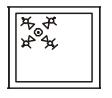
Correct Answer: Option (C)
⚡ Quick Exam Shortcut
For symbol-based figure completion:
- Track one unique symbol (preferably the diamond).
- Observe how its position changes across the visible quadrants.
- Check whether the remaining symbols follow the same movement pattern.
- Select the option that preserves all relative positions.
Only Figure (3) satisfies the complete symbol arrangement.
Shortcut Answer: Correct continuation of all symbol positions → Option (C).
Which one of the answer figures shall complete the given question figure?
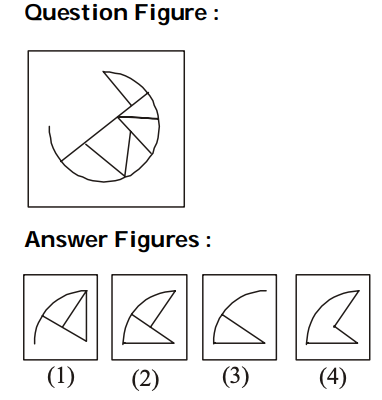
🔍 Analyze the Pattern
The figure is formed by several sectors arranged around a common centre.
Step 1: Follow the Outer Arc
The missing piece must continue the circular boundary smoothly.
Step 2: Match the Sector Shape
The surrounding regions are triangular sectors meeting at a common point. The missing piece must have the same structure.
Step 3: Continue the Internal Line
The dividing line entering the blank region must continue naturally into the missing piece.
Step 4: Compare the answer figures
- Figures (1), (3) and (4) fail to match either the arc or the internal division.
- Figure (2) correctly completes the figure.

Correct Answer: Option (B)
⚡ Quick Exam Shortcut
For circular figure completion:
- Trace the outer arc.
- Match the radial lines.
- Check the internal sector divisions.
Only Fig. (2) continues all three correctly.
Shortcut Answer: Correct arc + sector division → Option (B).
Which answer figure will complete the question figure?
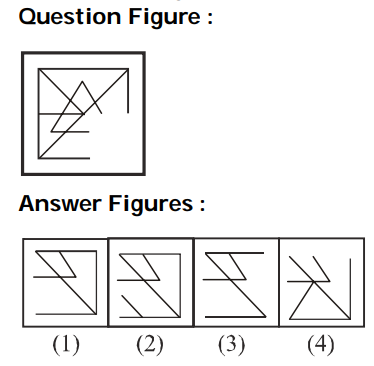
🔍 Analyze the Pattern
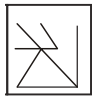
The missing portion lies in the lower-right section of the inner square. To find the correct answer, trace all lines entering the blank region.
Step 1: Observe the Central Peak
Near the centre of the figure, there is a small triangular peak formed by two slanting lines.
One side of this peak is already visible, while the other side must be completed by the missing piece.
Step 2: Follow the Incoming Lines
The missing region must continue:
- The descending diagonal emerging from the central peak.
- The long diagonal extending towards the lower-right corner.
- The right vertical boundary of the inner square.
Step 3: Compare the Options
- Fig. (1) continues the long diagonal but fails to complete the central peak correctly.
- Fig. (2) does not provide the required upper triangular continuation.
- Fig. (3) introduces an extra horizontal segment not supported by the figure.
- Fig. (4) correctly completes the central peak and aligns all incoming lines.
Step 4: Verify the Completion
When answer figure (4) is placed in the blank region:
- The triangular peak becomes complete.
- The diagonal lines join smoothly.
- The right boundary remains consistent.
- The overall zig-zag structure is preserved.
Correct Answer: Option (D)
⚡ Quick Exam Shortcut
In figure completion questions:
- Identify any incomplete triangles or peaks.
- Trace all lines entering the blank region.
- Reject options that add extra lines or fail to complete existing shapes.
- Select the option that completes every line naturally.
Only Fig. (4) completes the central triangular peak and maintains all line continuations.
Shortcut Answer: Complete the central peak + continue all diagonals → Option (D).
Which answer figure will complete the question figure?
🔍 Analyze the Pattern
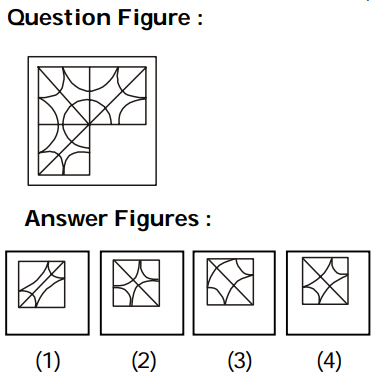
The missing portion lies in the lower-right square of the figure.
Step 1: Trace the Incoming Arcs
Two curved lines enter the blank region:
- One from the top boundary.
- One from the left boundary.
The correct option must continue both curves smoothly.
Step 2: Complete the Central Pattern
The figure forms a flower-like arrangement of curved petals around the centre.
The missing square must complete the lower-right petal without disturbing the symmetry.
Step 3: Compare the answer figures
- Fig. (1) introduces an extra curve.
- Fig. (3) does not align the incoming arc perfectly.
- Fig. (4) leaves the pattern incomplete.
- Fig. (2) correctly continues all arcs and completes the design.
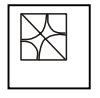
Correct Answer: Option (B)
⚡ Quick Exam Shortcut
For curved-pattern figure completion:
- Trace every arc entering the blank region.
- Check whether the curves meet smoothly.
- Verify that the central design remains symmetric.
Only Fig. (2) satisfies all these conditions.
Shortcut Answer: Correct arc continuation + complete petal → Option (B).
Which answer figure will complete the question figure?
🔍 Analyze the Pattern
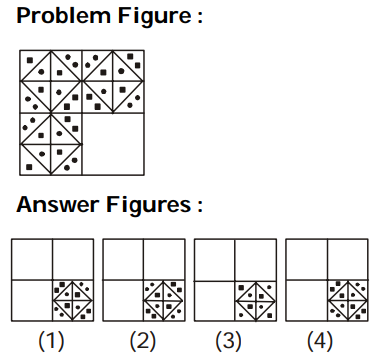
The bottom-right quadrant of the figure is missing.
Step 1: Observe the Internal Structure
Each quadrant contains:
- Four triangular sectors.
- Dots (●).
- Small squares (■).
The geometric structure remains unchanged. Only the positions of the symbols vary.
Step 2: Track the Squares (■)
The squares shift systematically from one quadrant to the next.
The missing quadrant must continue this sequence.
Step 3: Track the Dots (●)
The dots occupy the remaining sectors and move in the same pattern.
When the sequence is continued, the required arrangement matches Option (1).
Step 4: Compare the Answer Figures
- Fig. (2) misplaces one symbol group.
- Fig. (3) breaks the dot pattern.
- Fig. (4) is a mirror-image arrangement.
- Fig. (1) correctly completes the figure.
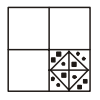
Correct Answer: Option (A)
⚡ Quick Exam Shortcut
For symbol-based figure completion:
- Track the position of one symbol type (■).
- Verify the movement of the other symbol type (●).
- Choose the option that preserves both patterns.
Only Fig. (1) matches the complete symbol arrangement.
Shortcut Answer: Correct continuation of dots and squares → Option (A).