Trigger Scenario Based Questions in Salesforce
Scenario-based Salesforce trigger questions with solutions — real business requirements turned into Apex triggers, with code and explanations.
The skills freshers need for software jobs in the AI era — programming, problem solving, Git, cloud, AI tools and communication — and how to build them.

Seven years ago, entering the software industry was mostly about knowing one programming language, some database basics, and writing decent code.
Today, things are very different.
Artificial Intelligence, automation tools, cloud platforms, and rapid product development have completely changed what companies expect from freshers.
College still teaches many subjects, but let’s be honest. Most students graduate without clarity on which skills actually matter in the real world.
This guide focuses on the **most relevant, practical, and future-proof skills** a fresher must have in 2026 to confidently enter the software industry.
These are not “nice-to-have” skills. These are the skills that significantly improve your chances of landing interviews, clearing technical rounds, and growing fast in your first job.
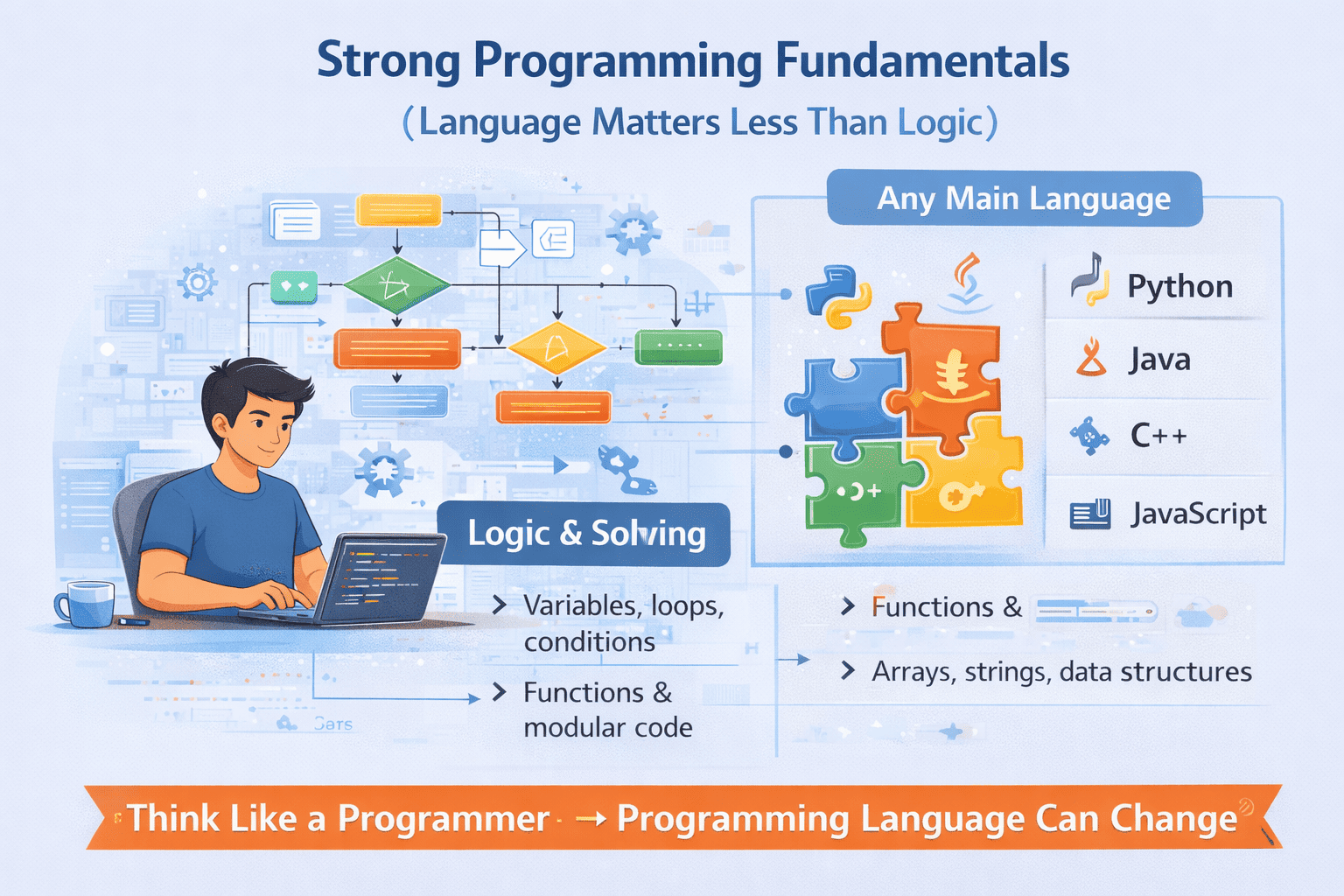
Earlier, companies used to ask for specific languages like C, C++, or Core Java.
Now, what really matters is whether you understand how programming works.
You must be comfortable with:
You can choose any one main language:
Companies no longer hire you for a language. They hire you for your ability to learn new languages quickly.
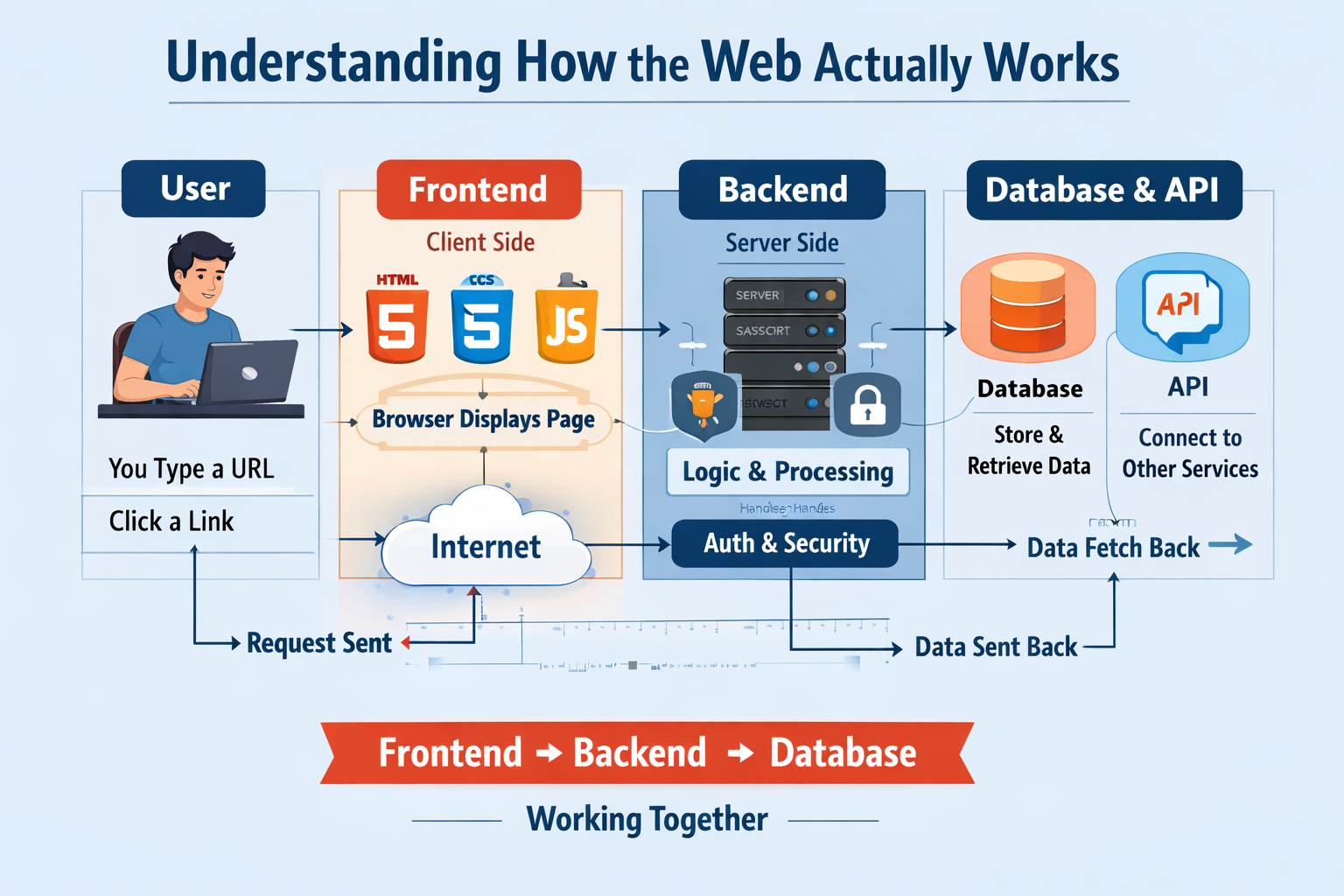
Even if you are not a web developer, understanding the web is non-negotiable today.
You should clearly understand:
You don’t need to become a UI expert, but you must know how applications are structured in the real world.
This knowledge helps not only in jobs, but also in interviews where system understanding is tested.
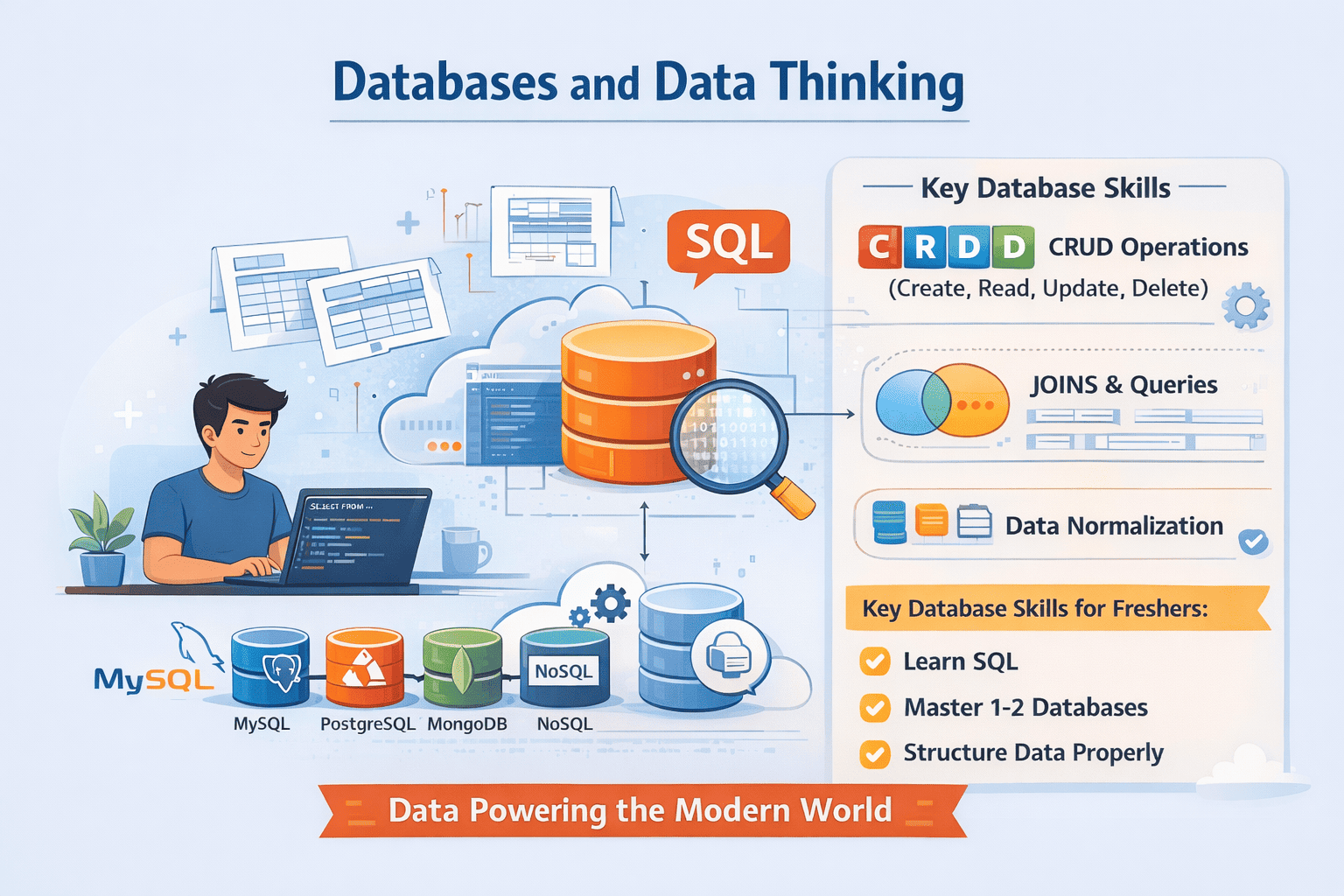
Software today runs on data.
If you cannot store, fetch, and manipulate data properly, you cannot build real applications.
Every fresher should know at least one database well:
You must be confident with:
In the AI era, data quality is everything. Even AI systems fail if data is poorly structured.
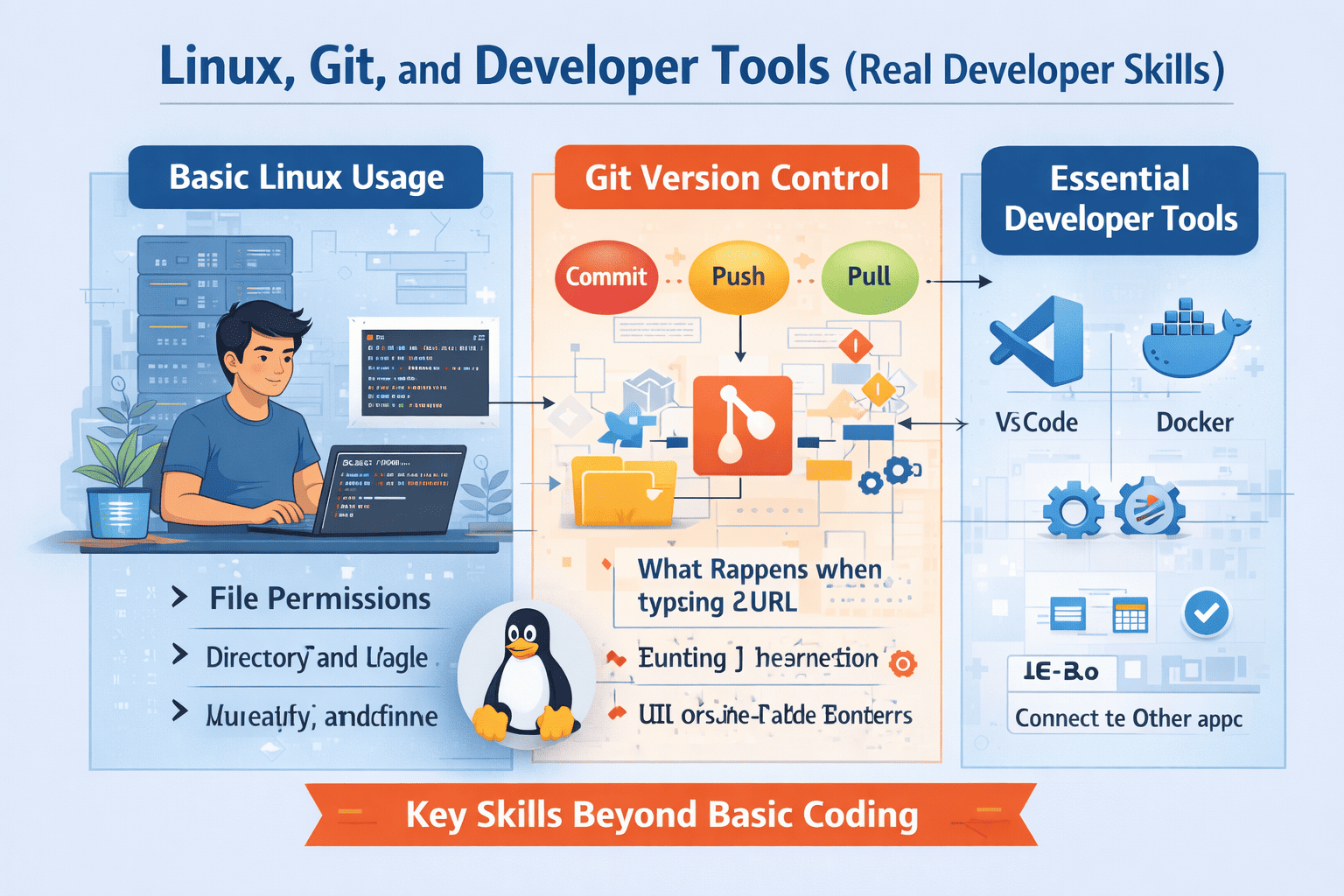
Most real-world software does not run on Windows laptops.
It runs on servers, containers, and cloud environments, mostly powered by Linux.
Every fresher should know:
Along with Linux, Git is mandatory.
These skills show that you can work in a real development team, not just in college labs.
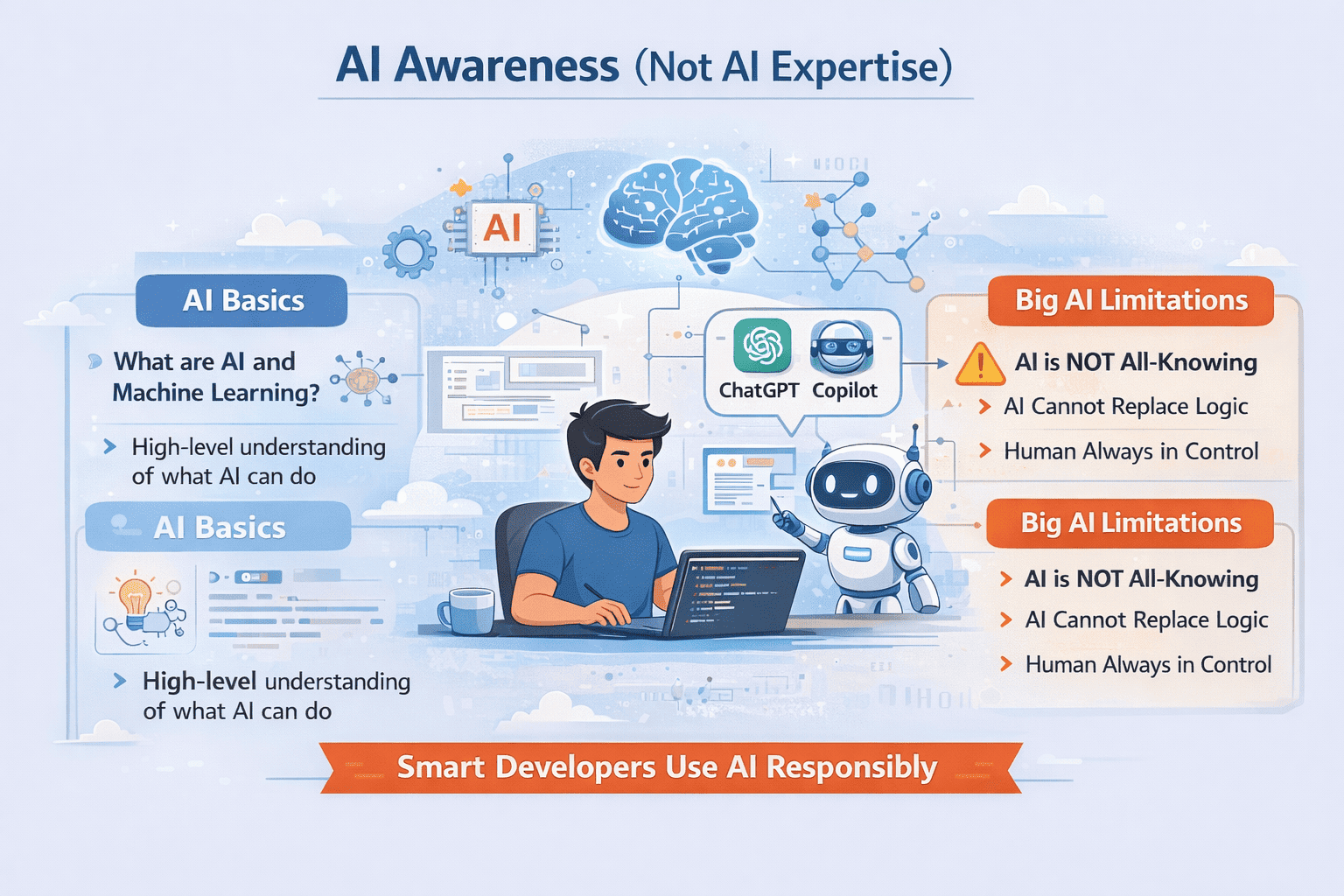
You are not expected to be an AI researcher.
But in 2026, a fresher who ignores AI is already behind.
You should understand:
Smart developers use AI as a productivity tool, not a shortcut.
Companies want freshers who can think independently and use AI responsibly.
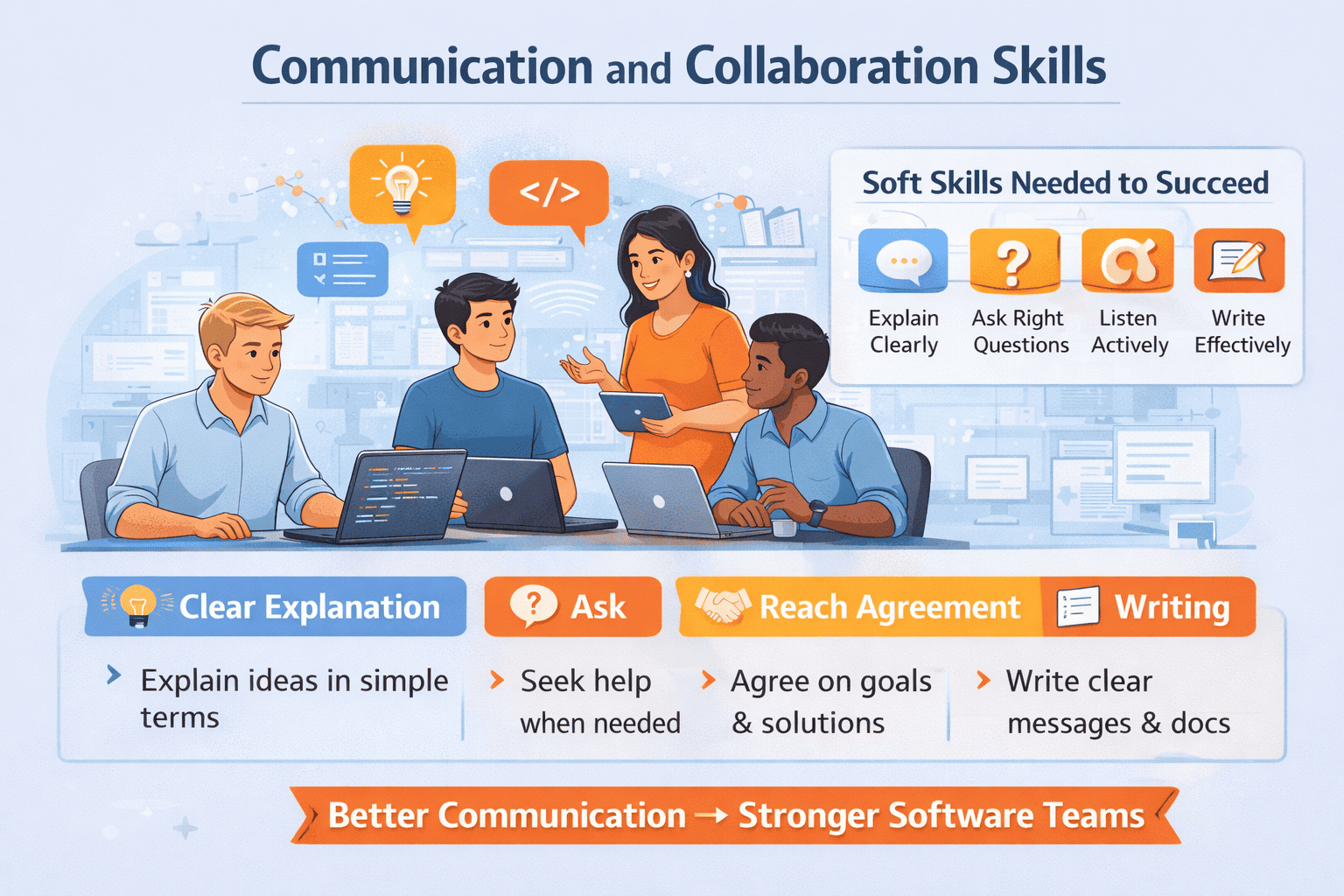
Technical skills get you shortlisted.
Communication skills get you hired and promoted.
This does not mean speaking perfect English.
It means:
Modern software development is collaborative. You will work with designers, testers, clients, and AI tools.
Clear communication multiplies your technical impact.
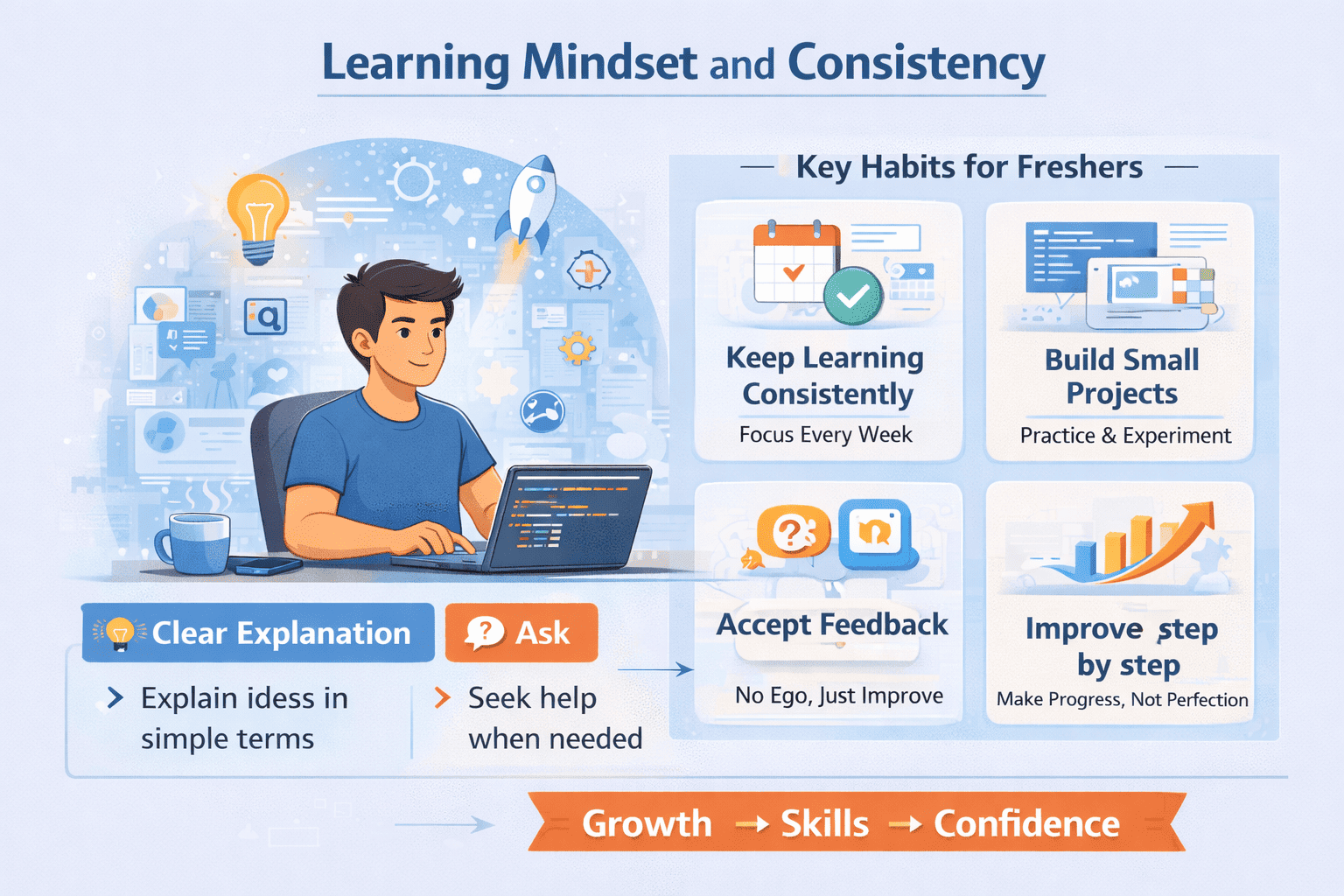
The most important skill of all.
Technology will keep changing. Languages will evolve. AI tools will improve.
The freshers who survive and grow are the ones who:
No course, certification, or college degree can replace this mindset.
Entering the software industry today is challenging, but it is also full of opportunity.
You do not need to master everything at once.
Focus on strong fundamentals, real-world tools, AI awareness, and clear communication. These skills together make you job-ready, future-proof, and confident.
The industry does not expect you to know everything.
It expects you to be ready to learn.

One short email when we publish something new — interview questions, Salesforce guides and career tips. No spam, unsubscribe in one click.
Scenario-based Salesforce trigger questions with solutions — real business requirements turned into Apex triggers, with code and explanations.
Batch Apex interview questions answered as a real interview — Database.Batchable, start, execute and finish, governor limits, chaining and testing.
Salesforce Apex trigger interview questions explained — trigger syntax, events, context variables, order of execution and bulkification — with code examples.
Questions, corrections or your own experience — they all help the next reader.
Priyanka Gupta
Swati Singh