
Off-Campus Placements for Freshers: A Complete Guide to IT & Technical Jobs
How freshers can land IT jobs off campus: where to find openings, how to apply, how to prepare for tests and interviews, and how to stand out.
The real reasons many graduates miss campus placements in the AI era — skills gaps, weak projects, poor interviews — and practical fixes you can start today.
Every year, thousands of students graduate with hope, excitement, and one common goal — getting placed. Campus drives happen, companies visit colleges, aptitude tests are conducted, interviews are scheduled… yet many students walk away without an offer.
This raises an uncomfortable but important question: why do not all students get placed after college?
The truth is, it is rarely about intelligence or marks alone. In today’s job market — especially in the IT and technical domain — placements depend on awareness, skills, mindset, and how well a student adapts to change, including the rise of AI.
Let’s break down the genuine and current reasons why many students struggle to get placed after college — and more importantly, what can be done about it.
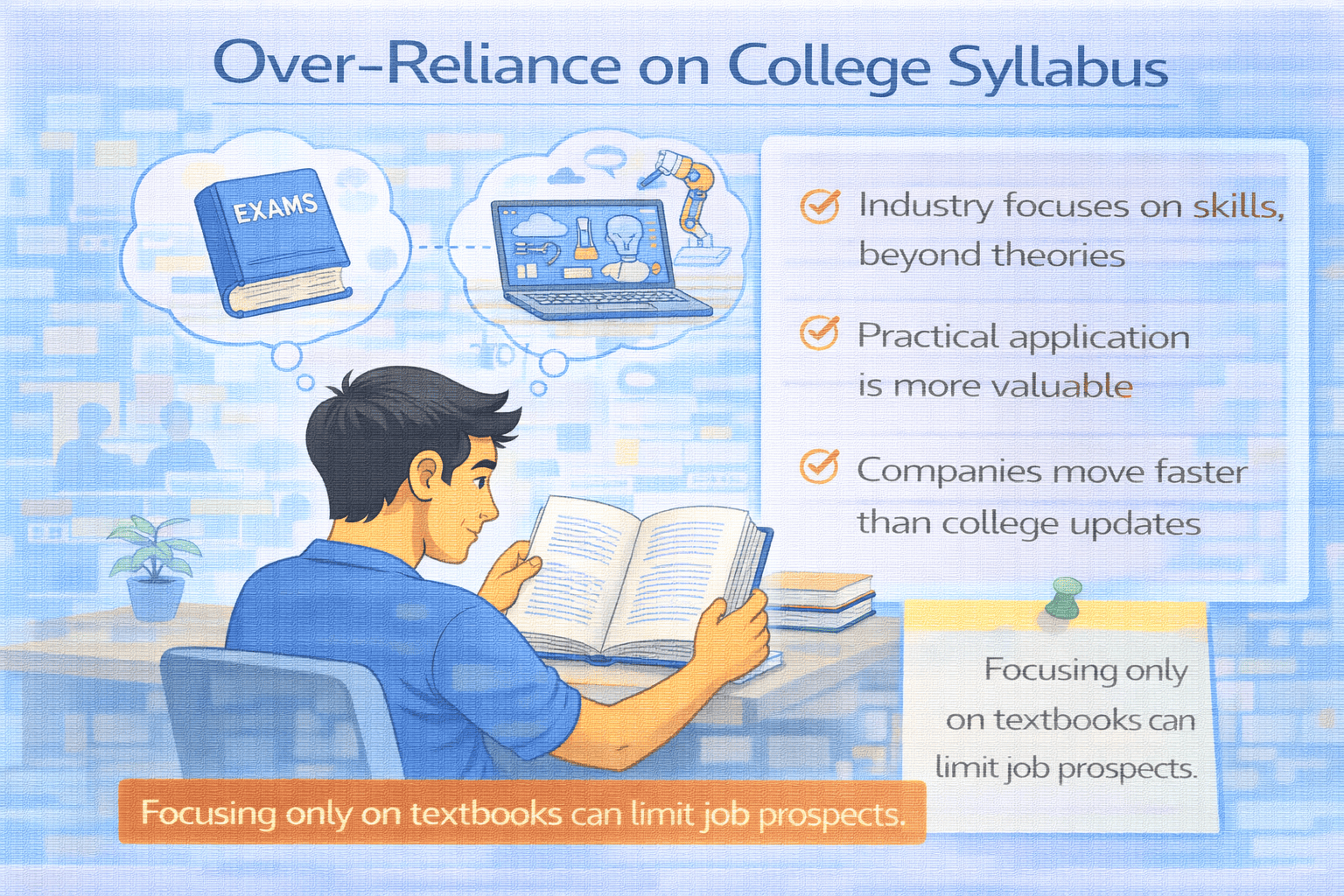
One of the biggest reasons students don’t get placed is assuming that the college syllabus is enough.
Most academic curriculums are slow to update. While the industry talks about cloud, AI, data, DevOps, and automation, many students are still evaluated only on theory-heavy subjects.
Reality check: Companies hire for skills, not semesters completed.
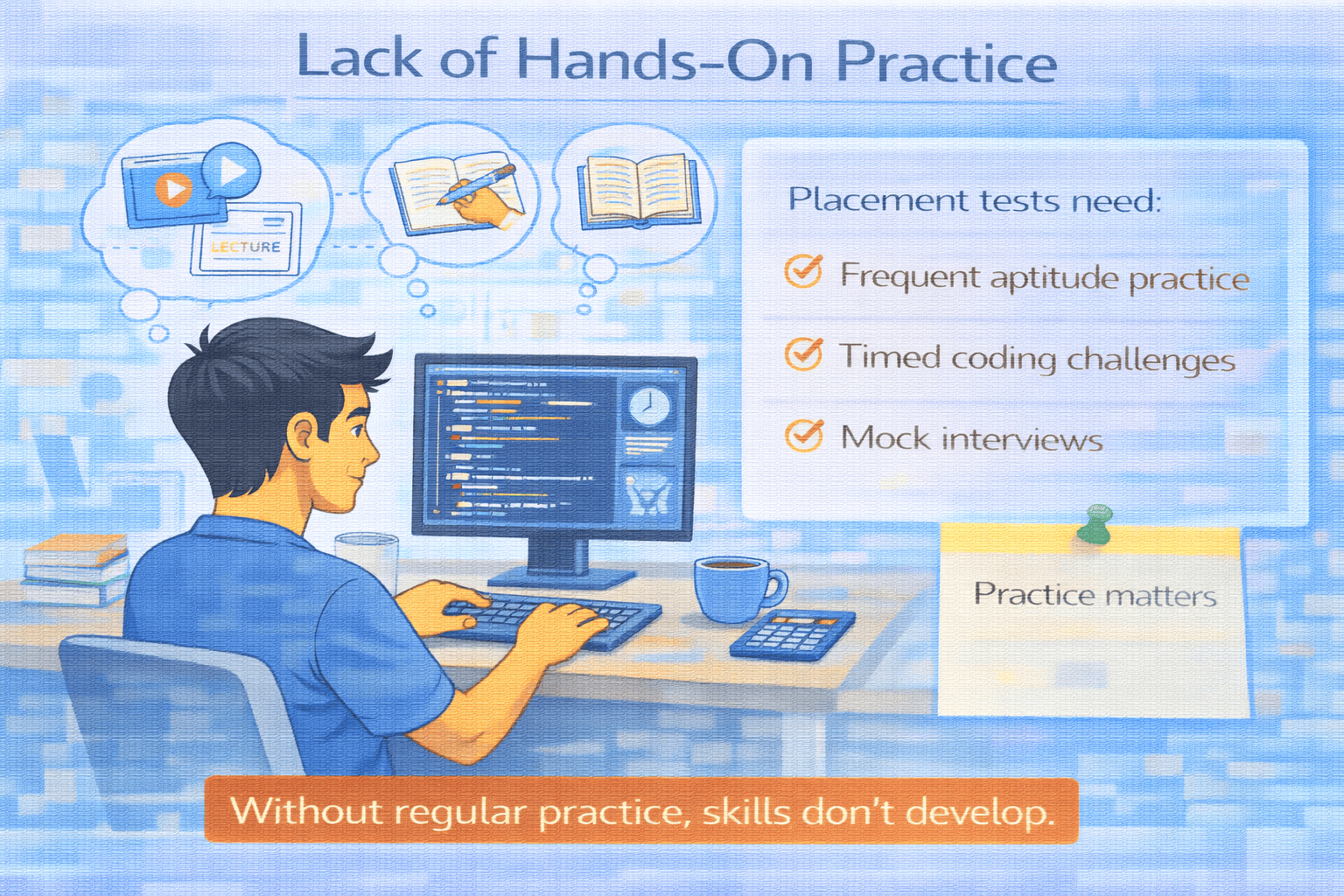
Watching tutorials, attending lectures, or reading notes feels productive — but without practice, it does not translate into employability.
Many students fail placement tests because they haven’t practiced:
Just like you can’t learn swimming by watching videos, you can’t clear placements without hands-on practice.
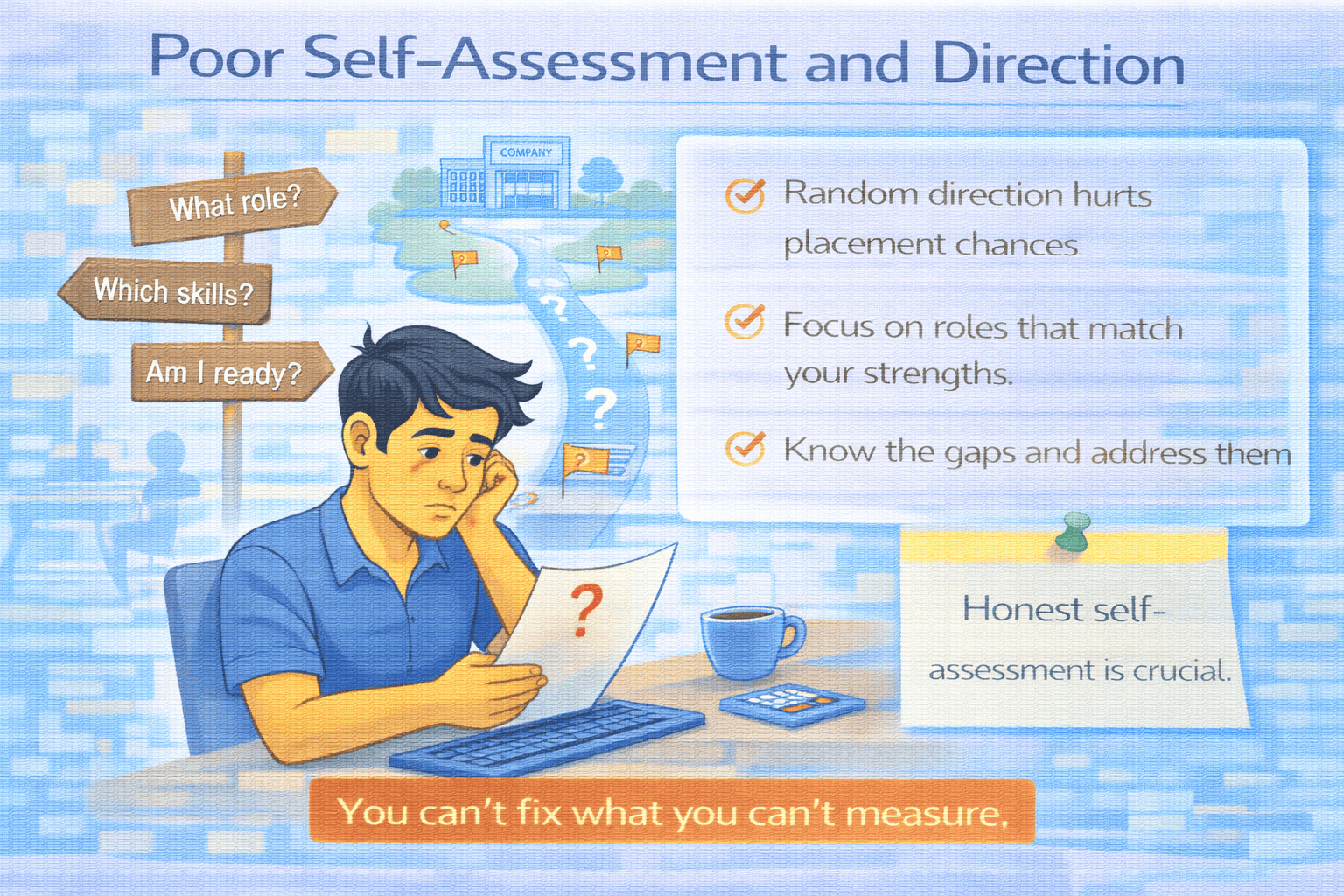
A surprising number of students don’t actually know where they stand.
They apply everywhere without understanding:
Without honest self-assessment, preparation becomes random — and random preparation leads to rejection.
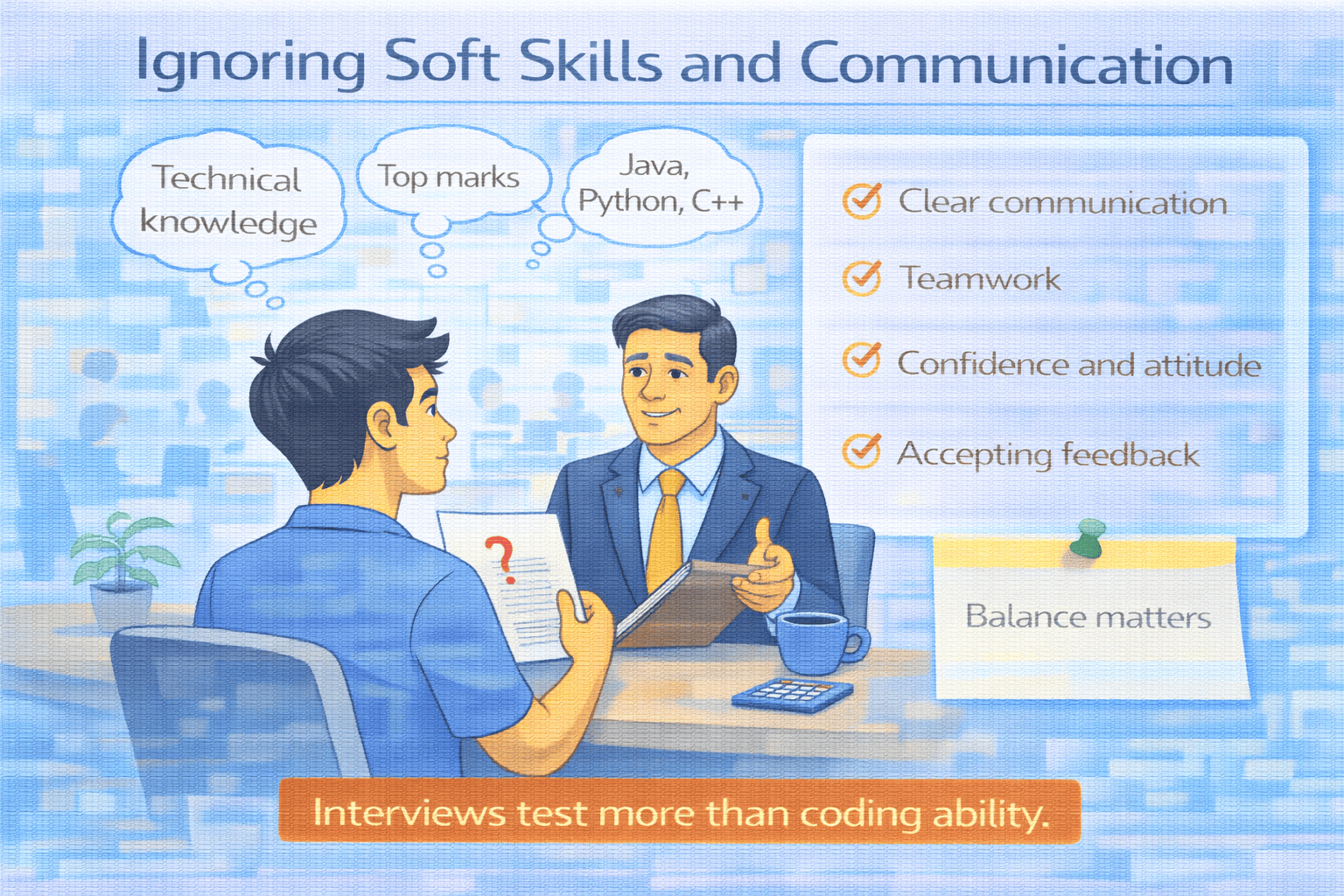
Many students believe placements are only about technical knowledge. That is no longer true.
Companies today look for candidates who can:
You don’t need fancy English or an accent. You need clarity, confidence, and honesty.
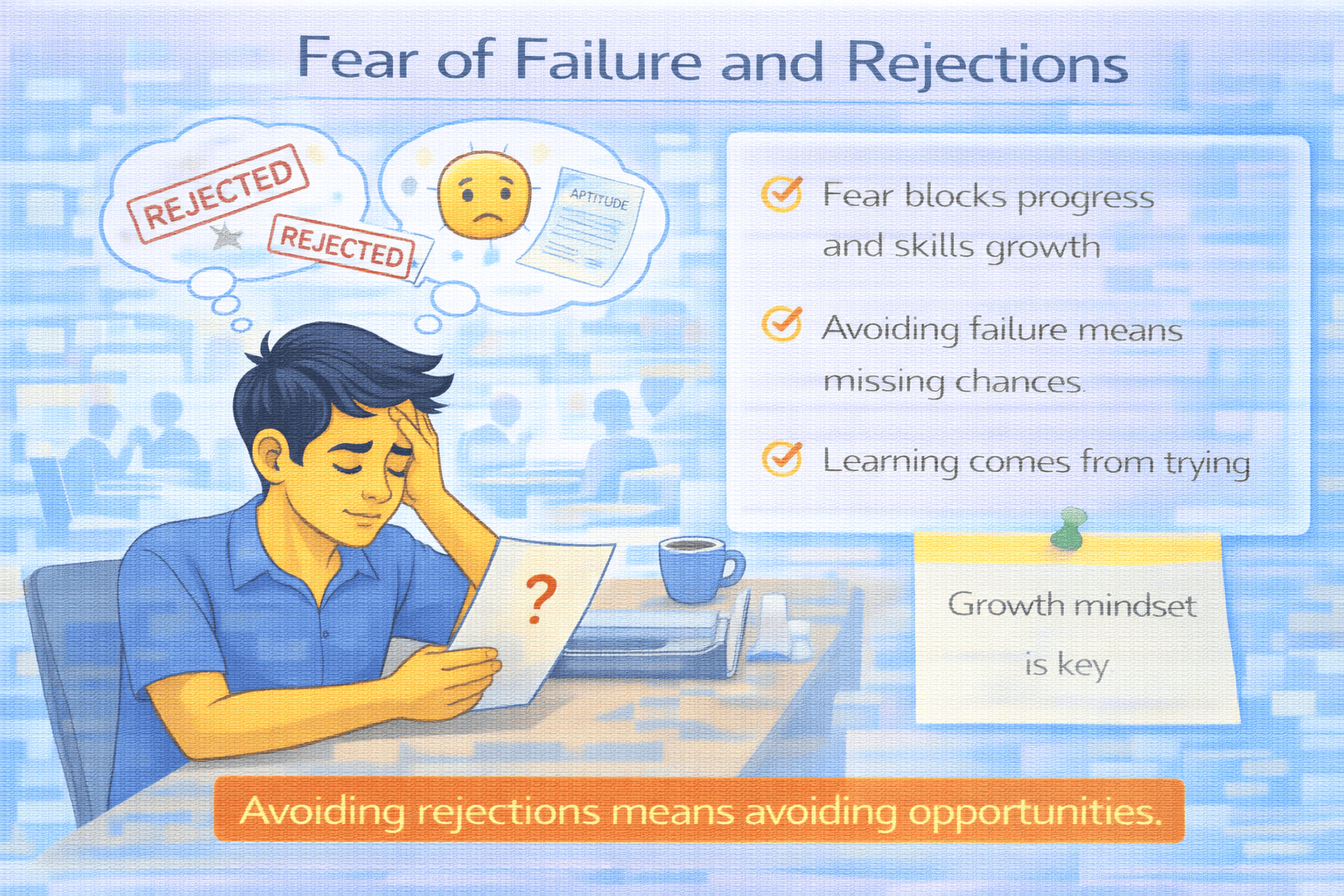
Another major reason students don’t get placed is psychological — fear.
After a few rejections, many students:
Rejections are not a signal to quit. They are feedback — if you choose to learn from them.
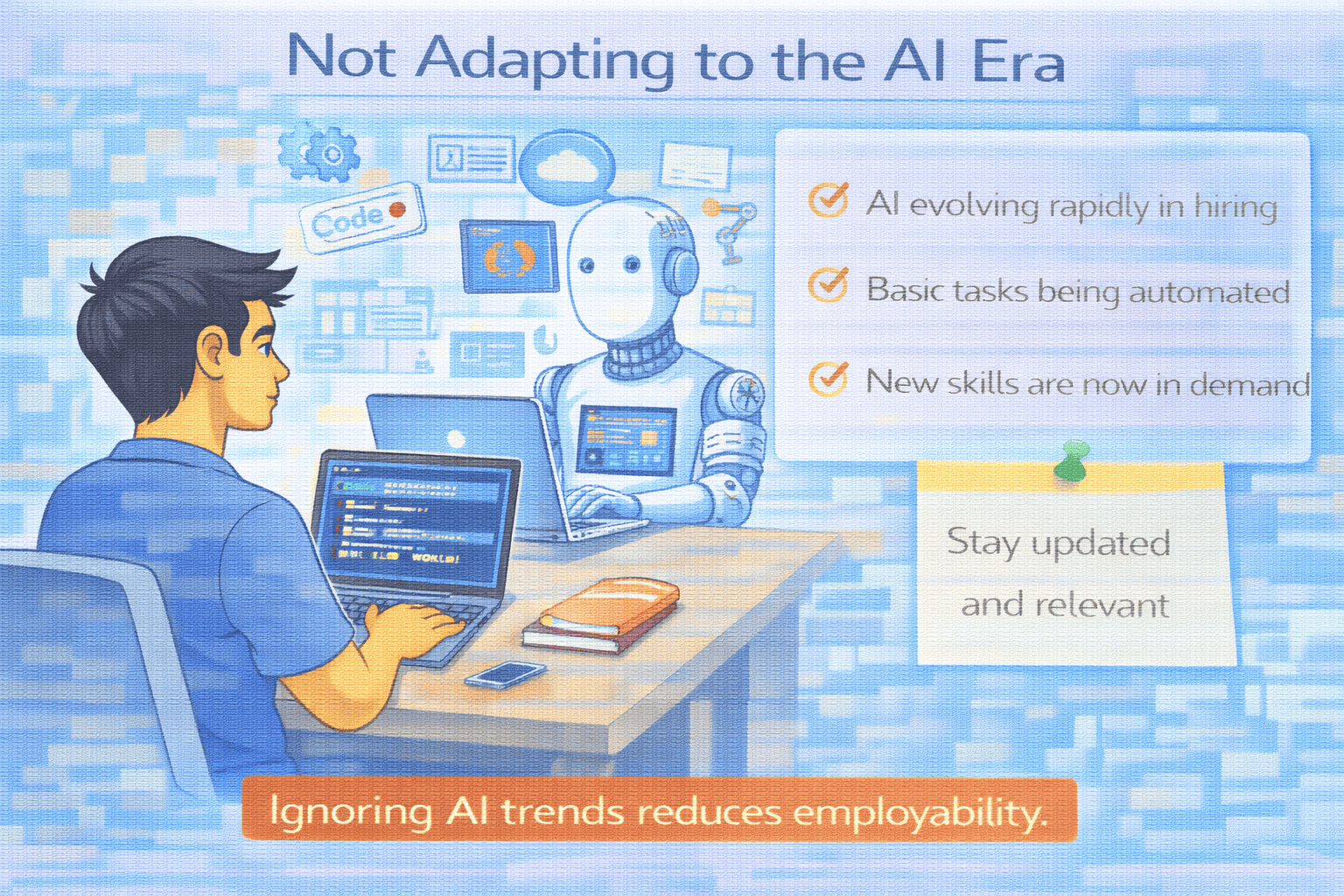
This is a new and very real reason in today’s job market.
AI has changed how companies work, hire, and evaluate candidates. Students who completely ignore AI trends often fall behind.
This does not mean you must become an AI expert. But you should:
Students who combine strong fundamentals with AI awareness stand out.
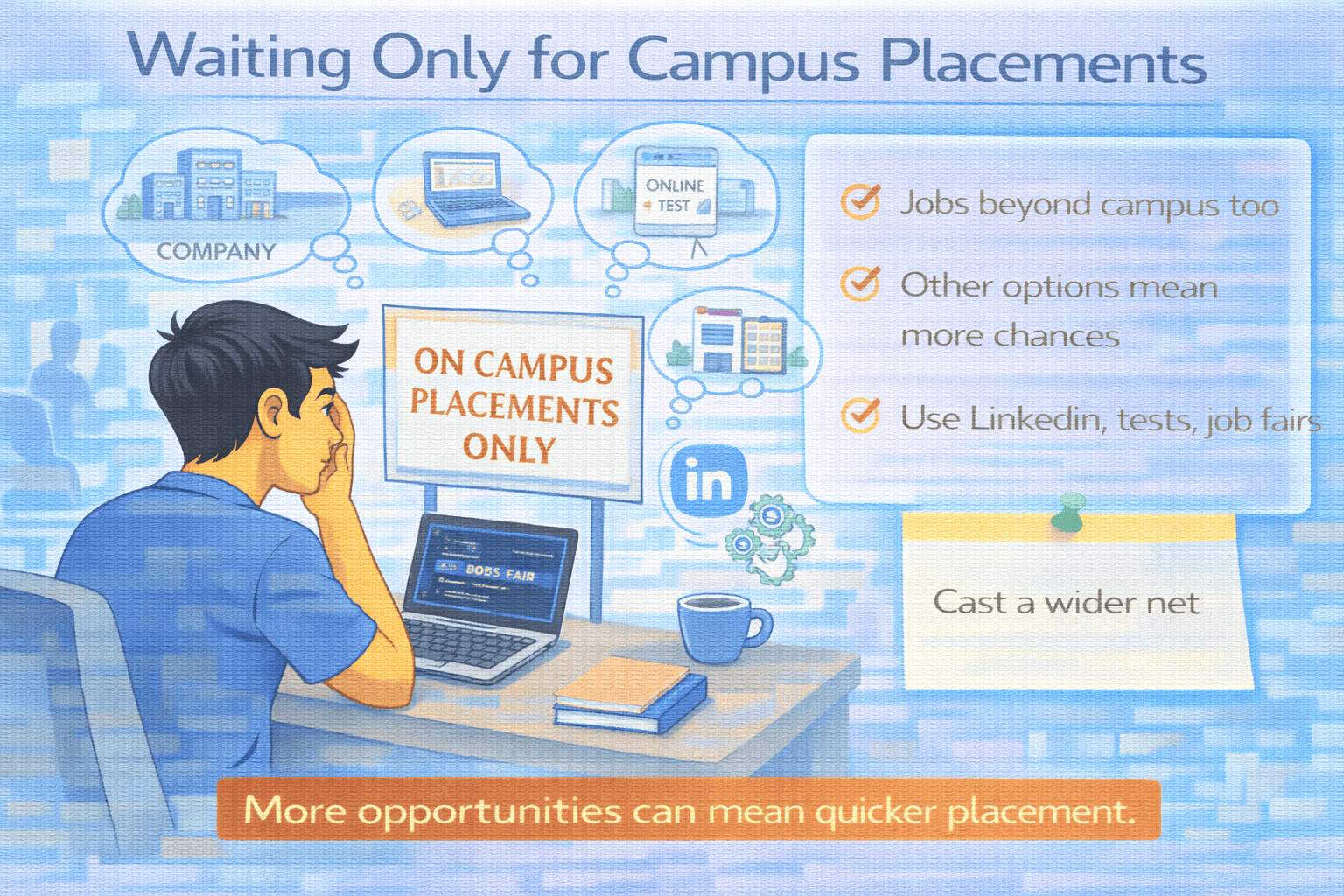
Campus placements are just one opportunity — not the final verdict on your career.
Many students miss out because they:
Some of the best careers start off-campus, not inside a placement hall.
If you’re a student or recent graduate, here’s the good news: all of this is fixable.
Getting placed is not about being perfect. It’s about being prepared, aware, and persistent.
Not all students get placed after college — and that’s okay. A job offer does not define your worth or potential.
What truly matters is how quickly you learn, how smartly you adapt, and how consistently you work towards your goal.
The industry rewards those who are willing to grow. Start today — one skill, one practice session, one application at a time.

One short email when we publish something new — interview questions, Salesforce guides and career tips. No spam, unsubscribe in one click.
How freshers can land IT jobs off campus: where to find openings, how to apply, how to prepare for tests and interviews, and how to stand out.

Practical placement advice for students who face rejection: how to learn from each interview, keep improving and stay motivated until you land the right job.
Scenario-based Salesforce trigger questions with solutions — real business requirements turned into Apex triggers, with code and explanations.
Questions, corrections or your own experience — they all help the next reader.
Aditi Bansal
Priya Gupta
Ruhi
Atul Jain
Disha Singh
kavya