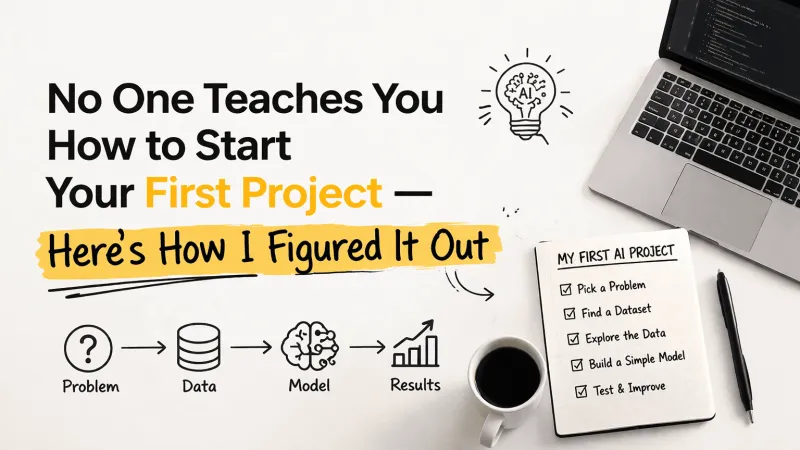
No One Teaches You How to Start Your First Project — Here’s How I Figured It Out
No one teaches you how to start your first project — a practical, step-by-step way to pick an idea, plan it, build it and finish it.
Are engineering students learning real skills or just passing exams? Why CGPA is not enough, and how to build skills that employers actually value.
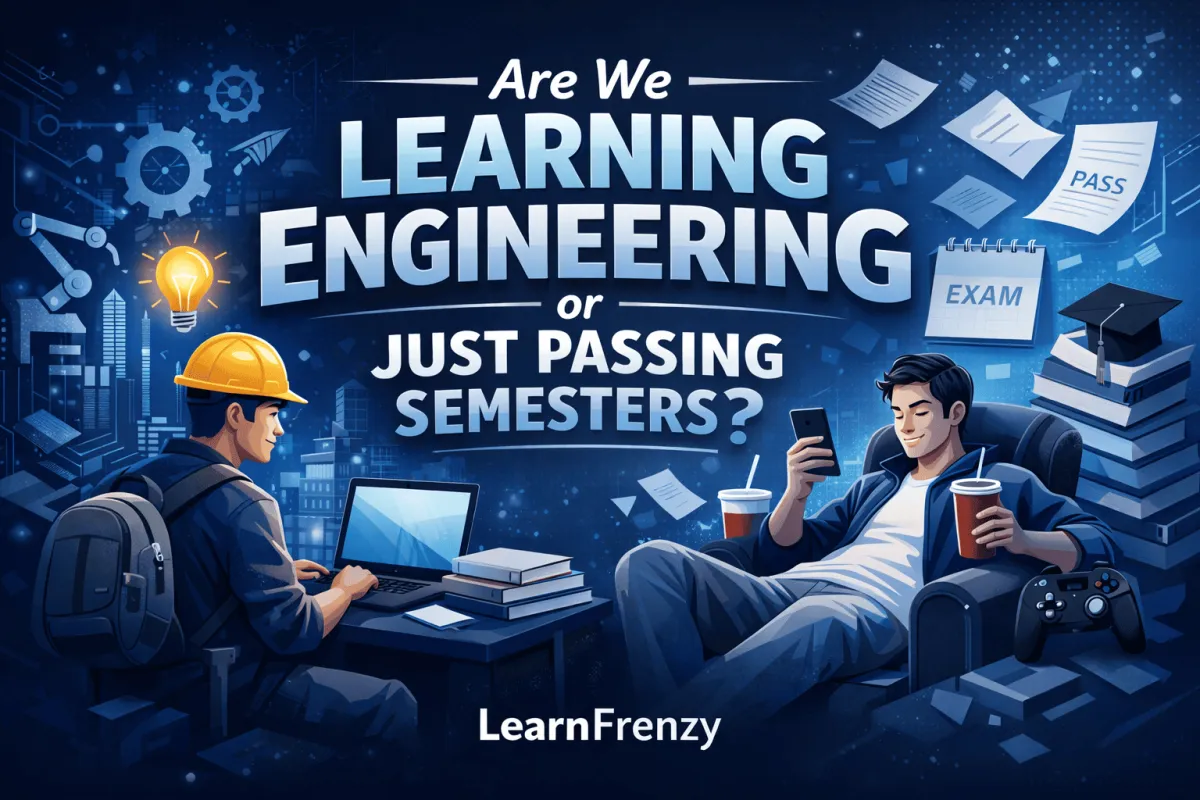
The difference between studying for exams and becoming a real engineer.
Yesterday, I was thinking about my engineering journey.
And one question kept repeating in my mind:
If you are in engineering college right now, pause for a moment and think honestly.
When a new semester starts, what is usually our goal?
We tell ourselves we’ll understand everything deeply this time.
But slowly, reality hits.
We start studying one night before the exam.
We ask seniors for important questions.
We focus only on “most probable” topics.
Lab records are completed for marks — not for curiosity.
And somehow, we survive the semester.
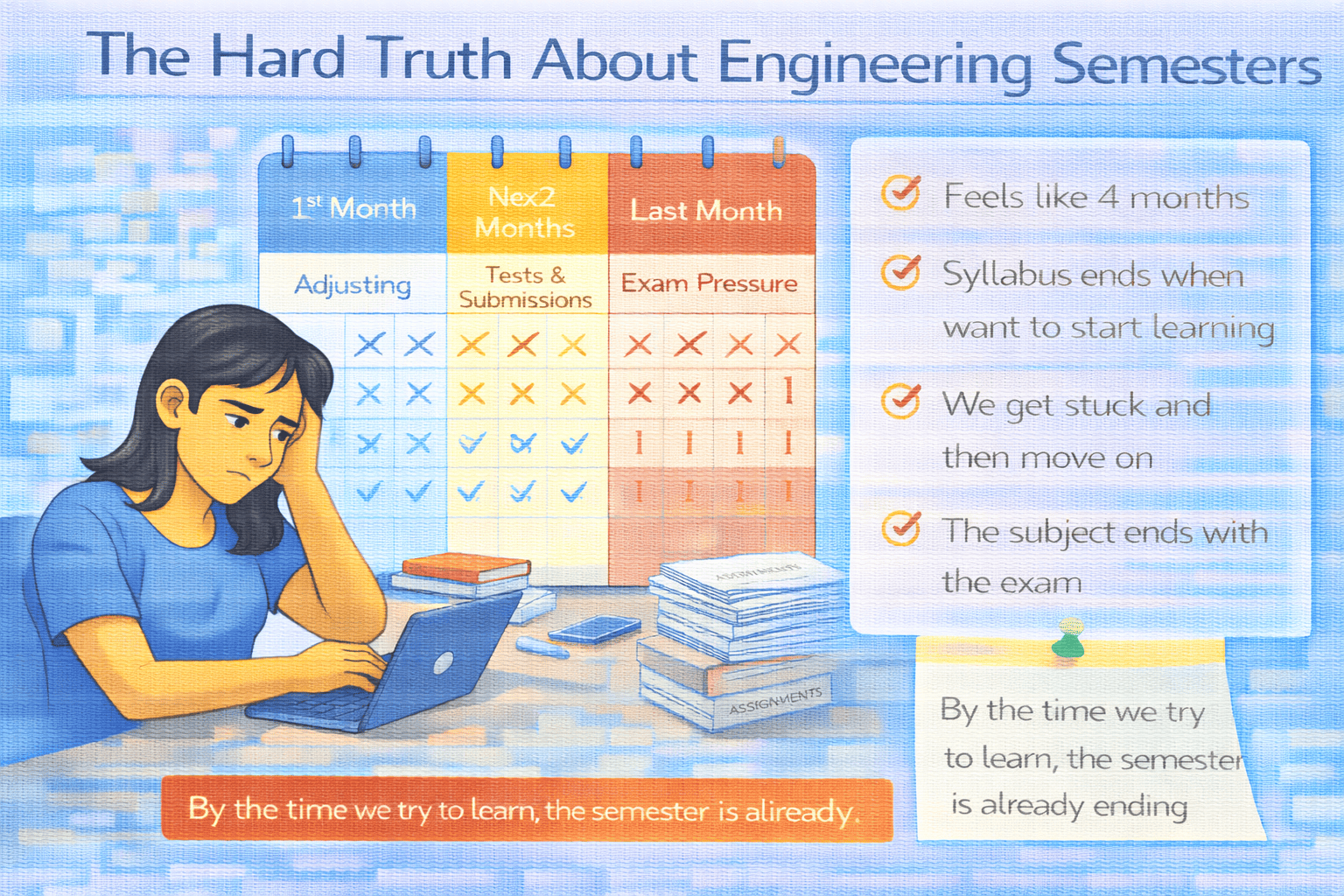
We believe a semester lasts six months.
In reality, it feels like four.
The first month goes in adjusting. The next two disappear in internal tests and submissions. The last month is pure exam pressure.
By the time we think, “I should properly learn this subject,” the syllabus is already over.
And once exams are done?
The subject is done.
Closed. Forgotten. Replaced by the next one.
Yes, we may get a good CGPA.
But let me ask you something uncomfortable:
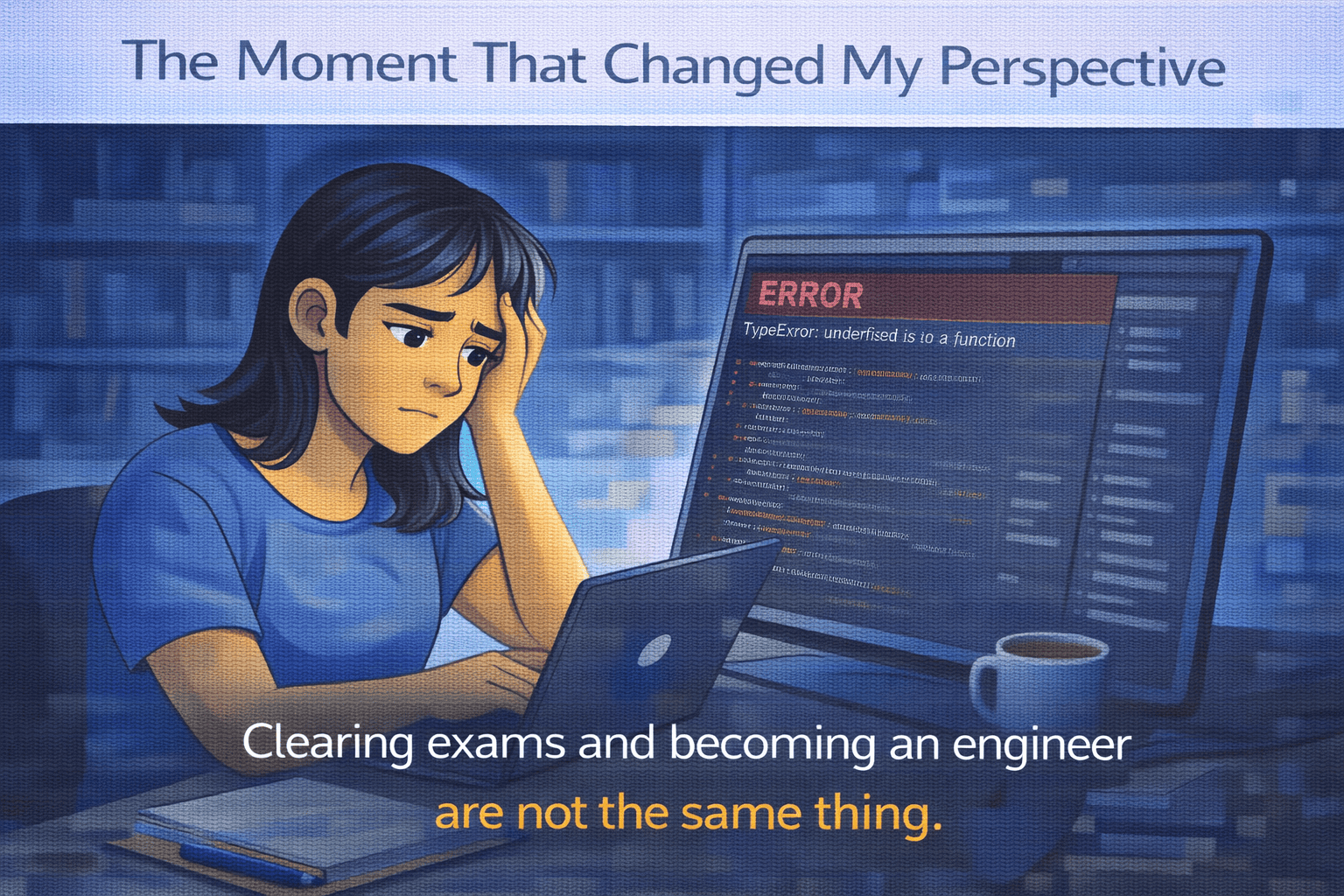
In my third year, I started working on my mini project.
I was confident. After all, I had cleared all my subjects.
But when I sat down to build something real, I got stuck at the basics.
Simple logic felt complicated. Concepts I had written in exams suddenly felt unfamiliar.
That was the moment it hit me:
Clearing exams and becoming an engineer are not the same thing.
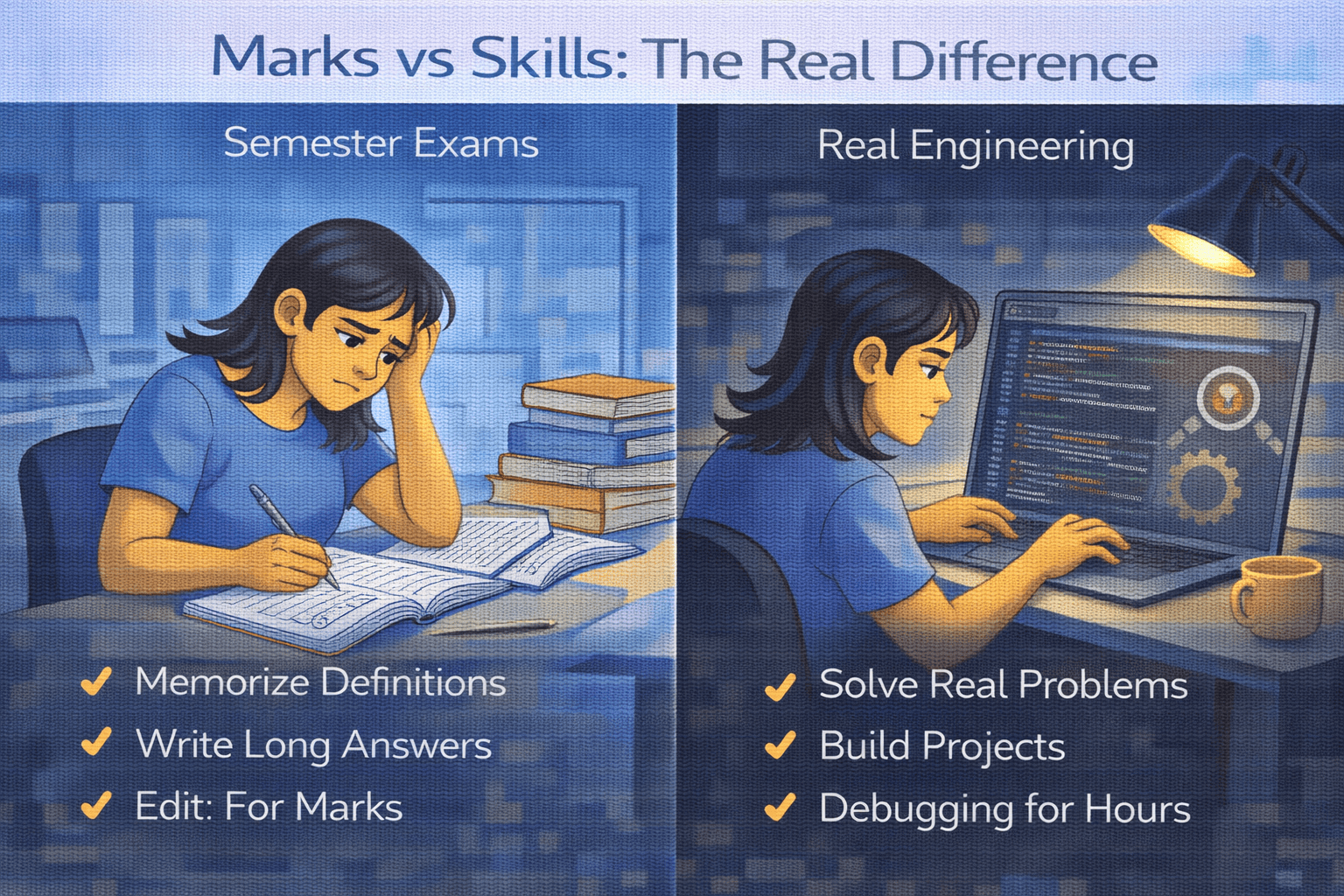
In semester exams:
It works for marks.
It works for CGPA.
It works for getting the degree.
But does it work when you sit in front of a real problem?
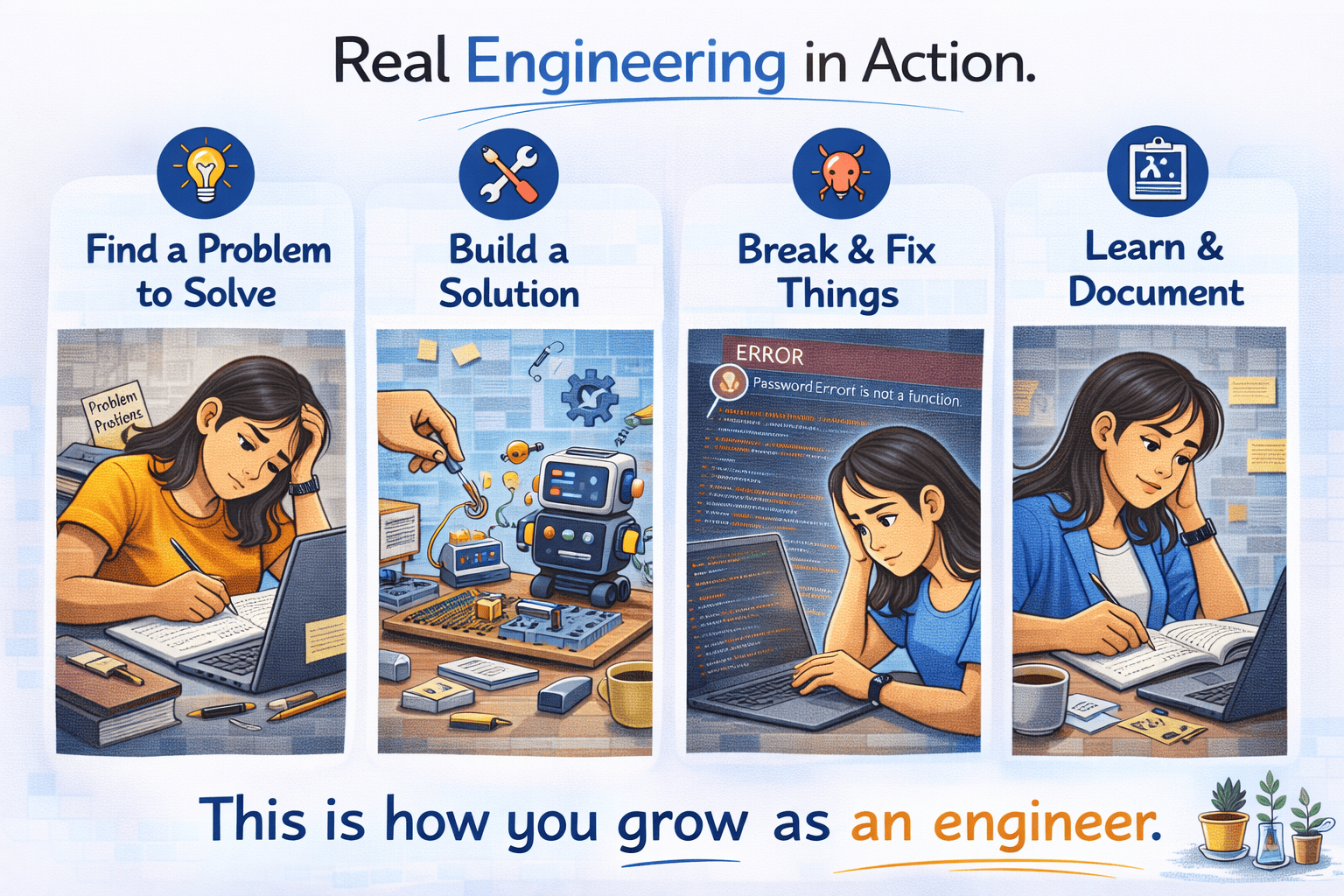
Real engineering is uncomfortable.
It is:
When I started learning outside the syllabus, something changed.
I began taking online courses that pushed me to build projects.
I started creating small real-world applications.
I made mistakes. A lot of them.
But slowly, I started understanding concepts deeply.
That hands-on experience taught me more than several semesters combined.
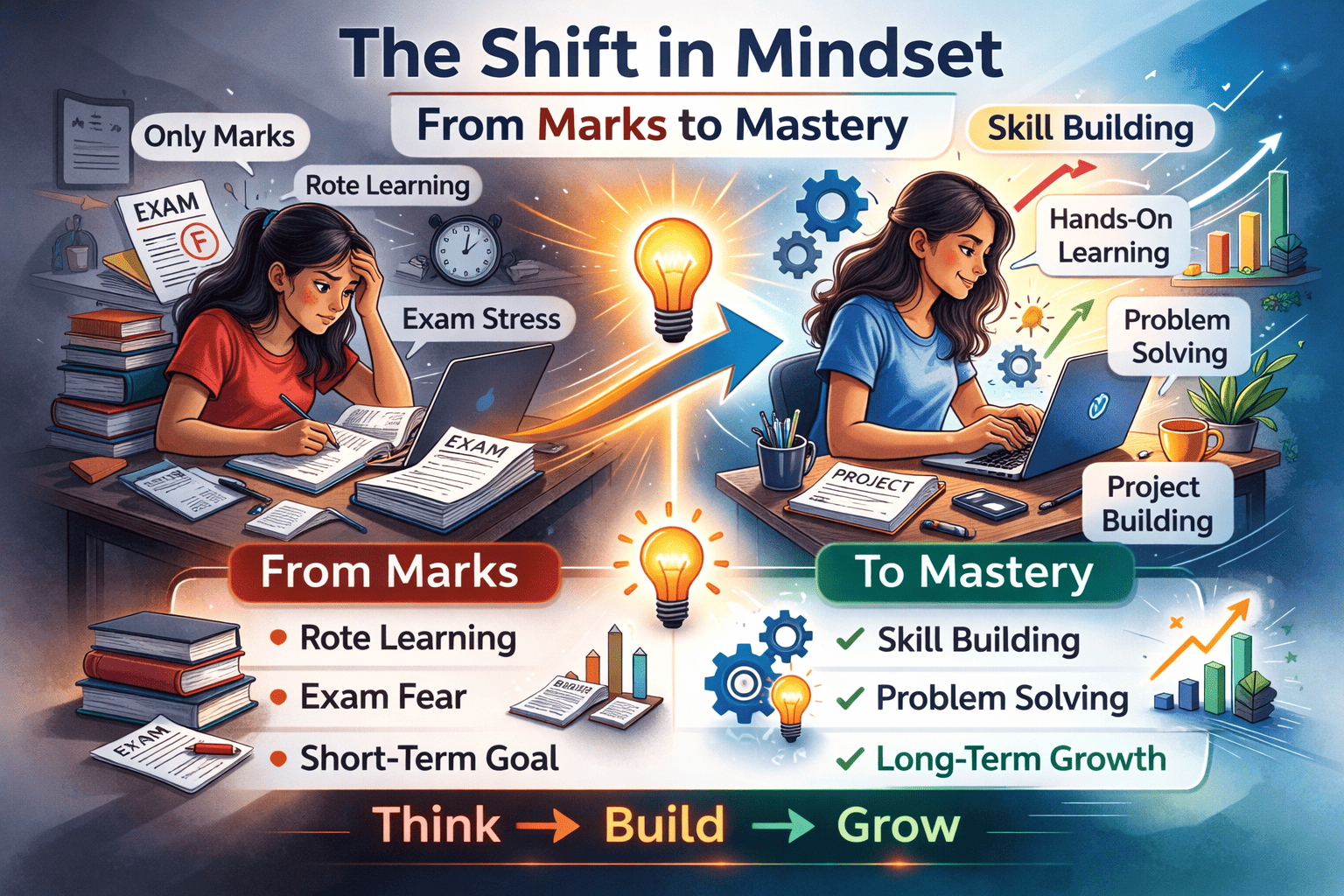
Earlier, my mindset was simple:
“How many units do I need to complete to get a good CGPA?”
Now, my mindset is different:
“How can I use this concept to build something meaningful?”
I am still in the same college. The same syllabus. The same exams.
Nothing outside has changed.
But inside, everything has changed.
Marks are important. CGPA matters. But they are not enough.
If you want to stand out:
Don’t wait for the “right time.” Don’t wait for final year. Don’t wait for placements to begin.
Start now.
Engineering is not about passing semesters.
It is about building the mindset to solve problems.
A degree may give you an opportunity.
But skills give you confidence.
I am no longer studying just to clear exams.
I am studying to become an engineer.
If you are reading this as an engineering student, I want you to pause for a moment.
Ask yourself honestly:
Your degree will get you an interview.
Your CGPA may get you shortlisted.
But your skills, your projects, your curiosity — those will build your confidence.
Do not wait for final year to take your growth seriously.
Do not wait for placements to start learning properly.
Do not wait for someone to tell you what to do.
Start small.
Build something simple.
Break it. Fix it. Improve it.
Because one day, when someone asks you what you can build — you should not hesitate.
Don’t just pass semesters. Build your engineering story.

One short email when we publish something new — interview questions, Salesforce guides and career tips. No spam, unsubscribe in one click.
No one teaches you how to start your first project — a practical, step-by-step way to pick an idea, plan it, build it and finish it.
Ten of the best free online courses and platforms to learn programming from scratch — what each teaches, who it suits and how to pick the right one.
Scenario-based Salesforce trigger questions with solutions — real business requirements turned into Apex triggers, with code and explanations.
Questions, corrections or your own experience — they all help the next reader.
Ananya Sharma
Rahul Verma
Priya Nair
Arjun Mehta
Karthik Reddy