Indian Politics
🌍 Expand your horizons with comprehensive general knowledge covering history, geography, science, culture, and current events. Stay informed and aware.
Introduction
Study MaterialIndian Politics
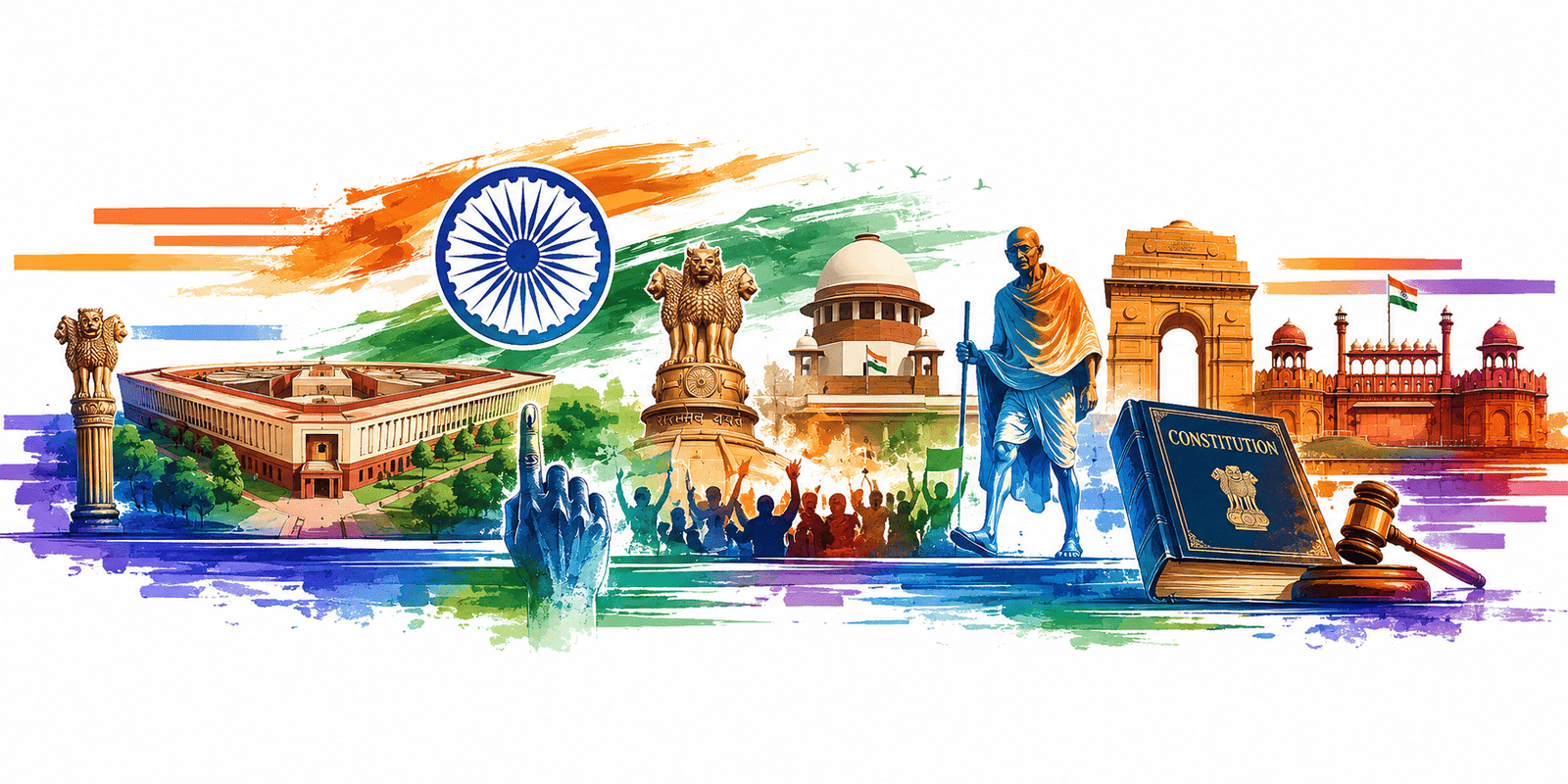
Indian Politics is one of the most important sections of General Knowledge for competitive examinations, interviews, and academic studies. It helps candidates understand the Indian Constitution, political system, Parliament, governance structure, fundamental rights, elections, and public administration.
Indian Politics mainly covers the Constitution of India, Union Government, State Government, Fundamental Rights, Directive Principles, Parliament, Judiciary, Elections, Panchayati Raj, Constitutional Bodies, and important political developments.
What is Indian Politics?
Indian Politics refers to the system of governance, administration, constitutional framework, political institutions, and democratic functioning of the Republic of India.
Indian Politics mainly includes:
- Constitution of India
- Parliament & Legislature
- President & Prime Minister
- Supreme Court & Judiciary
- Fundamental Rights & Duties
- Directive Principles of State Policy
- Elections & Political Parties
- Panchayati Raj System
- Constitutional Amendments
- Union & State Government
Indian Parliamentary System
India follows a Parliamentary Democratic System where the President is the constitutional head and the Prime Minister is the real executive head of the government.
| Institution | Role |
|---|---|
| President | Constitutional Head of India |
| Prime Minister | Head of Government |
| Lok Sabha | House of the People |
| Rajya Sabha | Council of States |
| Supreme Court | Highest Judicial Authority |
Constitution of India
The Constitution of India is the supreme law of the country and came into effect on 26 January 1950. It defines the structure, powers, duties, and functions of the government and citizens.
- World’s Lengthiest Written Constitution
- Adopted on 26 November 1949
- Implemented on 26 January 1950
- Dr. B. R. Ambedkar is known as the Architect of the Constitution
- Indian Constitution is partly inspired by various countries
- Contains Fundamental Rights and Duties
Fundamental Features of Indian Constitution
| Feature | Description |
|---|---|
| Sovereign | India is independent in decision-making |
| Socialist | Focus on social and economic equality |
| Secular | Equal respect for all religions |
| Democratic | Government elected by the people |
| Republic | Elected head of the state |
Fundamental Rights of Indian Citizens
- Right to Equality
- Right to Freedom
- Right against Exploitation
- Right to Freedom of Religion
- Cultural & Educational Rights
- Right to Constitutional Remedies
Directive Principles & Fundamental Duties
Directive Principles guide the government in policy-making, while Fundamental Duties define the responsibilities of Indian citizens toward the nation.
- Promote social and economic welfare
- Protect environment and national heritage
- Respect Constitution and National Flag
- Promote scientific temper and harmony
- Protect unity and integrity of India
Important Constitutional Bodies
| Body | Main Function |
|---|---|
| Election Commission | Conducts elections |
| Finance Commission | Distribution of financial resources |
| UPSC | Conducts civil services examinations |
| CAG | Audits government accounts |
| NITI Aayog | Policy planning and development |
Most Important Topics in Indian Politics
- Preamble of Constitution
- Fundamental Rights & Duties
- Parliament & Judiciary
- President & Prime Minister
- Emergency Provisions
- Constitutional Amendments
- Schedules & Articles
- Election Commission
- Panchayati Raj System
- Union & State Relations
Importance of Indian Politics in Exams
Competitive Exams
Very important for UPSC, SSC, Banking, Railway, and State PSC exams.
Constitutional Awareness
Helps understand rights, duties, and governance structure.
Interview Preparation
Improves awareness about political and constitutional topics.
Current Affairs Understanding
Helps understand government policies and political developments.
How to Prepare Indian Politics?
- Understand the structure of the Constitution.
- Learn important Articles and Schedules.
- Study Fundamental Rights and Duties carefully.
- Practice polity MCQs regularly.
- Follow political current affairs and constitutional updates.
- Revise Parliament, Judiciary, and Election topics frequently.
Quick Learning Framework
Learn Constitution Basics
↓
Study Rights & Duties
↓
Understand Parliament & Judiciary
↓
Practice Polity MCQs
↓
Revise Important Articles
↓
Improve Exam Accuracy
Final Takeaway
Indian Politics provides deep understanding about the Constitution, democratic system, governance structure, Parliament, Judiciary, and citizen rights in India.
Strong preparation in Indian Politics improves General Knowledge, constitutional awareness, analytical thinking, and competitive examination performance significantly.