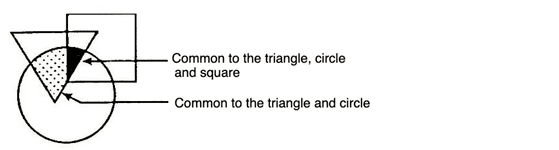
Dot Situation - Base Level
Practice and master this topic with our carefully crafted questions.
In the following questions, one or more dots are placed in the figure marked as (X). This figure is followed by four alternatives marked as (1), (2), (3) and (4). One out of these four options contains region(s) common to circle, square, triangle, similar to that marked by the dot in figure (X).
Select the figure which satisfies the same conditions of placement of the dots as in Figure (X).

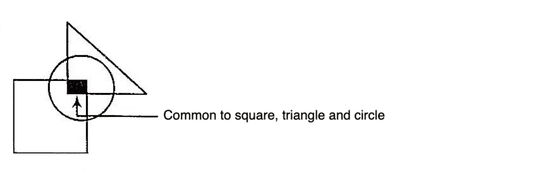
In figure (X), the dot is placed in the region which is common to the square, triangle and circle. Now, we have to search similar common region in four options. Only in figure (4), we find such a region which is common to the square, triangle and circle.
Select the figure which satisfies the same conditions of placement of the dots as in Figure (X).
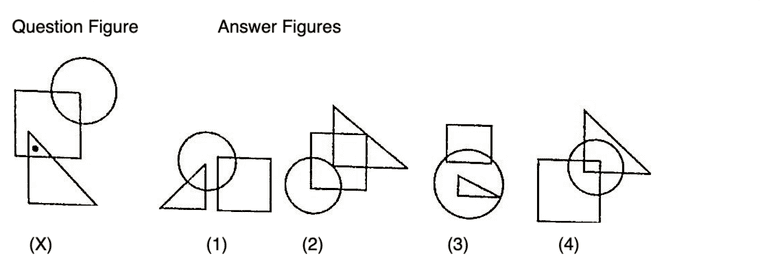
In figure (X), the dot is placed in the region which is common to the square and triangle. Now, we have to search similar common region in four options. Only in figure (2), we find such a region which is common to the square and triangle.
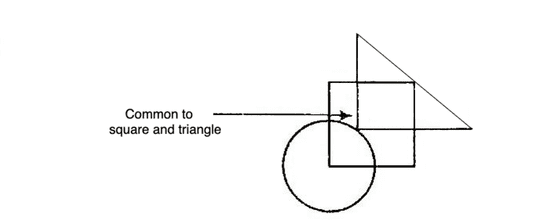
Select the figure which satisfies the same conditions of placement of the dots as in Figure (X).

In figure (X), the dot is placed in the region which is common to the circle and triangle. Now, we have to search similar common region in four options. Only in figure (3), we find such a region which is common to the circle and triangle.
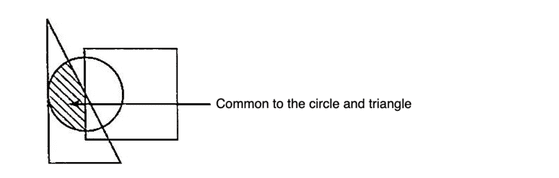
Select the figure which satisfies the same conditions of placement of the dots as in Figure (X).
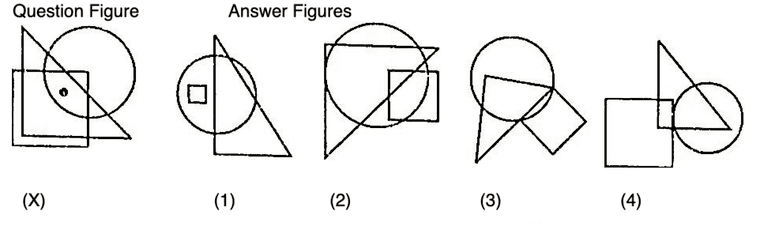
In figure (X), the dot is placed in the region which is common to the circle, square and triangle. Now, we have to search similar common region in four options. Only in figure (2), we find such a region which is common to the circle, square and triangle.
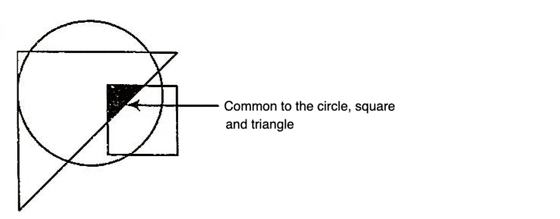
Select the figure which satisfies the same conditions of placement of the dots as in Figure (X).
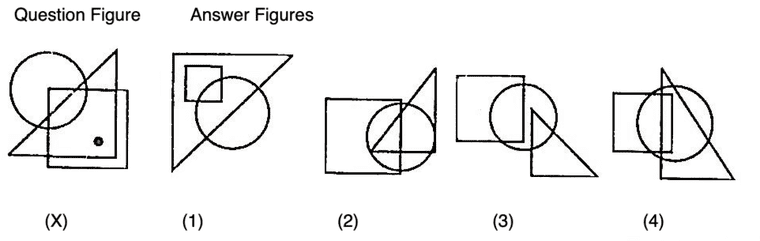
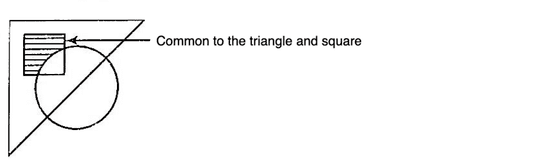
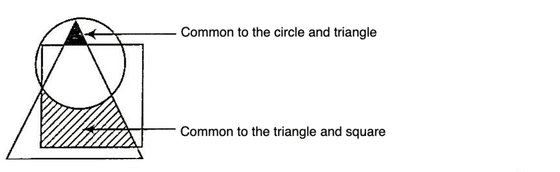
In figure (X), the dot is placed in the region which is common to the triangle and square. Now, we have to search similar common region in four options. Only in figure (1), we find such a region which is common to the triangle and square.
Select the figure which satisfies the same conditions of placement of the dots as in Figure (X).
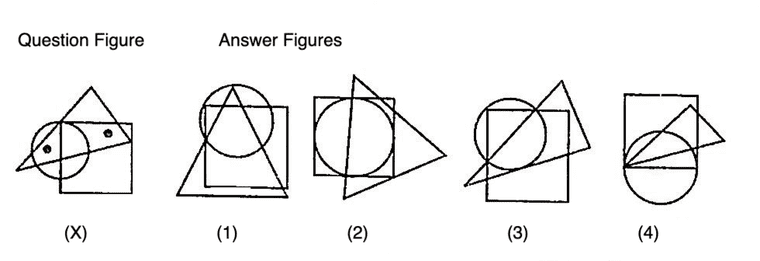
One dot occupies the region which is common to the circle and triangle and the other dot occupies the region which is common to the triangle and square. Out of all the answer figures, only answer figure (1) possesses a region which is common to the circle and triangle and a region which is common to the triangle and square.
Select the figure which satisfies the same conditions of placement of the dots as in Figure (X).
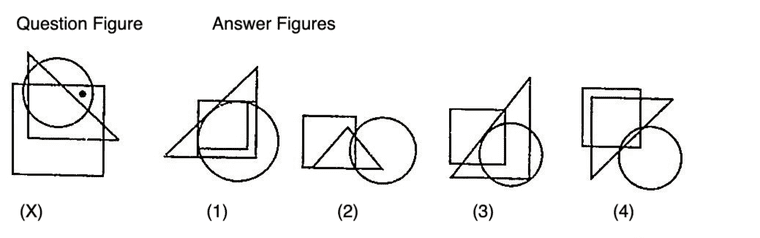
In figure (X), the dot is placed in the region which is common to the circle and square. Now, we have to search similar common region in four options. Only in figure (4), we find such a region which is common to the circle and square.
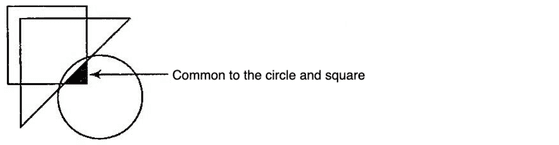
Select the figure which satisfies the same conditions of placement of the dots as in Figure (X).
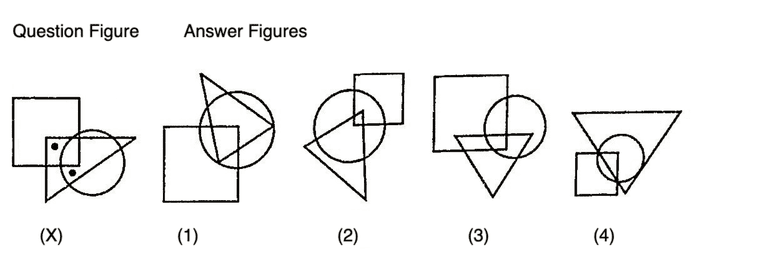
One dot occupies the region which is common to the triangle and square and the other dot occupies the region which is common to the triangle and circle. Out of all the answer figures, only answer figure (3) possesses a region which is common to the triangle and square and a region which is common to the triangle and circle.
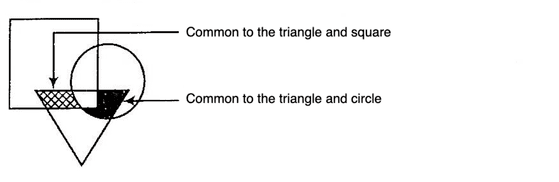
Select the figure which satisfies the same conditions of placement of the dots as in Figure (X).
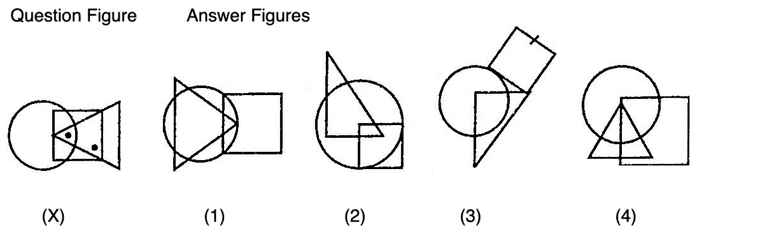
One dot occupies the region which is common to the triangle, square and circle and the other dot occupies the region which is common to the triangle and square. Out of all the answer figures, only answer figure (4) possesses a region which is common to the triangle, square and circle and a region which is common to the triangle and square.
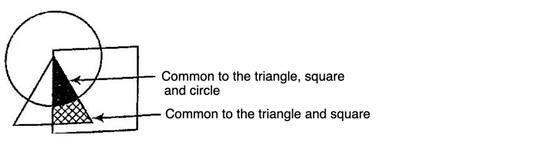
Select the figure which satisfies the same conditions of placement of the dots as in Figure (X).
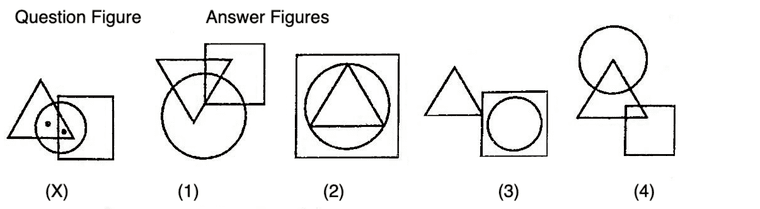
One dot occupies the region which is common to the triangle, circle and square and the other dot occupies the region which is common to the triangle and circle. Out of all the answer figures, only answer figure (1) possesses a region which is common to the triangle, circle and square and a region which is common to the triangle and circle.