Indian History
🌍 Expand your horizons with comprehensive general knowledge covering history, geography, science, culture, and current events. Stay informed and aware.
Introduction
Study MaterialIndian History
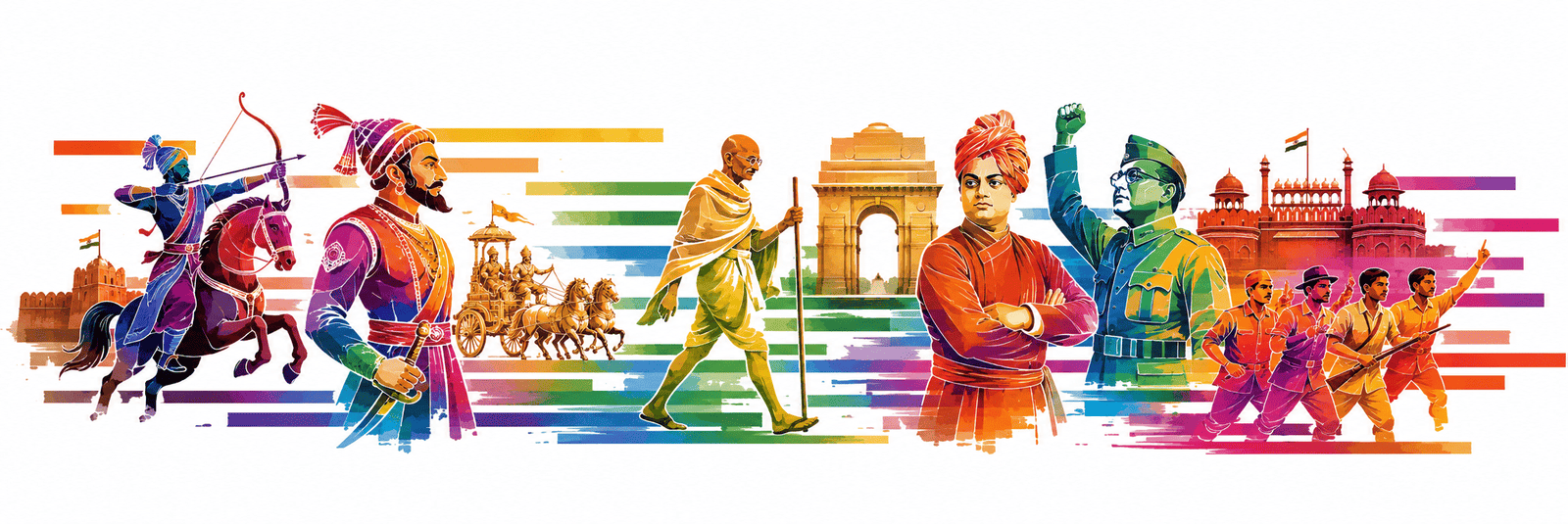
Indian History is one of the most important sections of General Knowledge for competitive examinations, interviews, and academic studies. It helps candidates understand India’s ancient civilization, cultural heritage, political developments, freedom struggle, and historical events that shaped modern India.
Indian History covers Ancient, Medieval, and Modern India along with important dynasties, rulers, battles, reform movements, and the Indian Freedom Movement.
What is Indian History?
Indian History is the systematic study of important historical events, civilizations, rulers, kingdoms, social changes, religious movements, and political developments that took place in India from ancient times to modern independence.
Indian History mainly consists of:
- Ancient Indian History
- Medieval Indian History
- Modern Indian History
- Indian Freedom Struggle
- Dynasties & Empires
- Religious & Social Reform Movements
- Important Battles & Events
- British Rule in India
Major Periods of Indian History
| Period | Main Focus |
|---|---|
| Ancient India | Indus Valley Civilization, Maurya, Gupta Empire |
| Medieval India | Delhi Sultanate, Mughal Empire, Regional Kingdoms |
| Modern India | British Rule, Revolt of 1857, Freedom Movement |
Importance of Indian History
Indian History is extremely important for competitive exams because many questions are directly asked from historical events, rulers, dynasties, freedom movements, and important dates.
Competitive Exams
Important for UPSC, SSC, Railway, Banking, Defence, and State PSC exams.
Historical Awareness
Helps understand India’s cultural and political development.
National Identity
Builds awareness about freedom fighters and national movements.
Analytical Thinking
Improves understanding of causes and effects of historical events.
Important Topics in Indian History
| Topic | Important Areas |
|---|---|
| Ancient India | Indus Valley, Vedic Age, Maurya Empire, Gupta Empire |
| Medieval India | Delhi Sultanate, Mughals, Vijayanagara Empire |
| Modern India | British Rule, Revolt of 1857, INC Formation |
| Freedom Struggle | Non-Cooperation, Civil Disobedience, Quit India |
| Reform Movements | Brahmo Samaj, Arya Samaj, Aligarh Movement |
| Important Personalities | Gandhi, Nehru, Subhash Bose, Bhagat Singh |
Most Important Historical Events
- Indus Valley Civilization
- Rise of Maurya Empire
- Reign of Ashoka
- Gupta Golden Age
- Delhi Sultanate Establishment
- Mughal Empire Foundation
- Battle of Plassey (1757)
- Revolt of 1857
- Formation of Indian National Congress
- Indian Independence Movement
- Quit India Movement
- Indian Independence (1947)
Important Dynasties & Empires
- Maurya Dynasty
- Gupta Dynasty
- Chola Dynasty
- Delhi Sultanate
- Mughal Empire
- Maratha Empire
- Vijayanagara Empire
- British East India Company
Important Freedom Movements
- Swadeshi Movement
- Non-Cooperation Movement
- Civil Disobedience Movement
- Quit India Movement
- Khilafat Movement
- Revolutionary Movement
- Azad Hind Fauj Movement
Important Personalities in Indian History
| Personality | Contribution |
|---|---|
| Mahatma Gandhi | Father of the Nation |
| Subhash Chandra Bose | Azad Hind Fauj |
| Jawaharlal Nehru | First Prime Minister of India |
| Bhagat Singh | Revolutionary Freedom Fighter |
| Dr. B. R. Ambedkar | Architect of Indian Constitution |
| Rani Lakshmibai | Leader of Revolt of 1857 |
Why Indian History is Important for Exams?
- Frequently asked in competitive exams
- Important for static GK preparation
- Helps in essay and interview preparation
- Improves understanding of Indian culture
- Strengthens analytical and chronological understanding
Quick Learning Framework
Learn Historical Periods
↓
Study Important Events
↓
Remember Important Dates
↓
Practice History MCQs
↓
Revise Regularly
↓
Improve Exam Accuracy
Final Takeaway
Indian History provides deep understanding about India’s civilization, rulers, empires, reform movements, and freedom struggle. Strong preparation in Indian History improves General Knowledge, analytical ability, and competitive examination performance significantly.
Regular revision of important events, dynasties, battles, movements, and historical personalities is the key to mastering Indian History effectively.