Will AI Take Our Jobs or Create New Opportunities?
Will AI replace jobs or create new ones? A balanced look at which roles change, the new opportunities AI opens and the skills that keep you relevant.
Job opportunities for electrical engineers in power, automation, PLC and SCADA, electronics, government and PSU roles, with the skills employers look for.
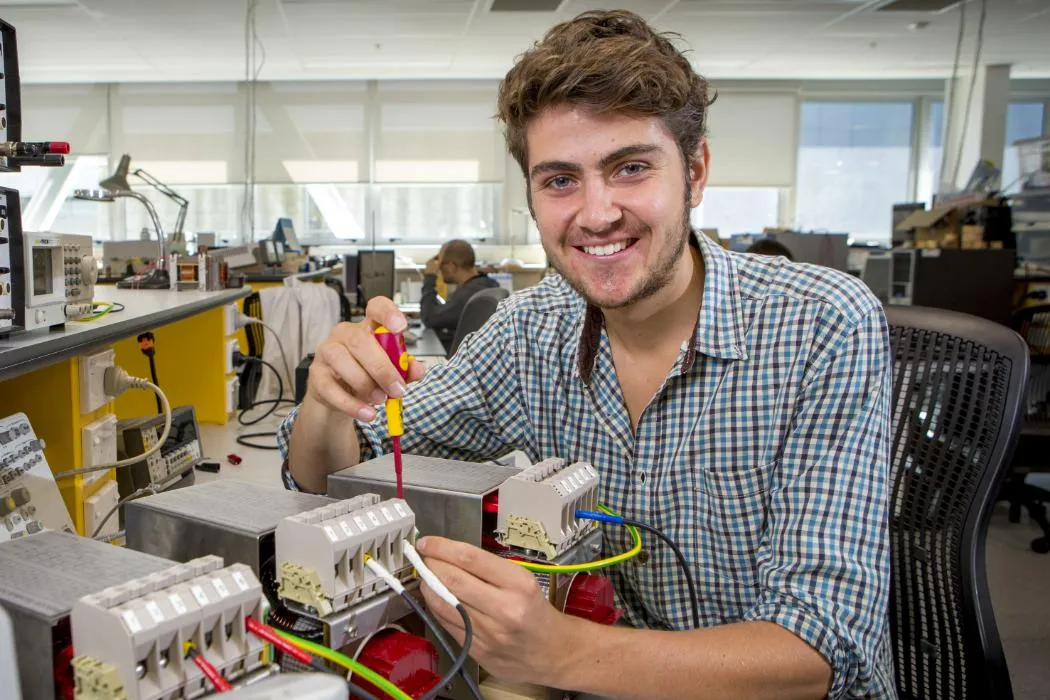
Electrical Engineering is one of the fastest growing fields that involves study and application of electricity and electronics. It is the most interesting branch of engineering because it involves study of computer, electrical and electronics and communication. Electrical engineering deals with generation, transmission and distribution of electricity.
This blog provides Career guidance,Career choices, Salary and Job Opportunities to Electrical Engineering Students who wish to pursue their career after the course.
Few important questions that comes to the mind of final year electrical engineering students are :
> How to get a job in electrical company?This blog is intended to answer these question. Before going into companies which provides the jobs for electrical engineers, lets have a look at the type of jobs available in electrical domain and skills required for each Job. Some skills are not mandatory as a fresher, but having those skills will significantly improve the chances of getting jobs. Different Openings for Electrical Engineers and Skill set required for each engineering Job is given below
| JOB Category | Required Skill Set |
|---|---|
| Industrial Automation | PLC,SCADA,DCS,Electrical Engineering Basics,Communication protocols like IEC 104,IEC 61850,Modbus,DNP3 |
| Substation Automation | RTU,PLC,SCADA,Electrical Engineering Basics, Communication protocols like IEC 104,IEC 61850,Modbus,DNP3 |
| Power System Analysis | Fault Analysis,Electrical Network Analysis,Power Flow Basics,Electrical Engineering Basics |
| Microchip Design | B.E,B.Tech,M.E,M.Tech, Electrical Engineering Advanced |
| Equipment Manufacturing | Home Electrical Appliances,Electrical Engineering Basics |
| Power System Equipment Manufacturing | DRIVES,Relay, Meter, transformer,Breaker,Generator, Electrical Engineering Basics |
| Plant Operation & Maintenance | Electrical Engineering Basics |
| Research and Development Careers | Optimization, ANN, FANN, Electrical Engineering Advanced |
Let us have look at the companies that provide electrical engineering jobs in each category for electrical engineers.
| JOB Category | Companies |
|---|---|
| Industrial Automation | ABB, Seimens, Schneider Electric, Rockwell Automation |
| Substation Automation | ABB, Seimens, Alstom, Areva, Schneider Electric |
| Power System Analysis | Digsilent |
| Microchip Design | microchip |
| Equipment Manufacturing | ABB, Seimens, Alstom, Areva, Schneider Electric |
| Power System Equipment Manufacturing | ABB, Seimens, Alstom, Areva, Schneider Electric |
| Plant Operation & Maintenance | All Private and Government owned Cement,Steel,Oil and Gas, Aluminium, Paper, Copper Plants. All Private and Government owned Power Plants, Transmission Companies and Distribution utilities. |
| Research and Development Careers | ABB, Seimens, Alstom, Areva, Schneider Electric |
Now lets have a detailed look at each skill.
PLC (Programmable Logic Controller) is used in automation industry for controlling electromechanical process. PLC consists of a processor, communication modules, analog and digital cards. External devices can communicate with PLC using protocols like IEC 104,IEC 61850, Modbus, DNP3 etc. PLC Programmers can write logic's to control a electromechanical system and download into PLC. When inputs are received from the field device, PLC program executes and sends out necessary commands as per Logic.PLC Programming Languages are based IEC 1131-3 standard. IEC standard specify following list of languages of PLC.
1. Ladder Logic diagram (LD)
RTU ( Remote Terminal Unit) is a microprocessor controlled electronic device, which act as an interface between Field devices and PLC, DCS, SCADA . Simple programs are downloaded and get executed inside RTU. RTU fetch data from field devices like Transducers, Sensor, Relay, Meter etc. via Serial,Ethernet cables. RTU can be interfaced with other equipments or software's over standard communication protocols like IEC 104,IEC 61850, Modbus, DLMS,DNP3 etc.

DCS (Distributed Control System) is the brain of automation system. DCS functions as a coordinated control system for all the PLCs to control the operations of a plant. Every plant will have sub divisions. For example in a steel plant there will be mills like casting mill, furnace, manufacturing and packing. Each mill be controlled by a PLC. DCS system sits on top of all these mills, which control and communicates between the PLC's and sends necessary commands.

SCADA (Supervisory Control and Data Acquisition) is a type of control system which is used to monitor data Polled from PLC, RTU using protocols like IEC 104, IEC 61850,Modbus, DNP3 etc. Polled data will be stored in the system for online and Offline analysis via real time trends, Historical graphs etc. SCADA can send commands to PLC's, RTU's on user action.

Protocols that are mainly used in communication are IEC 104, IEC 61850, Modbus, DLMS, DNP3 etc. Since most protocols are IEC standard protocols, working with RTU's, DCS and PLC's of different manufacturers will be easy.

As population and industries grow, demand for power grows exponentially. Starting new power projects is not the best solution to tackle this issue. So governments around the world is pumping huge amount of money in power sector research and development for increasing efficiency in generation, transmission and distribution of power. So choosing careers in research and development for Engineers after Electrical engineering is a good move, since research and development are well funded. In order to increase efficiency in power sector, power production need to be optimized and and power should be generated with high efficiency. The generated power need to be transmitted and distributed to end customers with less transmission loss. So there are n number of areas for research in power sector. Areas for research development are :
 Optimization Solutions in power plant to increase efficiency using ANN, FANN, Genetic Algorithm etc.
Load Flow Analysis in Transmission and Distribution networks for reducing Transmission loss
Optimization solution in power exchange scheduling process between Transmission, generation and distribution networks.Smart devices and equipments like smart meters, smart home appliances development which consume less power. Smart devices and equipments are a part of world wide initiative to save power called "SMART GRID"
According to the US BLS, there is a good career prospect for engineers who specialise in research and development. Electrical engineers' salaries vary, depending on industry standards and experience levels. Freshers can start their career with a pay of Rs 25,000 to Rs 35,000 per month and can go up to Rs 60,000 per month when they reach the managerial cadre. As you gain experience, you can become either a consultant, which is a lucrative path, or start your own company and employ future engineers.
Hope this article provides an insight to electrical engineering students in choosing careers, jobs after engineering.
One short email when we publish something new — interview questions, Salesforce guides and career tips. No spam, unsubscribe in one click.
Will AI replace jobs or create new ones? A balanced look at which roles change, the new opportunities AI opens and the skills that keep you relevant.
Job opportunities for ECE graduates in embedded systems, VLSI, telecom, IT and PSU roles, plus the skills and certifications that get you hired.

The best career paths for CS graduates — software engineering, design, analytics, testing and networking — with what each job involves day to day.
Questions, corrections or your own experience — they all help the next reader.
PLC Automation