

Seven years ago, entering the software industry was mostly about knowing one programming language, some database basics, and writing decent code.
Today, things are very different.
Artificial Intelligence, automation tools, cloud platforms, and rapid product development have completely changed what companies expect from freshers.
College still teaches many subjects, but let’s be honest. Most students graduate without clarity on which skills actually matter in the real world.
This guide focuses on the **most relevant, practical, and future-proof skills** a fresher must have in 2026 to confidently enter the software industry.
These are not “nice-to-have” skills. These are the skills that significantly improve your chances of landing interviews, clearing technical rounds, and growing fast in your first job.
1. Strong Programming Fundamentals (Language Matters Less Than Logic)
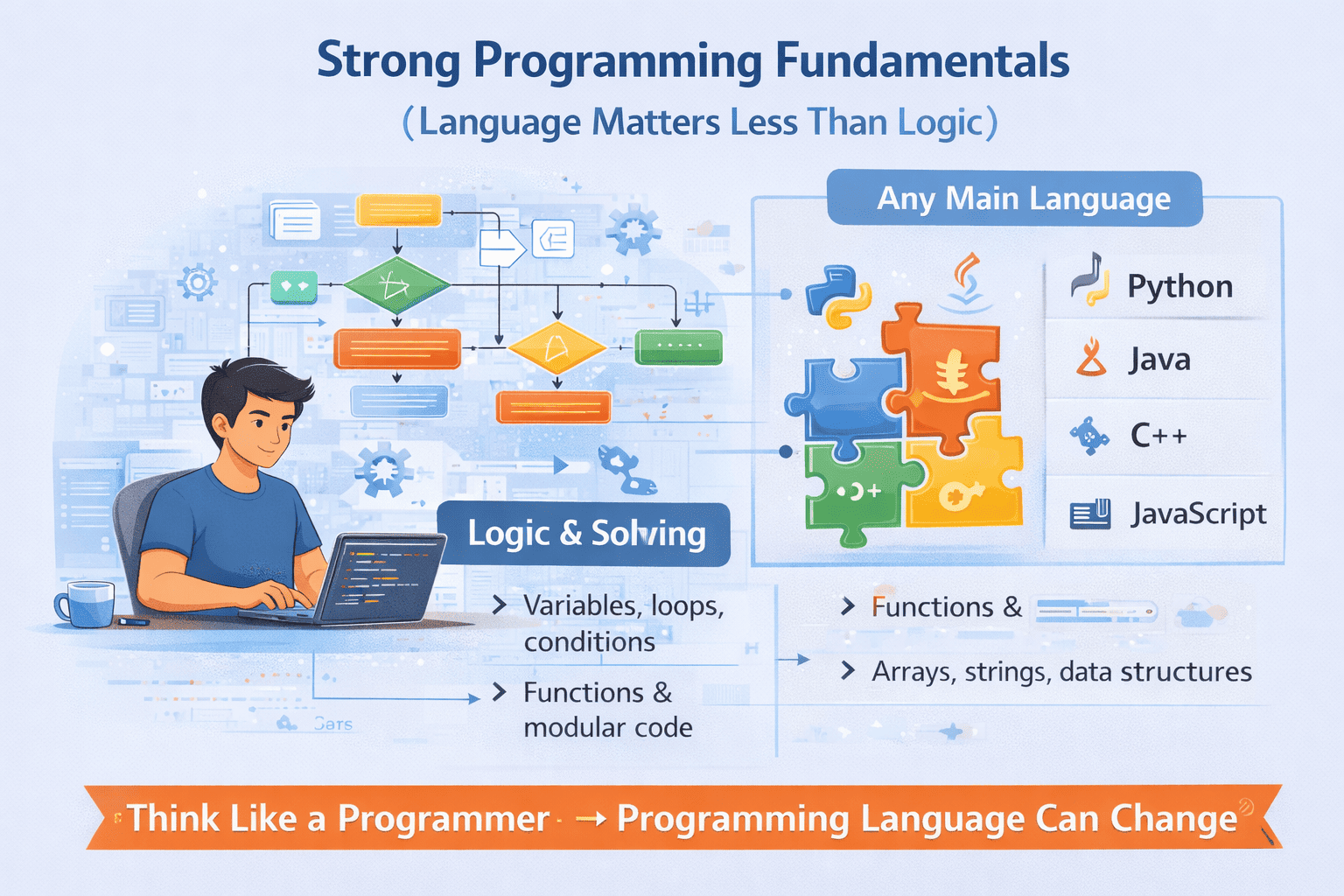
Earlier, companies used to ask for specific languages like C, C++, or Core Java.
Now, what really matters is whether you understand how programming works.
You must be comfortable with:
- Variables, loops, and conditions
- Functions and modular code
- Arrays, strings, and basic data structures
- Problem-solving and logical thinking
You can choose any one main language:
- Python (very popular with AI and automation)
- Java (still dominant in enterprise systems)
- JavaScript (essential for web development)
- C++ (strong foundation and performance-oriented)
Companies no longer hire you for a language. They hire you for your ability to learn new languages quickly.
2. Understanding How the Web Actually Works
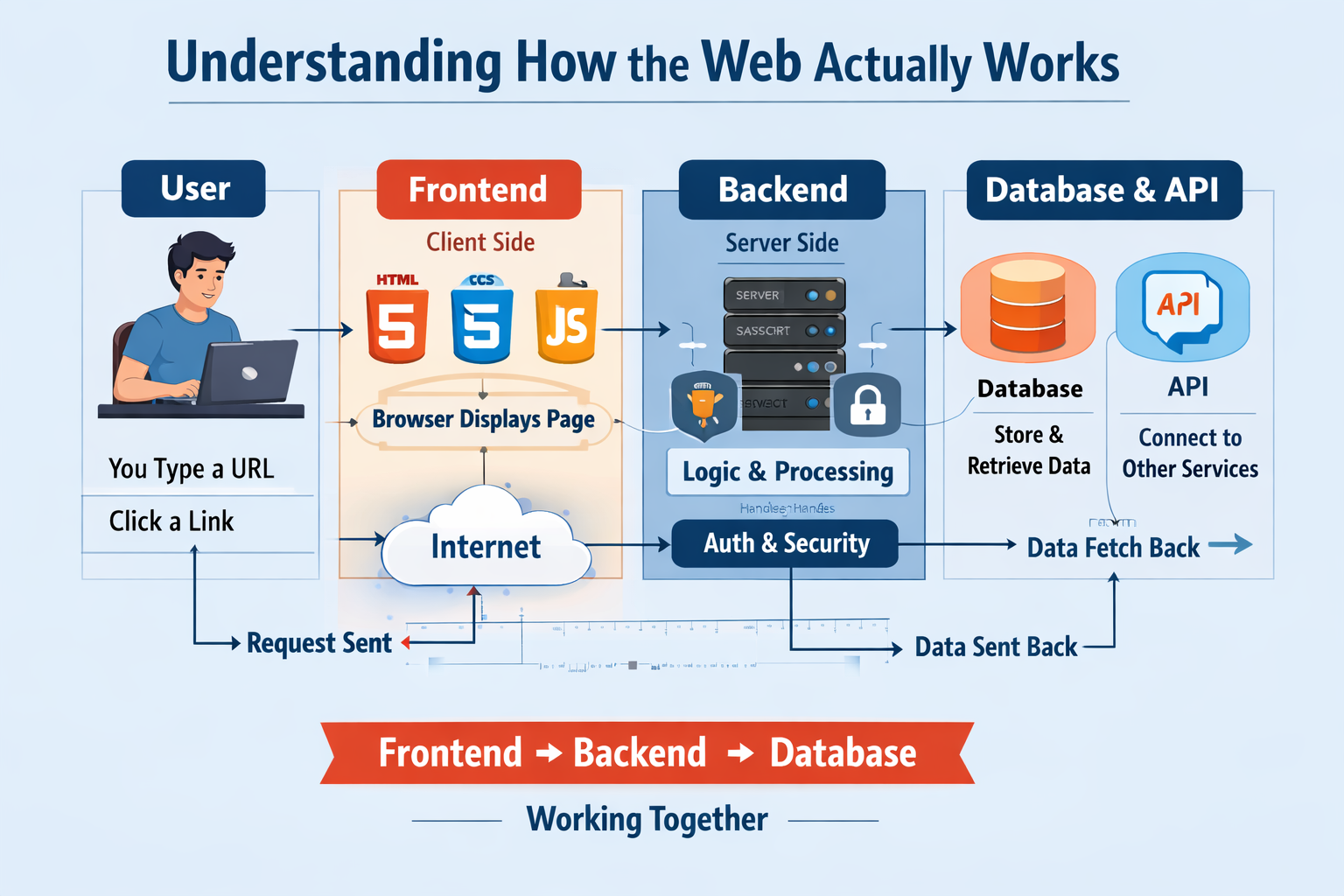
Even if you are not a web developer, understanding the web is non-negotiable today.
You should clearly understand:
- What happens when you type a URL in the browser
- Difference between frontend and backend
- Basic HTML, CSS, and JavaScript
- APIs and how data flows between systems
You don’t need to become a UI expert, but you must know how applications are structured in the real world.
This knowledge helps not only in jobs, but also in interviews where system understanding is tested.
3. Databases and Data Thinking
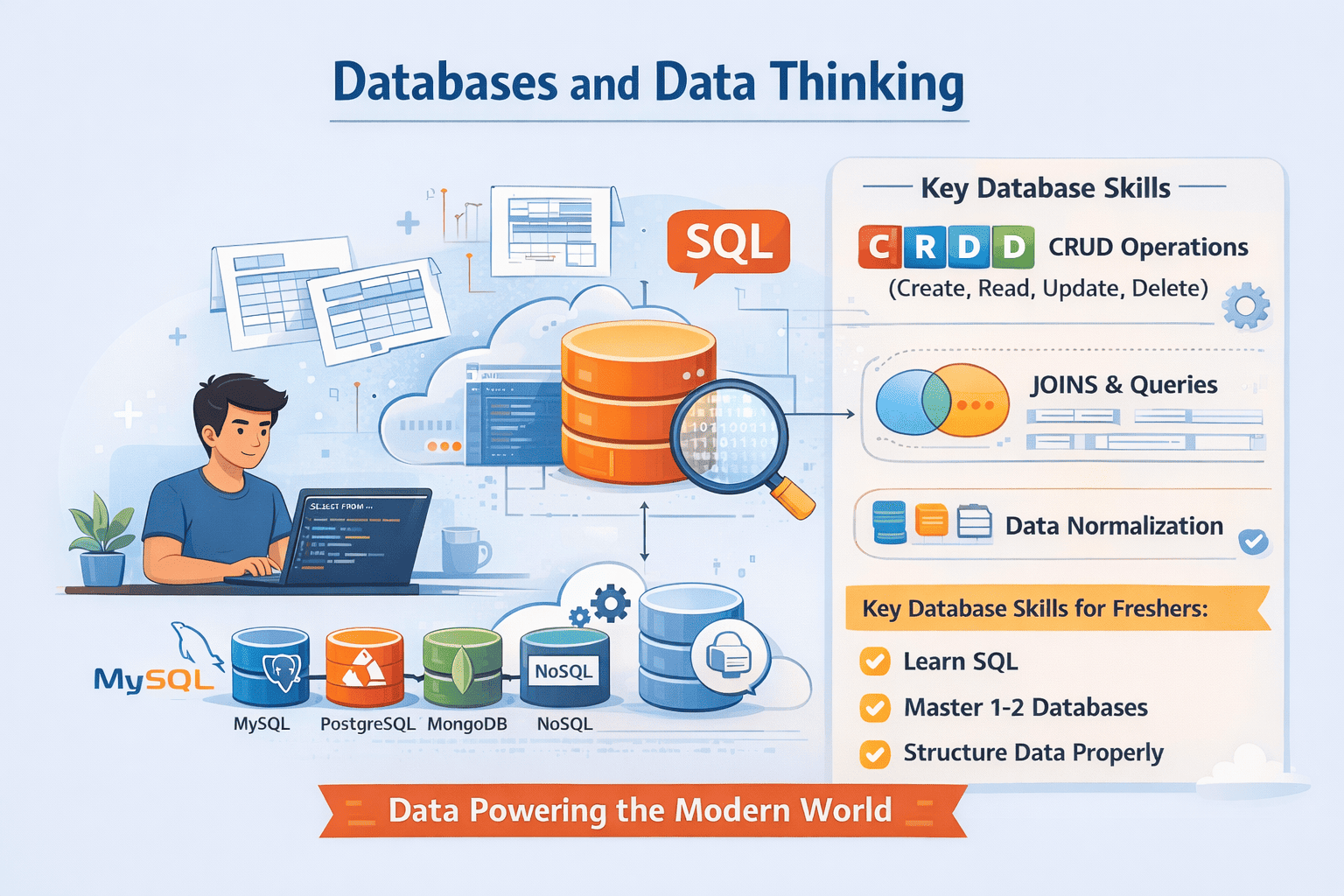
Software today runs on data.
If you cannot store, fetch, and manipulate data properly, you cannot build real applications.
Every fresher should know at least one database well:
- MySQL or PostgreSQL for relational databases
- Basic understanding of NoSQL (MongoDB is a plus)
You must be confident with:
- CRUD operations (Create, Read, Update, Delete)
- Joins and basic queries
- Why data normalization matters
In the AI era, data quality is everything. Even AI systems fail if data is poorly structured.
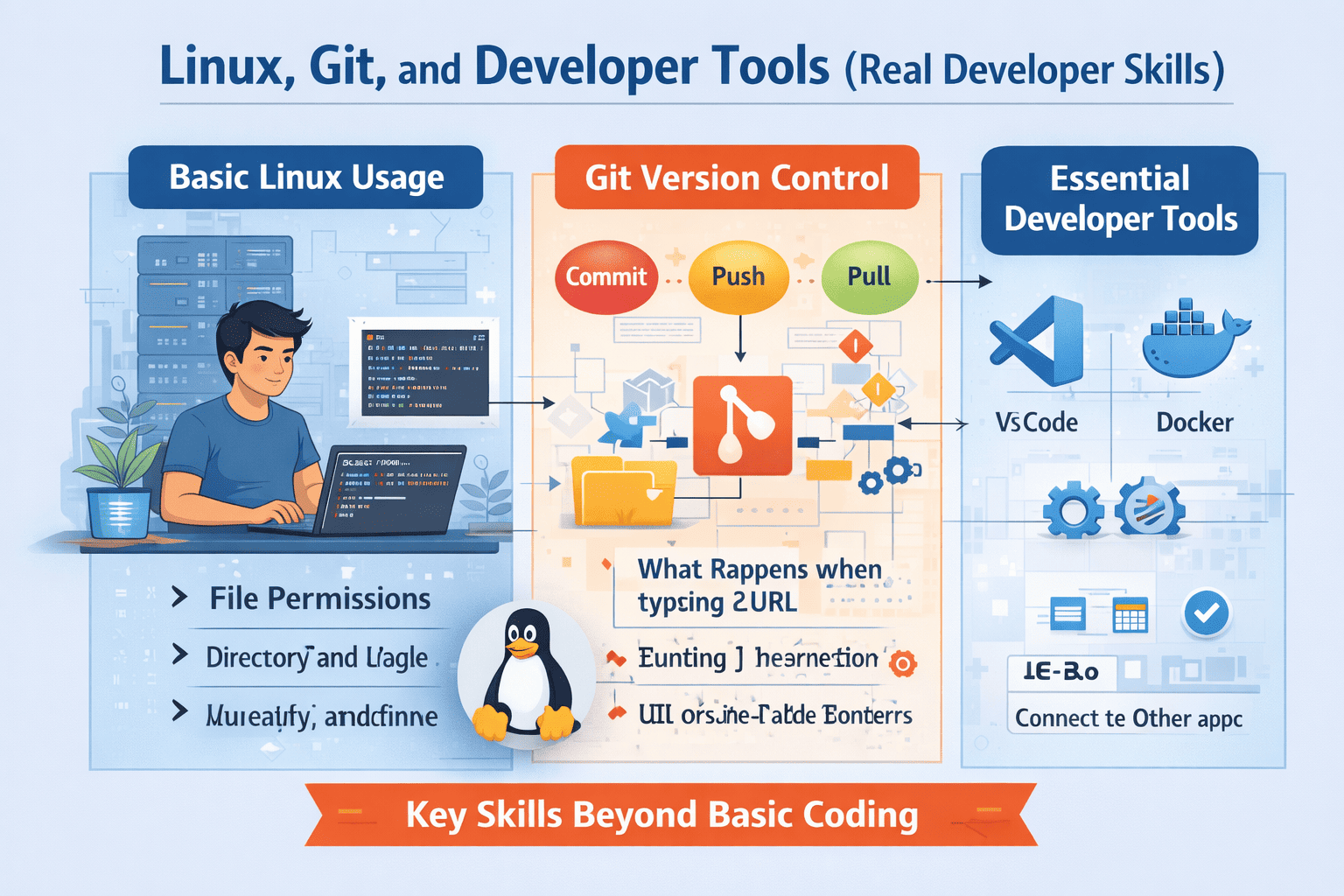
4. Linux, Git, and Developer Tools (Real Developer Skills)
Most real-world software does not run on Windows laptops.
It runs on servers, containers, and cloud environments, mostly powered by Linux.
Every fresher should know:
- Basic Linux commands
- File permissions and directory structure
- How to run applications from terminal
Along with Linux, Git is mandatory.
- Creating repositories
- Commit, push, pull, and merge
- Understanding branches
These skills show that you can work in a real development team, not just in college labs.
5. AI Awareness (Not AI Expertise)
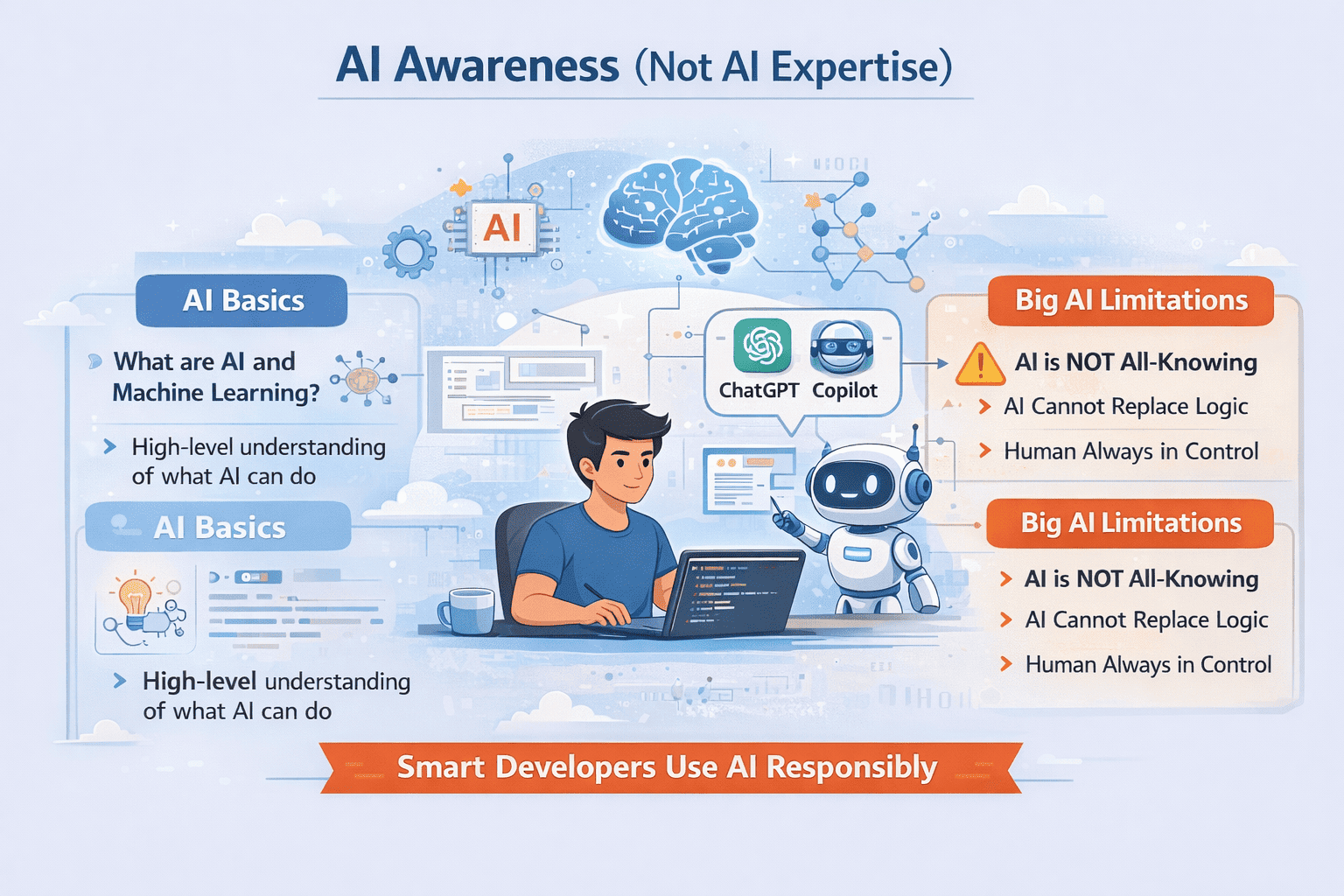
You are not expected to be an AI researcher.
But in 2026, a fresher who ignores AI is already behind.
You should understand:
- What AI and Machine Learning are (at a high level)
- How tools like ChatGPT or Copilot assist developers
- Why AI cannot replace logic and engineering thinking
Smart developers use AI as a productivity tool, not a shortcut.
Companies want freshers who can think independently and use AI responsibly.
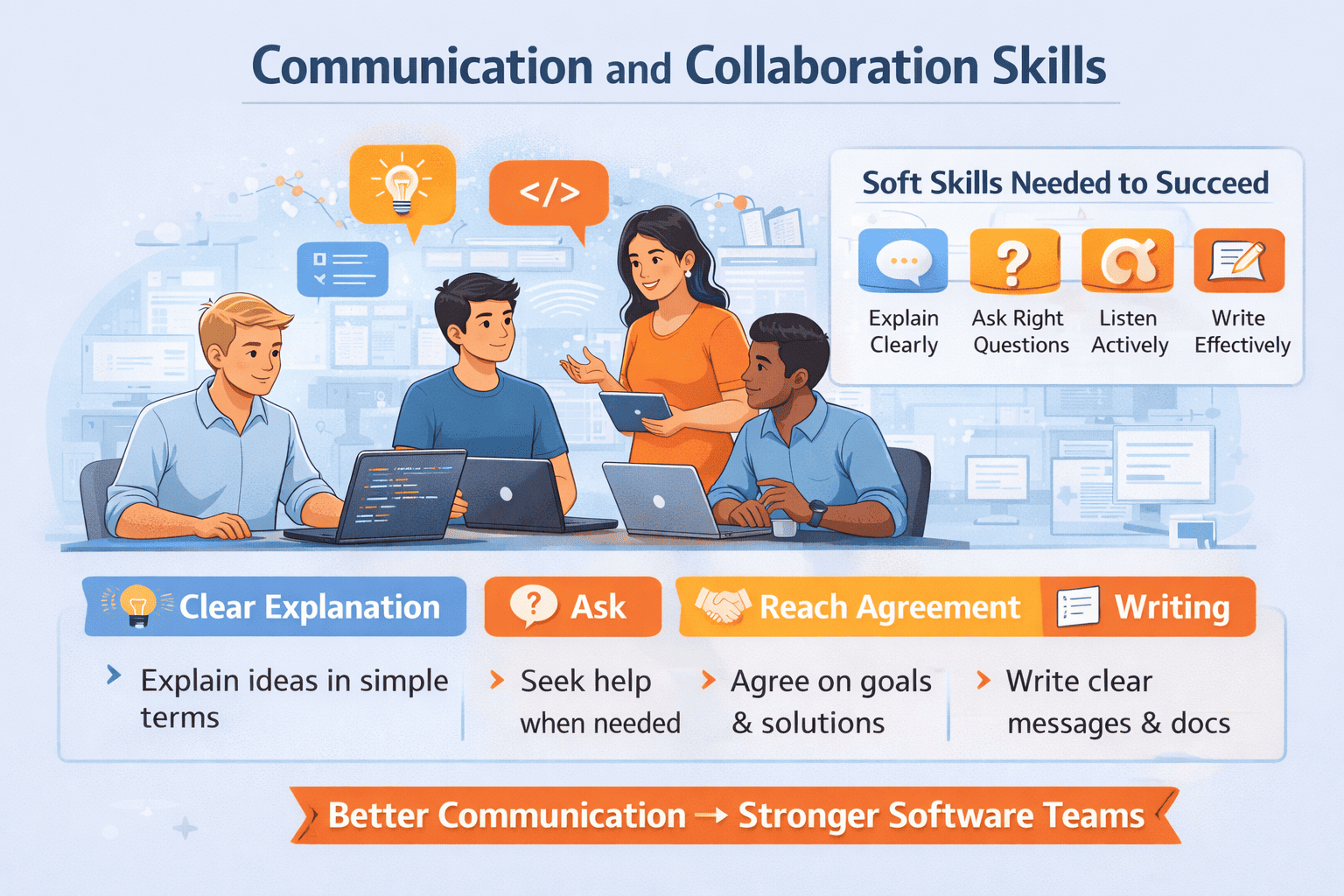
6. Communication and Collaboration Skills
Technical skills get you shortlisted.
Communication skills get you hired and promoted.
This does not mean speaking perfect English.
It means:
- Explaining your ideas clearly
- Asking the right questions
- Listening and responding professionally
- Writing clear messages and documentation
Modern software development is collaborative. You will work with designers, testers, clients, and AI tools.
Clear communication multiplies your technical impact.
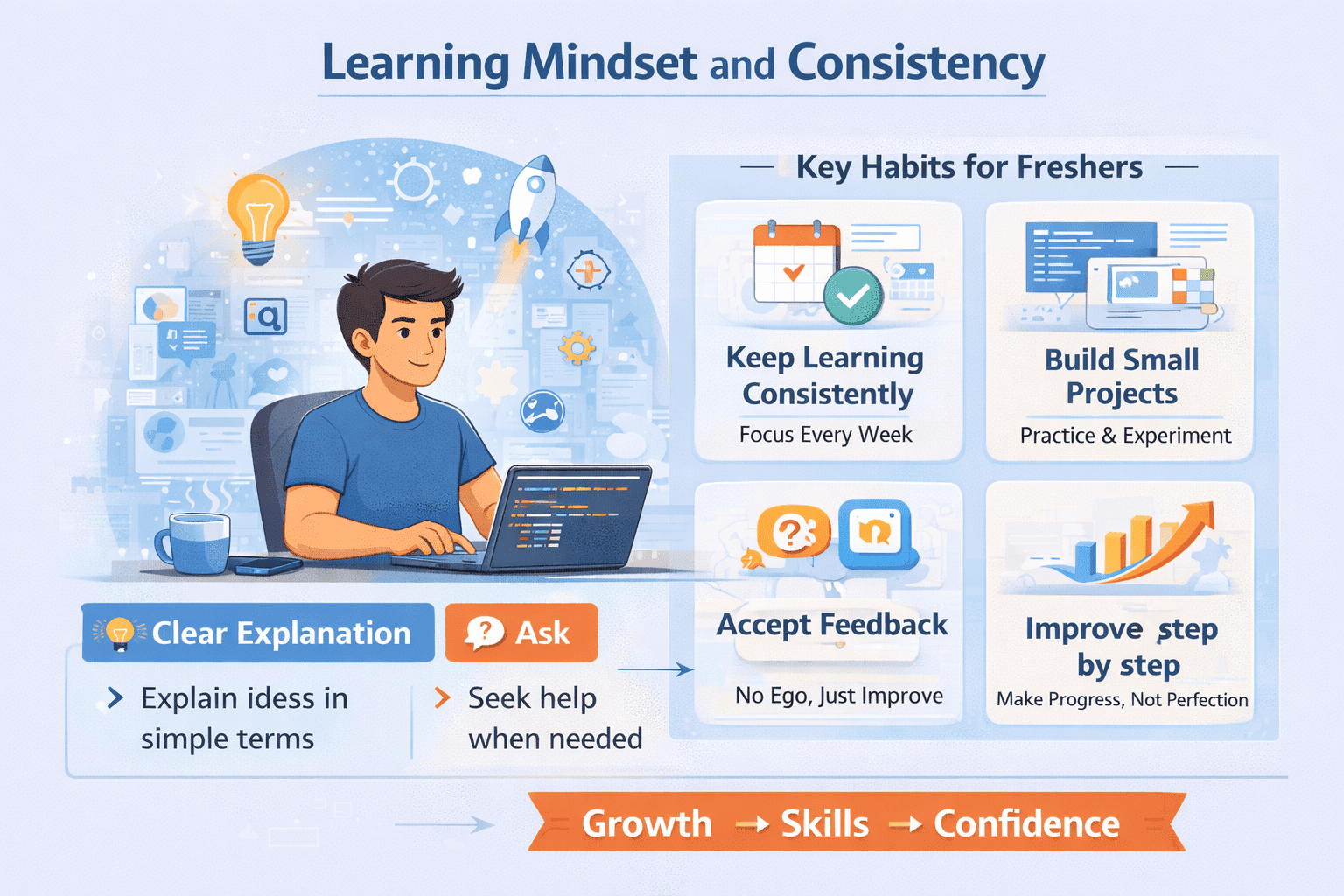
7. Learning Mindset and Consistency
The most important skill of all.
Technology will keep changing. Languages will evolve. AI tools will improve.
The freshers who survive and grow are the ones who:
- Keep learning consistently
- Build small projects regularly
- Accept feedback without ego
- Improve step by step
No course, certification, or college degree can replace this mindset.
Final Thoughts
Entering the software industry today is challenging, but it is also full of opportunity.
You do not need to master everything at once.
Focus on strong fundamentals, real-world tools, AI awareness, and clear communication. These skills together make you job-ready, future-proof, and confident.
The industry does not expect you to know everything.
It expects you to be ready to learn.
Comments (2)
What others are saying about this article
Priyanka Gupta
ReaderSwati Singh
ReaderLeave a Comment
Share your thoughts and join the discussion