

Every year, thousands of students graduate with hope, excitement, and one common goal — getting placed. Campus drives happen, companies visit colleges, aptitude tests are conducted, interviews are scheduled… yet many students walk away without an offer.
This raises an uncomfortable but important question: why do not all students get placed after college?
The truth is, it is rarely about intelligence or marks alone. In today’s job market — especially in the IT and technical domain — placements depend on awareness, skills, mindset, and how well a student adapts to change, including the rise of AI.
Let’s break down the genuine and current reasons why many students struggle to get placed after college — and more importantly, what can be done about it.
1. Over-Reliance on College Syllabus
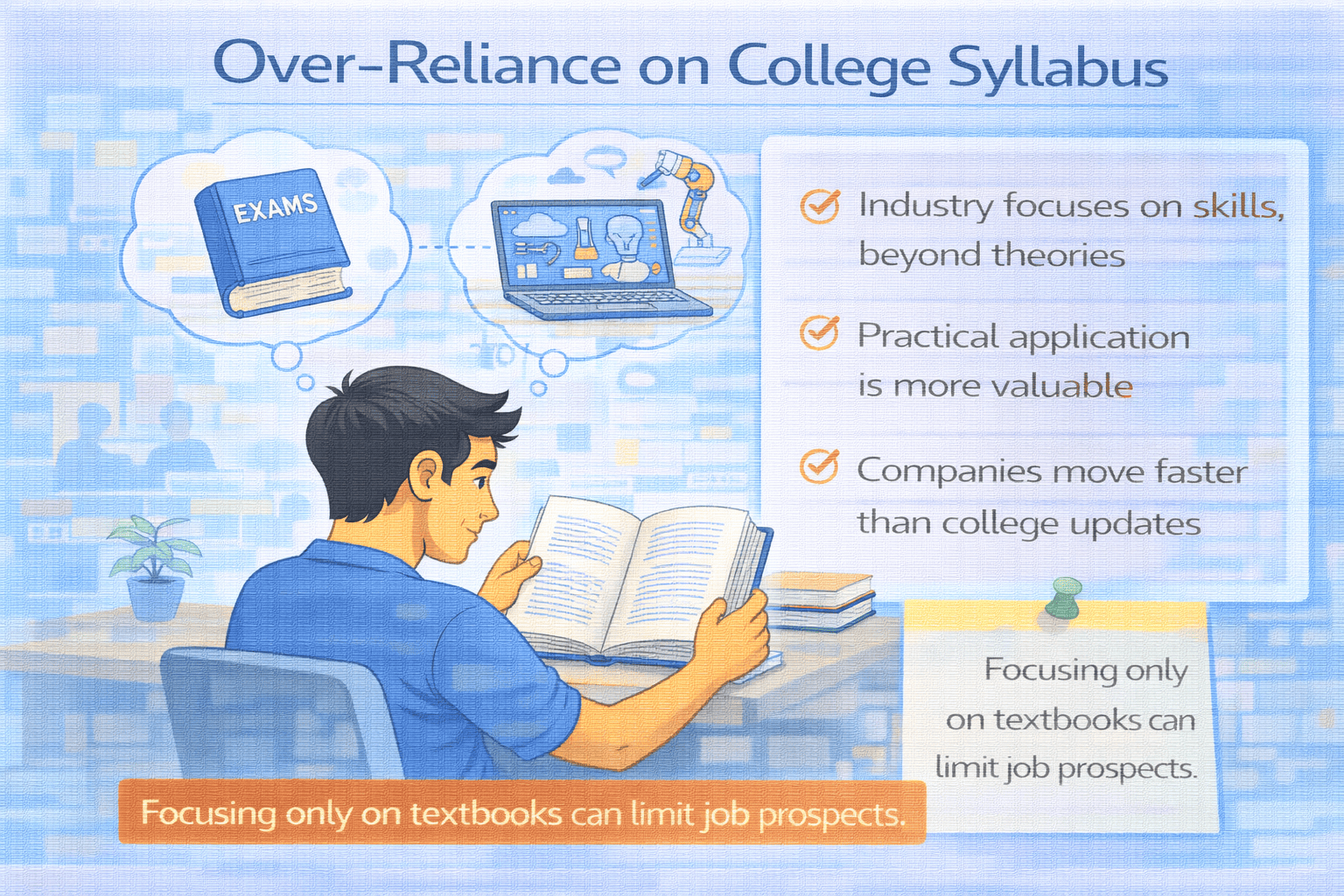
One of the biggest reasons students don’t get placed is assuming that the college syllabus is enough.
Most academic curriculums are slow to update. While the industry talks about cloud, AI, data, DevOps, and automation, many students are still evaluated only on theory-heavy subjects.
- Knowing concepts is good, but companies expect application.
- Real interviews focus on problem-solving, not definitions.
- Practical exposure matters more than textbook answers.
Reality check: Companies hire for skills, not semesters completed.
2. Lack of Hands-On Practice
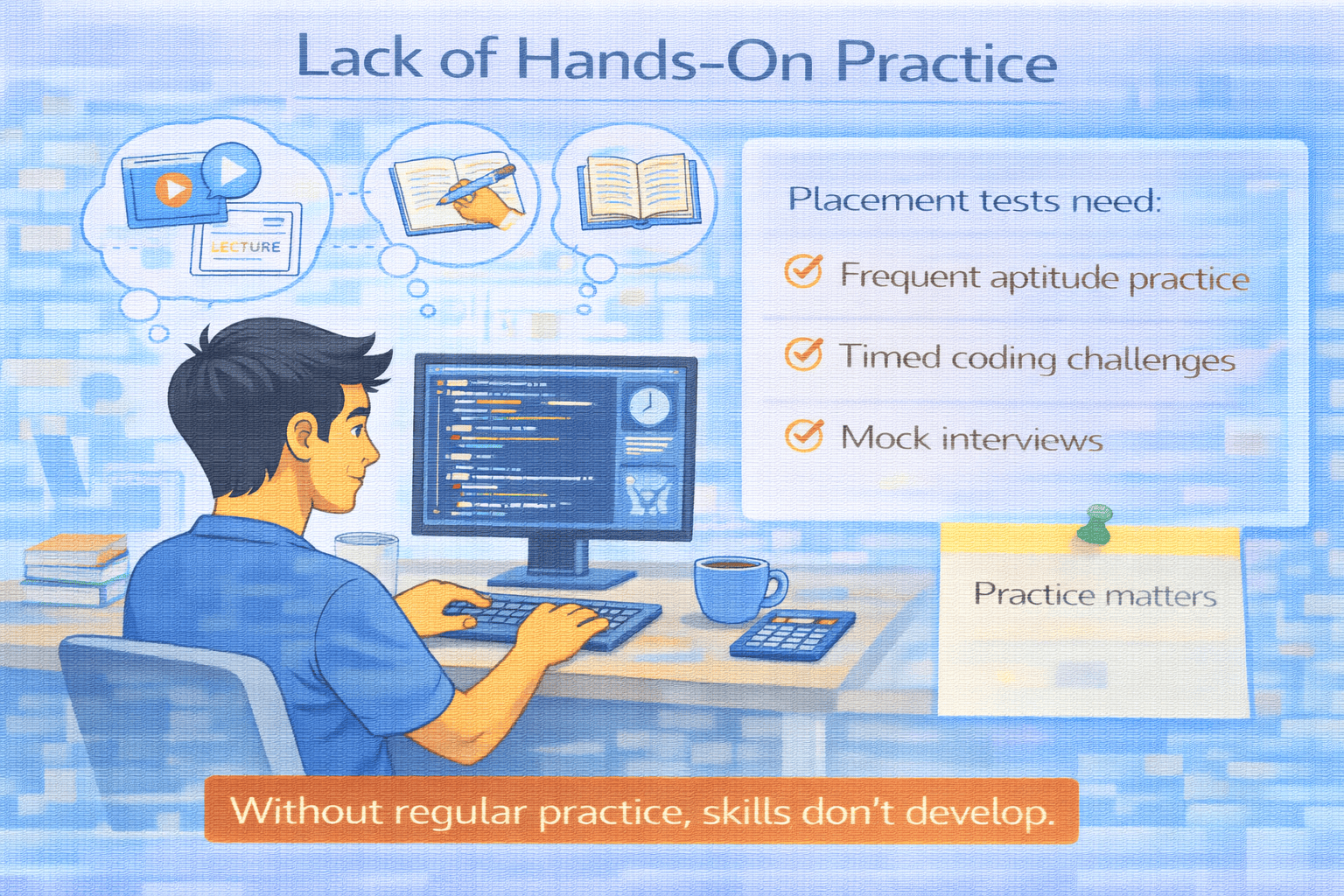
Watching tutorials, attending lectures, or reading notes feels productive — but without practice, it does not translate into employability.
Many students fail placement tests because they haven’t practiced:
- Aptitude and logical reasoning regularly
- Coding problems or real-world scenarios
- Mock interviews and timed tests
Just like you can’t learn swimming by watching videos, you can’t clear placements without hands-on practice.
3. Poor Self-Assessment and Direction
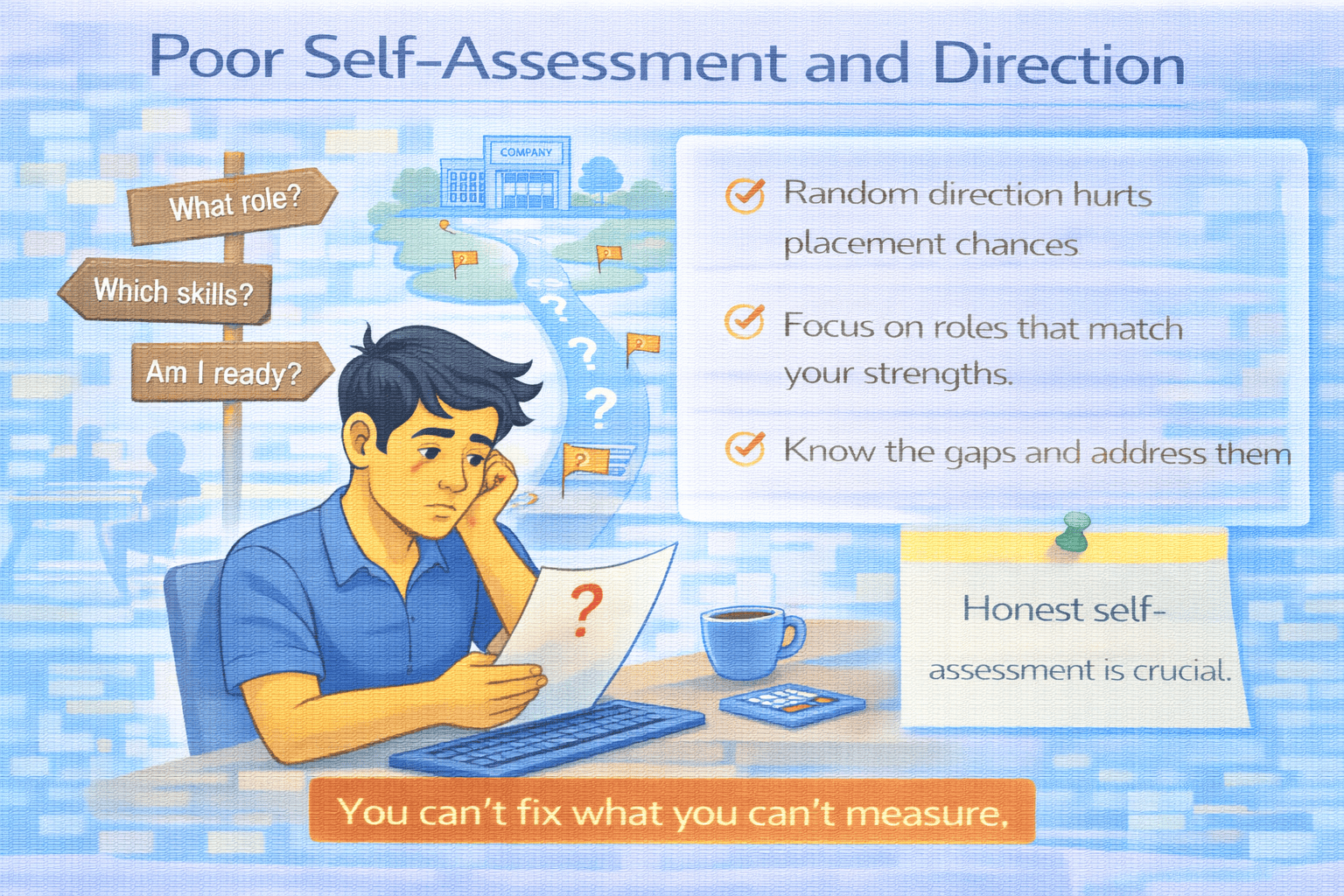
A surprising number of students don’t actually know where they stand.
They apply everywhere without understanding:
- What roles suit their strengths
- Which skills they are missing
- How far they are from industry expectations
Without honest self-assessment, preparation becomes random — and random preparation leads to rejection.
4. Ignoring Soft Skills and Communication
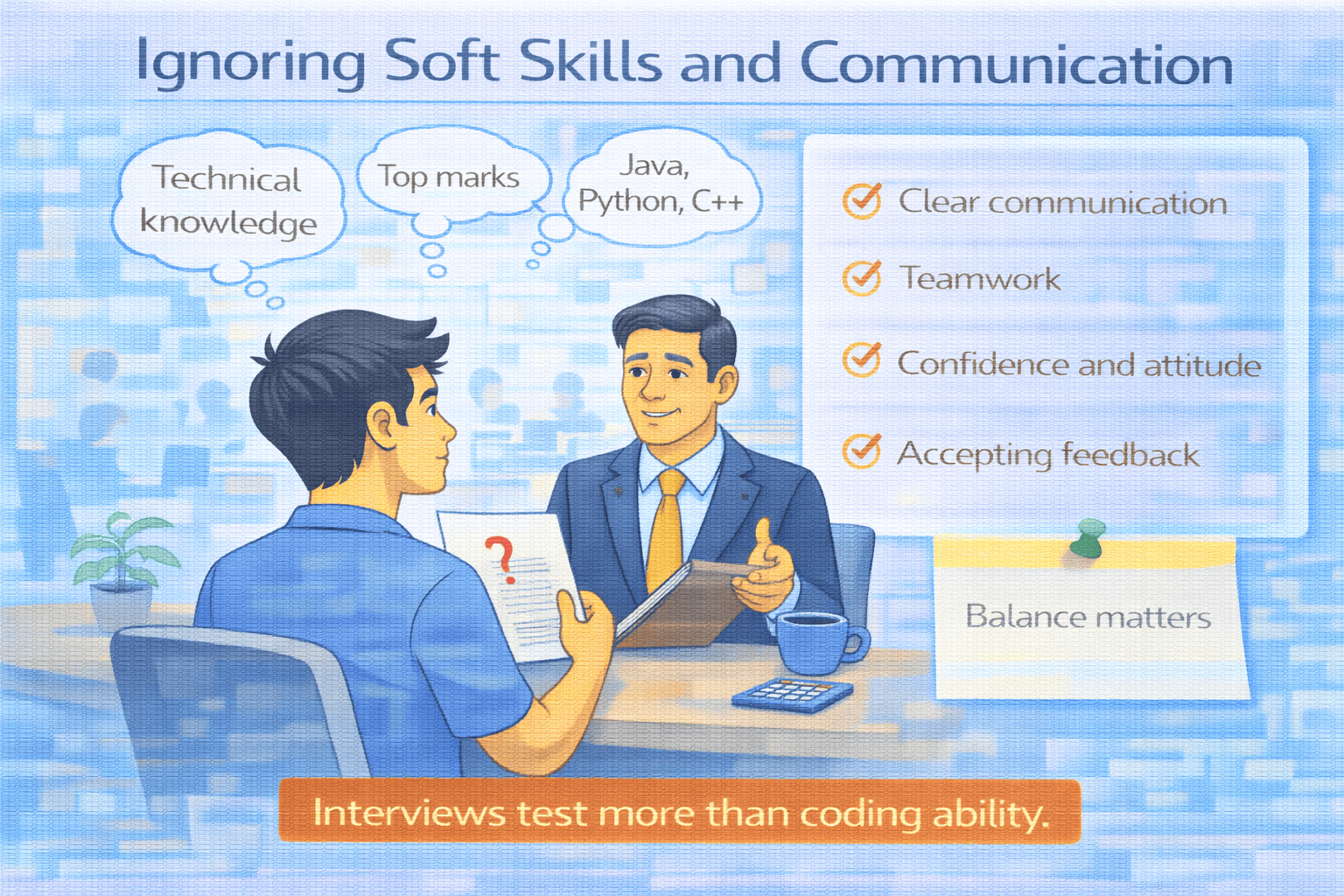
Many students believe placements are only about technical knowledge. That is no longer true.
Companies today look for candidates who can:
- Explain their thoughts clearly
- Communicate in teams
- Ask questions confidently
- Handle feedback professionally
You don’t need fancy English or an accent. You need clarity, confidence, and honesty.
5. Fear of Failure and Rejections
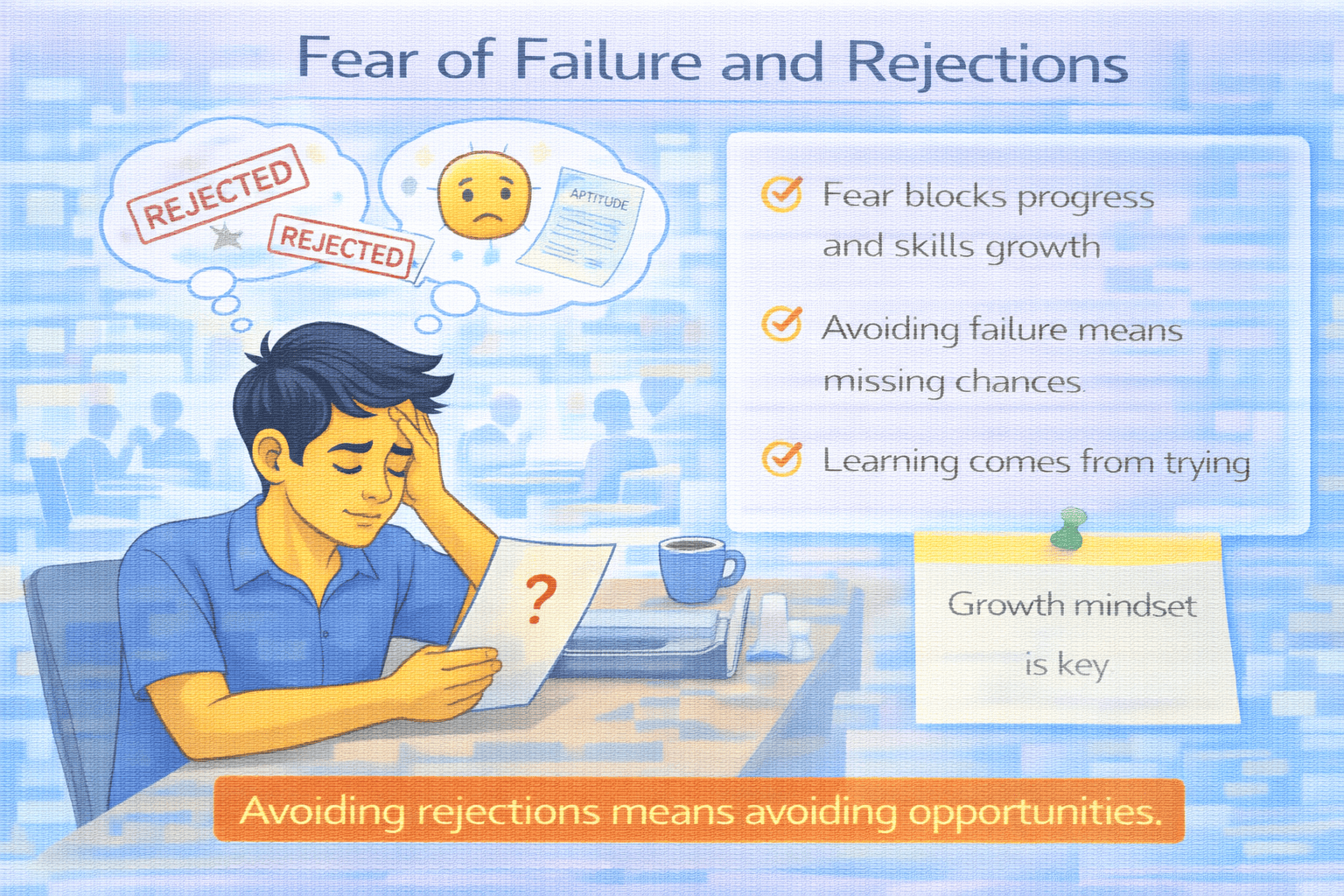
Another major reason students don’t get placed is psychological — fear.
After a few rejections, many students:
- Stop applying actively
- Avoid interviews due to self-doubt
- Assume “placements are not for me”
Rejections are not a signal to quit. They are feedback — if you choose to learn from them.
6. Not Adapting to the AI Era
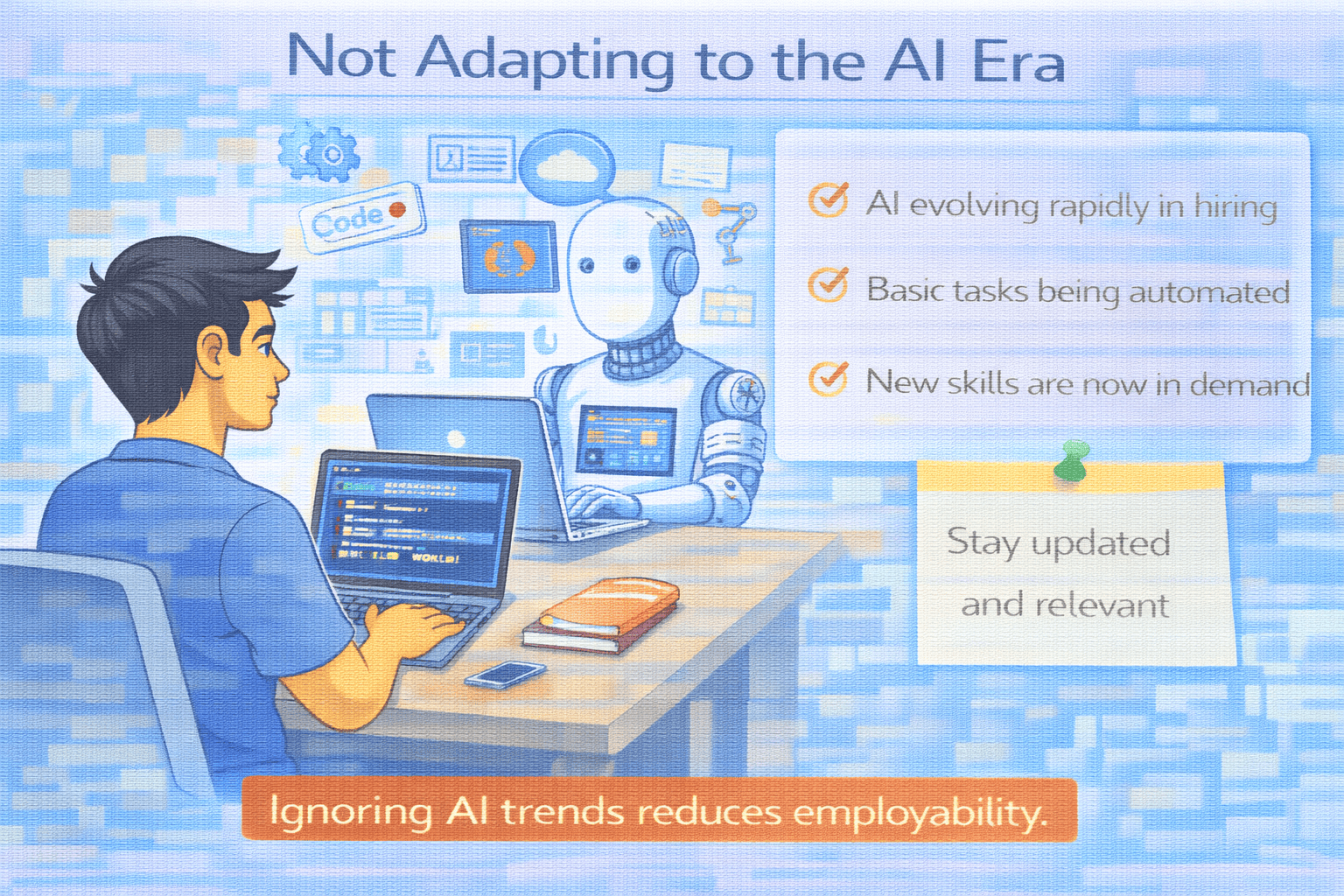
This is a new and very real reason in today’s job market.
AI has changed how companies work, hire, and evaluate candidates. Students who completely ignore AI trends often fall behind.
This does not mean you must become an AI expert. But you should:
- Understand how AI impacts your field
- Use AI tools responsibly for learning
- Focus on logic, problem-solving, and adaptability
Students who combine strong fundamentals with AI awareness stand out.
7. Waiting Only for Campus Placements
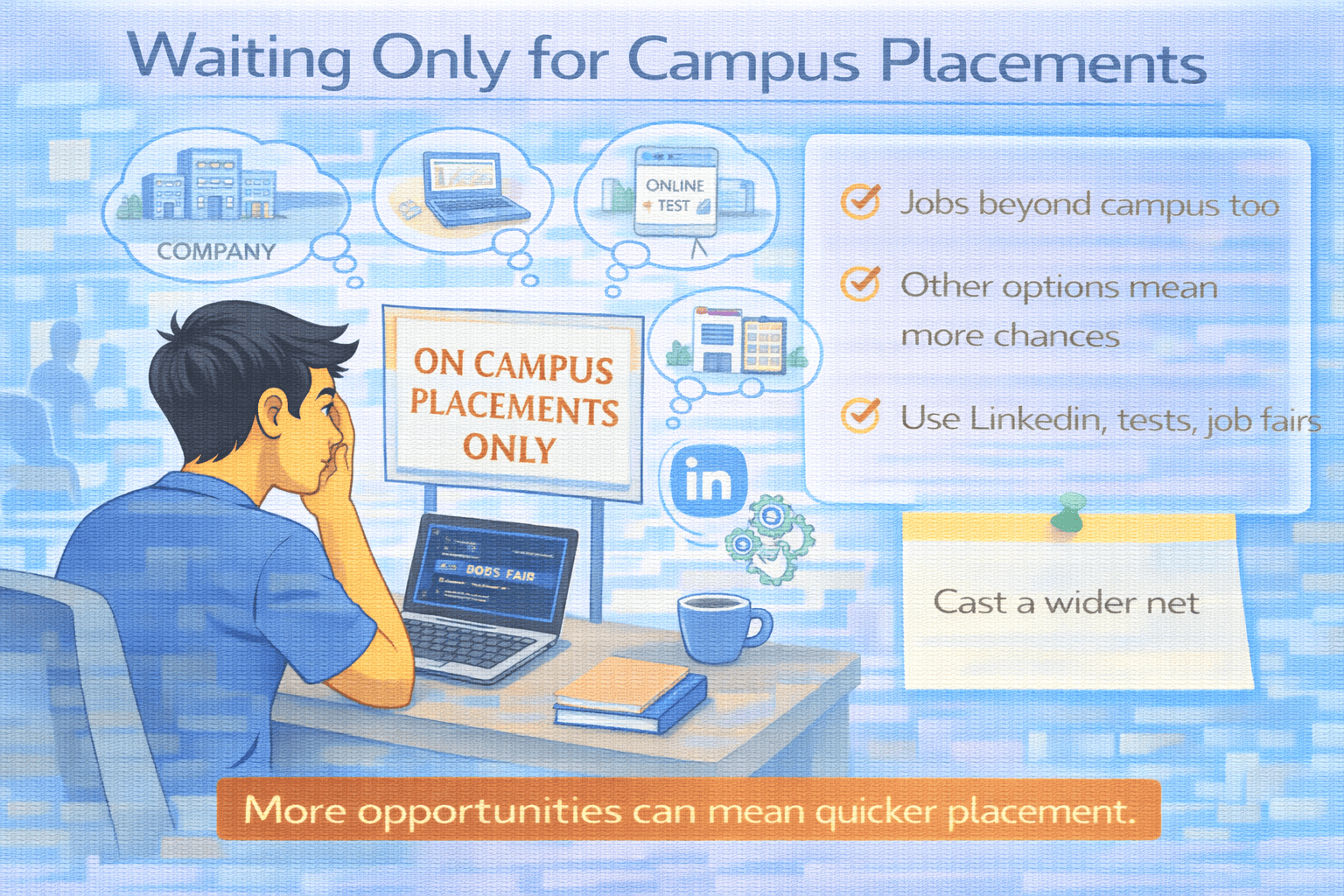
Campus placements are just one opportunity — not the final verdict on your career.
Many students miss out because they:
- Don’t prepare for off-campus opportunities
- Don’t build profiles on job portals and LinkedIn
- Don’t network or connect with alumni
Some of the best careers start off-campus, not inside a placement hall.
What Students Can Do Differently
If you’re a student or recent graduate, here’s the good news: all of this is fixable.
- Focus on skills, not just marks
- Practice consistently, even in small steps
- Assess yourself honestly and improve gaps
- Build communication and confidence
- Adapt to industry changes, including AI
Getting placed is not about being perfect. It’s about being prepared, aware, and persistent.
Final Thoughts
Not all students get placed after college — and that’s okay. A job offer does not define your worth or potential.
What truly matters is how quickly you learn, how smartly you adapt, and how consistently you work towards your goal.
The industry rewards those who are willing to grow. Start today — one skill, one practice session, one application at a time.
Comments (5)
What others are saying about this article
Priya Gupta
ReaderRuhi
ReaderDisha Singh
ReaderAditi Bansal
ReaderAtul Jain
ReaderLeave a Comment
Share your thoughts and join the discussion