

HR Interview Preparation Tips for Freshers – How to Actually Get Hired
“Cleared the technical round! HR round is just a formality now.”
Heard this before?
Many freshers walk into the HR interview thinking the job is already theirs. Some even relax too much, assuming the HR round is only about salary discussion and paperwork.
That mindset costs people offers.
In today’s competitive job market, where hundreds of freshers have similar technical skills, the HR interview often becomes the final decision-maker.
Think of it this way. If technical skills are the engine of a company, soft skills are the oil that keeps everything running smoothly. HR’s job is to make sure you fit into that system.
Let’s break down exactly what HRs look for in freshers and how you can prepare smartly.
Why the HR Interview Matters More Than You Think
For freshers, HR interviews are not about checking experience. They are about checking potential.
HR wants to understand:
- How you communicate
- How you handle pressure
- Whether you can learn and adapt
- If you fit the company culture
You may be technically strong, but if HR senses attitude issues, rigidity, or poor communication, the offer can stop right there.
1. Communication Skills (Not Accent, Not Fancy English)
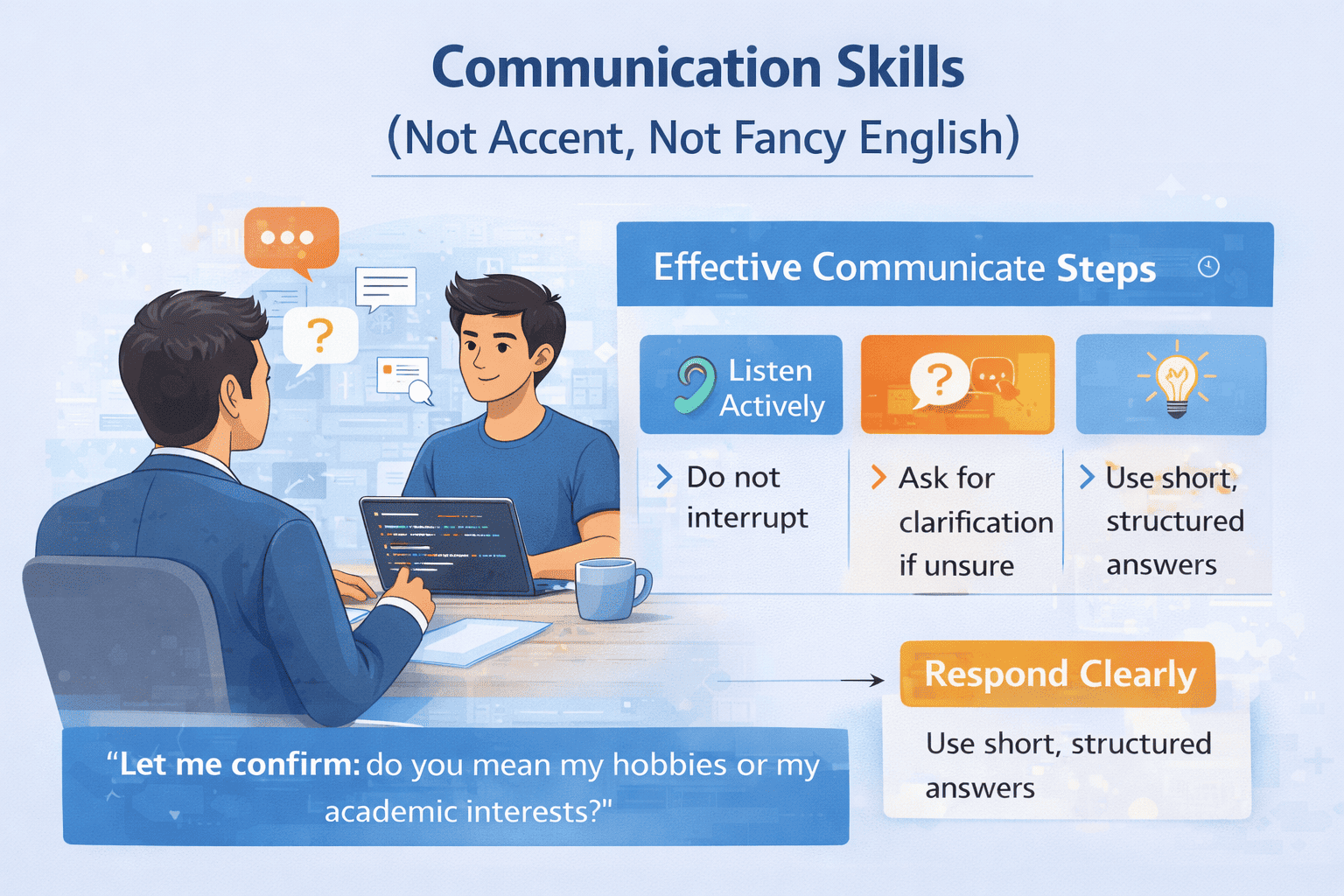
Let’s clear a big myth first.
Communication skills do not mean fluent English or a foreign accent.
Good communication simply means you can understand questions and respond clearly.
There are three key parts to effective communication in an HR interview:
- Listen actively – Let the interviewer complete the question. Do not interrupt.
- Understand the intent – If you are unsure, politely ask for clarification.
- Respond clearly – Short, structured, and audible answers work best.
If you don’t understand a question, it is perfectly fine to say:
“Just to confirm, are you asking about my academic interests or my hobbies outside college?”
This shows maturity, not weakness.
Golden rule: Interviews follow the 20–80 principle. Listen 80% of the time, speak 20% with clarity.
2. Confidence (Calm, Not Overconfidence)
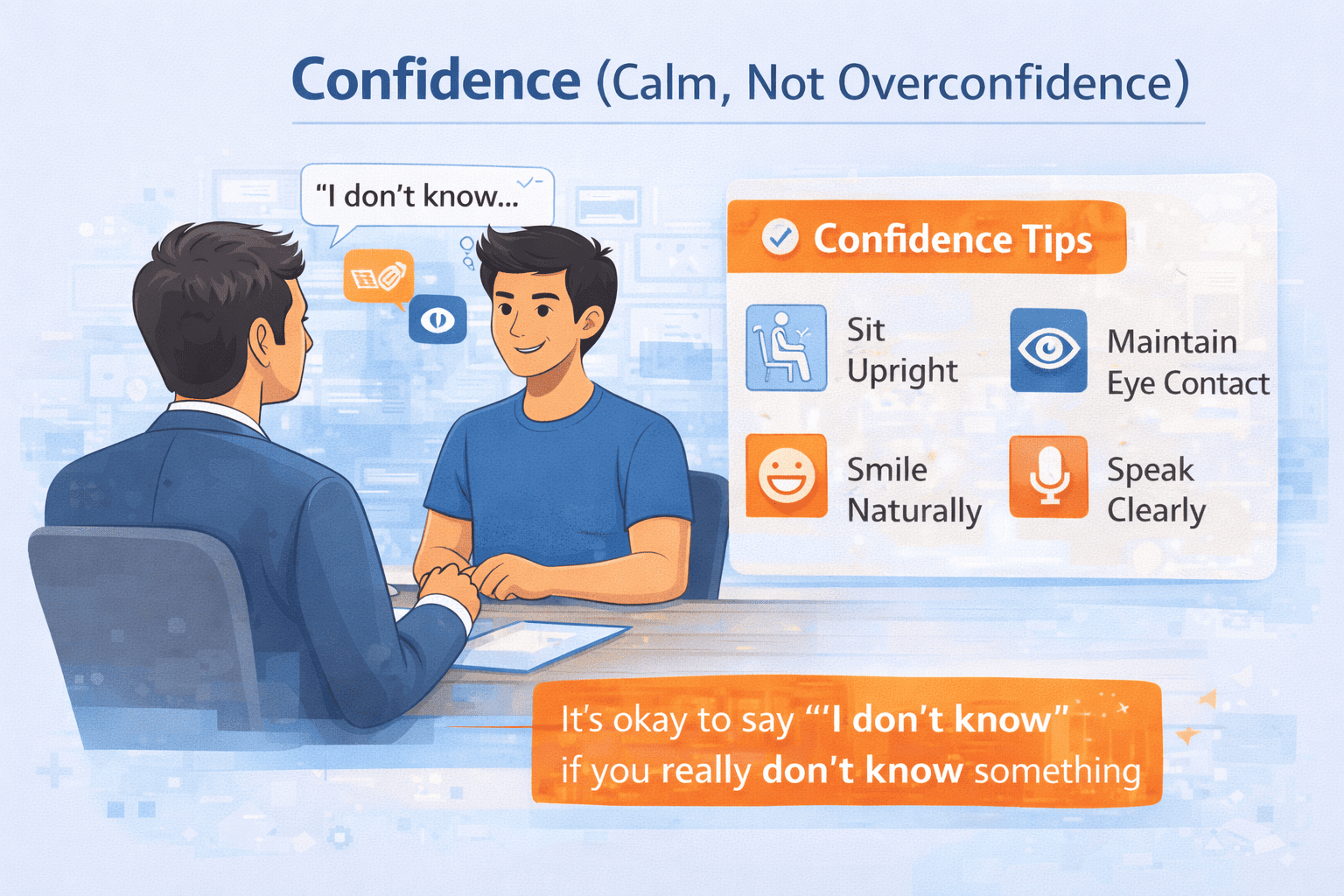
Feeling nervous as a fresher is normal.
Remember this: the company invited you because they are interested in you.
Confidence shows through body language more than words.
- Sit upright with a relaxed posture
- Maintain comfortable eye contact
- Smile naturally and stay attentive
- Speak clearly and at a steady pace
It is absolutely okay to say “I don’t know” when you genuinely don’t.
That shows honesty.
Just don’t overuse it.
3. Know Yourself Before the Interview
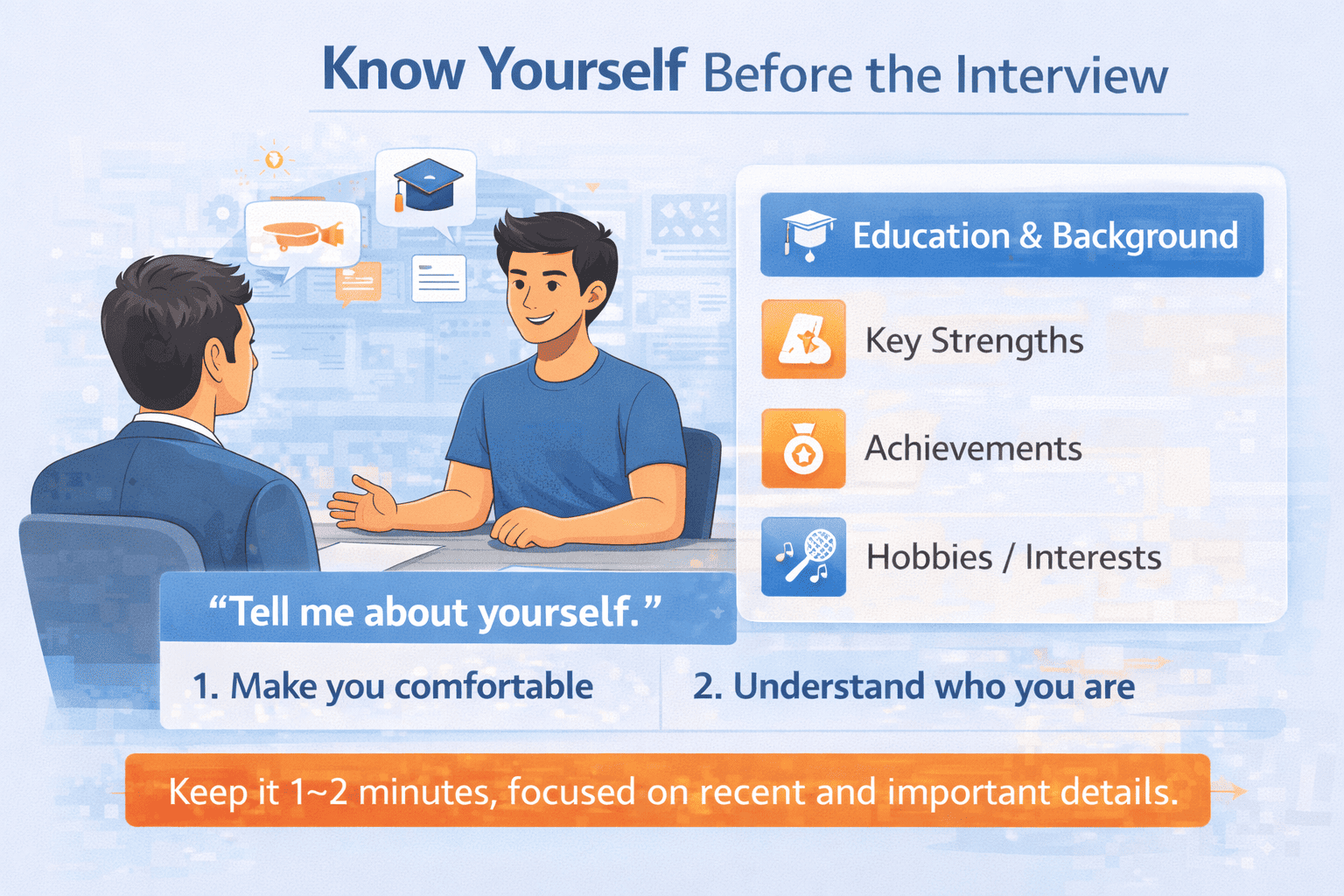
Almost every HR interview starts with:
“So, tell me about yourself.”
This question has two goals:
- To make you comfortable
- To understand who you really are
Your answer should be prepared, but not memorized.
A strong response usually includes:
- Your education and recent background
- Your key strengths or interests
- One or two achievements
- A brief mention of hobbies or interests
Avoid childhood stories or unnecessary family details.
Keep it within 1–2 minutes and focus on what matters professionally.
Common “Know Yourself” questions include:
- Tell me about yourself
- What are your strengths and weaknesses?
- What are your career goals?
- What are your hobbies or interests?
4. Cultural Fit and Company Compatibility

Every company has a unique working culture.
HR evaluates whether you can adapt to it.
As a fresher, show flexibility.
- Be open to learning new roles
- Avoid rigid expectations initially
- Focus on career growth, not comfort
When asked opinion-based questions, stay balanced.
Do not take extreme stands or argue aggressively.
If ethics or legality are involved, always align with professional and legal conduct.
5. Learning Ability (Your Biggest Strength as a Fresher)
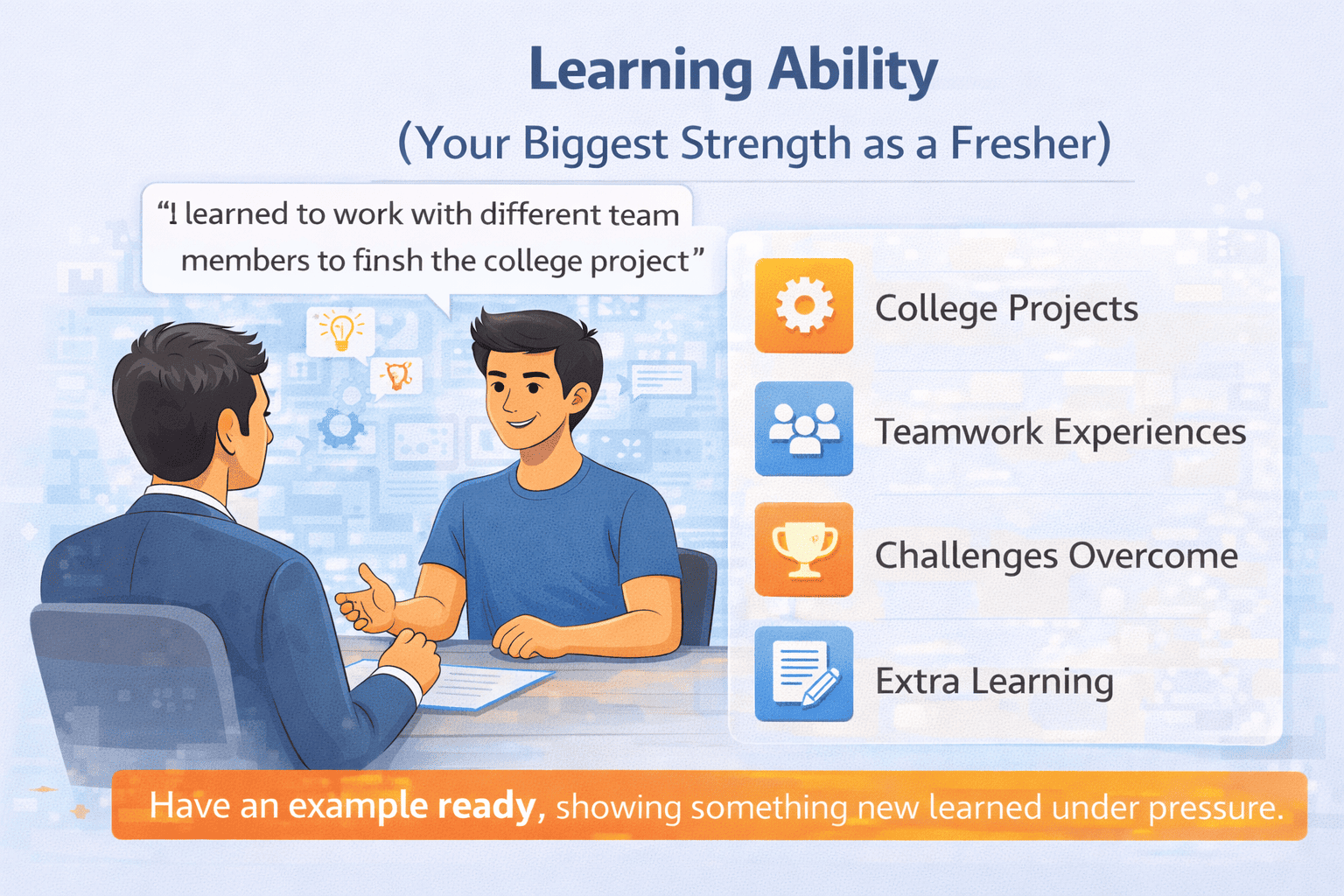
Companies hire freshers because they are adaptable.
Your willingness and ability to learn matter more than what you already know.
HR may evaluate this indirectly by asking about:
- College projects
- Teamwork experiences
- Challenges you faced
- Any extra learning or certifications
Always keep one example ready that shows you learned something new under pressure.
This makes you memorable.
6. Salary Expectations (Be Realistic)
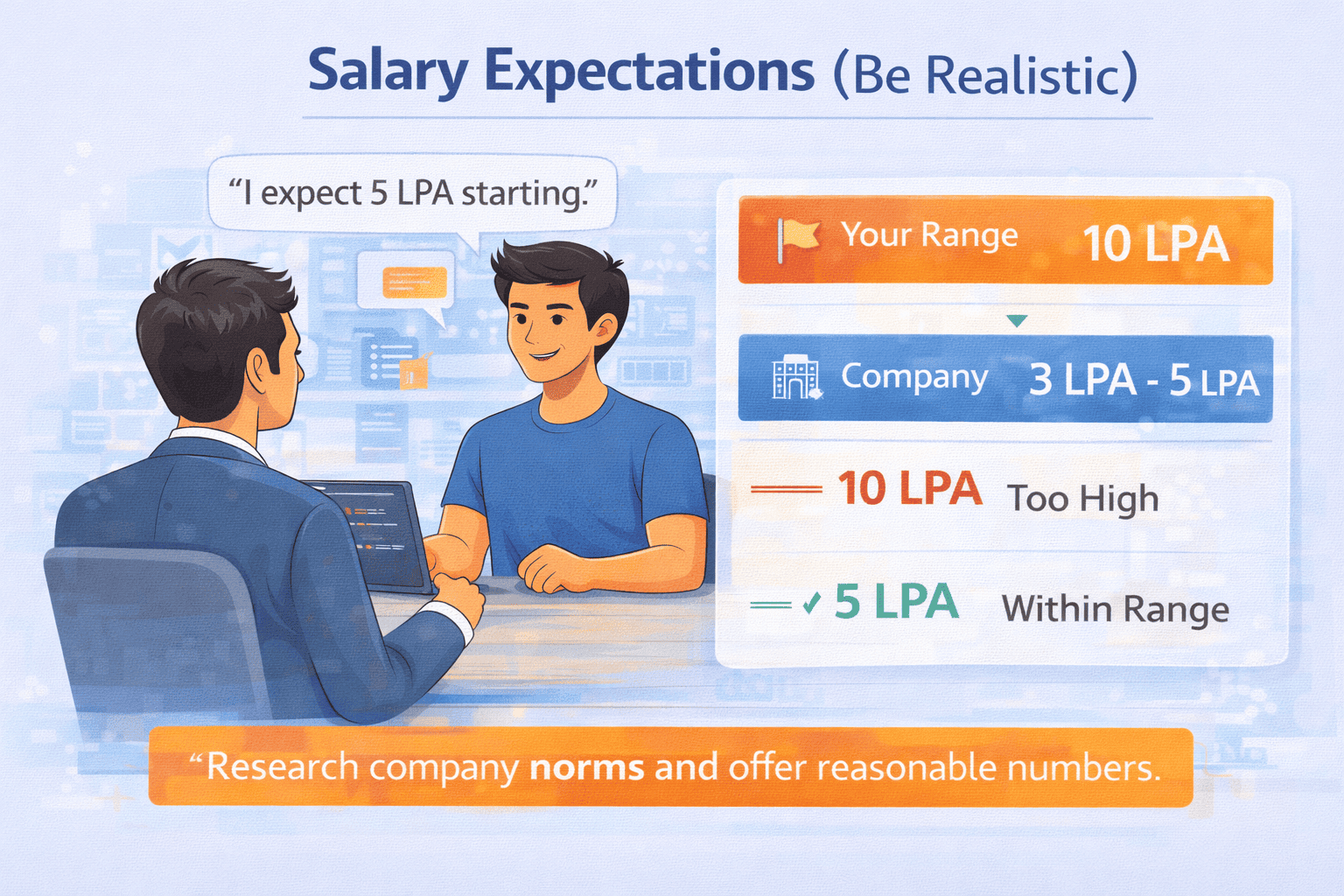
Freshers usually have limited bargaining power.
When HR asks about expected CTC, they want to know if you understand the market.
Research the company’s fresher package and stay within a reasonable range.
An unrealistic number sends a clear signal that you may not be serious about the role.
Common HR Interview Mistakes Freshers Make
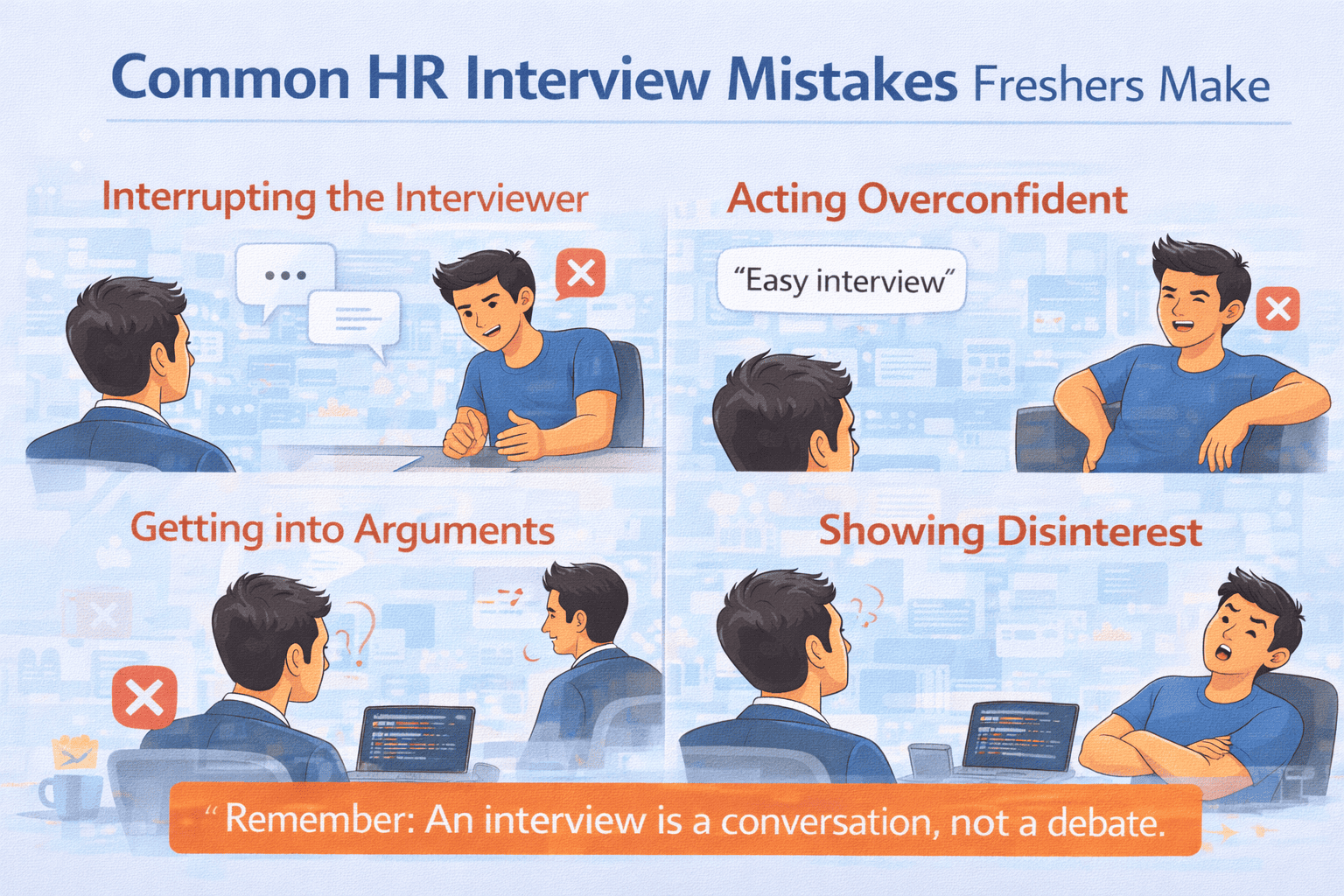
- Interrupting the interviewer
- Acting overconfident after technical rounds
- Arguing instead of explaining
- Showing disinterest or disrespect
An interview is a conversation, not a debate.
Absolute “Never Do” Rules
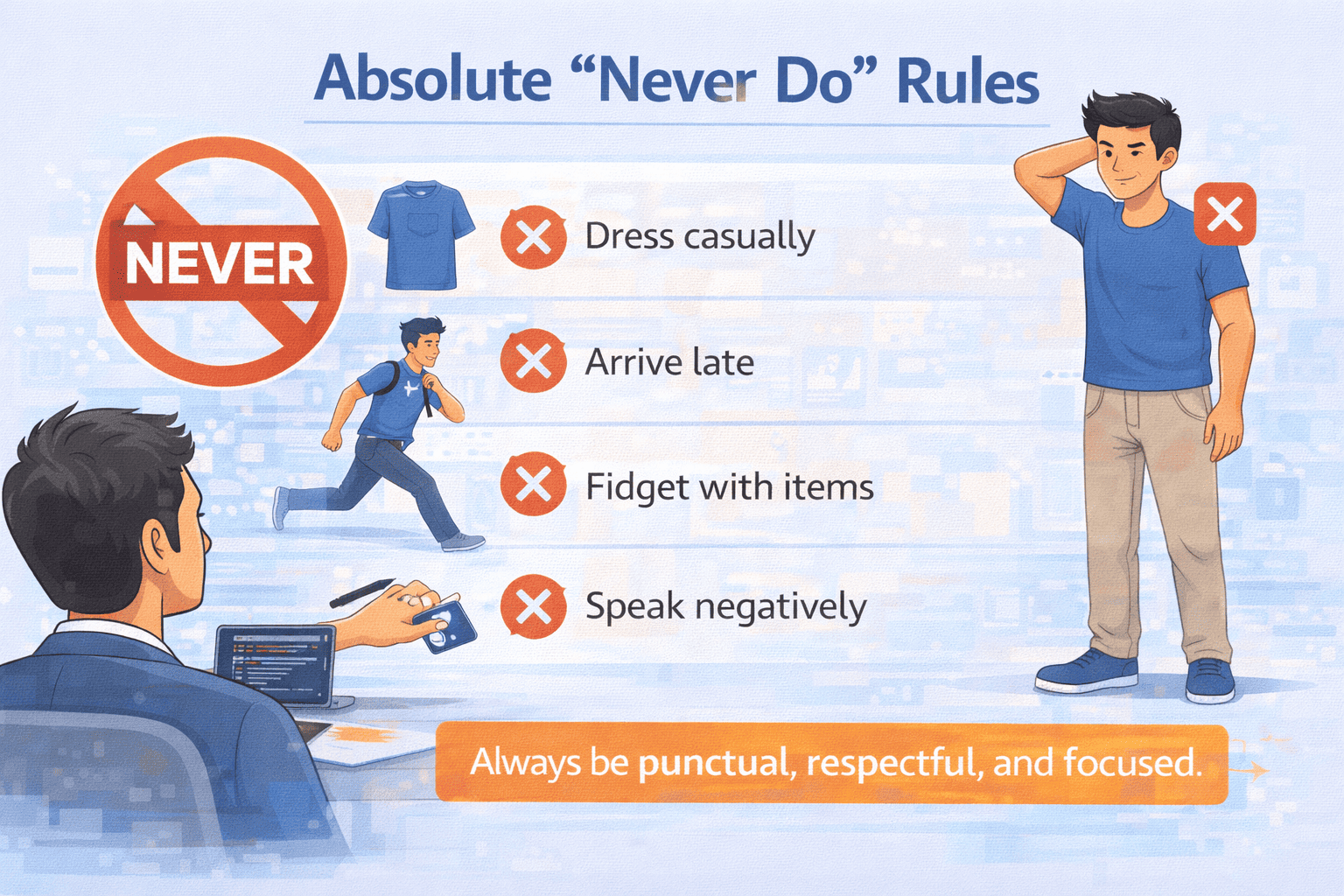
- Never dress casually for an interview
- Never arrive late
- Never fidget with pens, papers, or phone
- Never speak negatively about others
Professional behavior creates a strong final impression.
Final Thoughts
HR interviews are not designed to trap you.
They are designed to understand you.
If you communicate clearly, stay honest, show willingness to learn, and remain respectful, you already stand ahead of many candidates.
Prepare well, stay calm, and be yourself.
That’s how freshers turn interviews into offer letters.
Comments (1)
What others are saying about this article
Priti Singh
ReaderLeave a Comment
Share your thoughts and join the discussion